

Laser and sheet-metal equipment
Industrial equipment for metalworking
We select, supply and commission equipment for sheet metal, tube processing, welding and automation. We help production work more precisely and consistently.

Loading 3D model…
Equipment should create new possibilities
Solutions for modern production
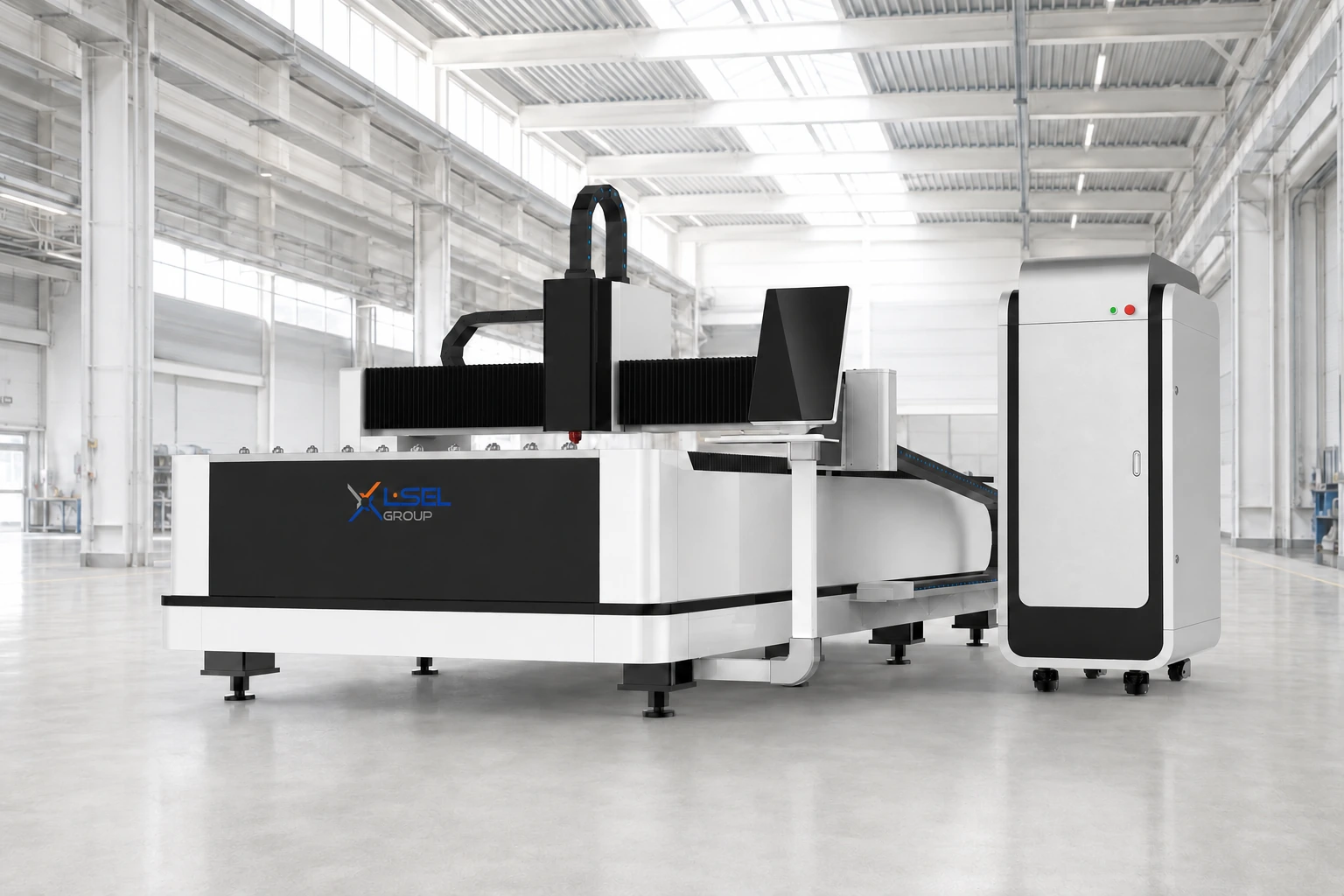 01Open sheet laser cuttersOpen sheet laser cutters
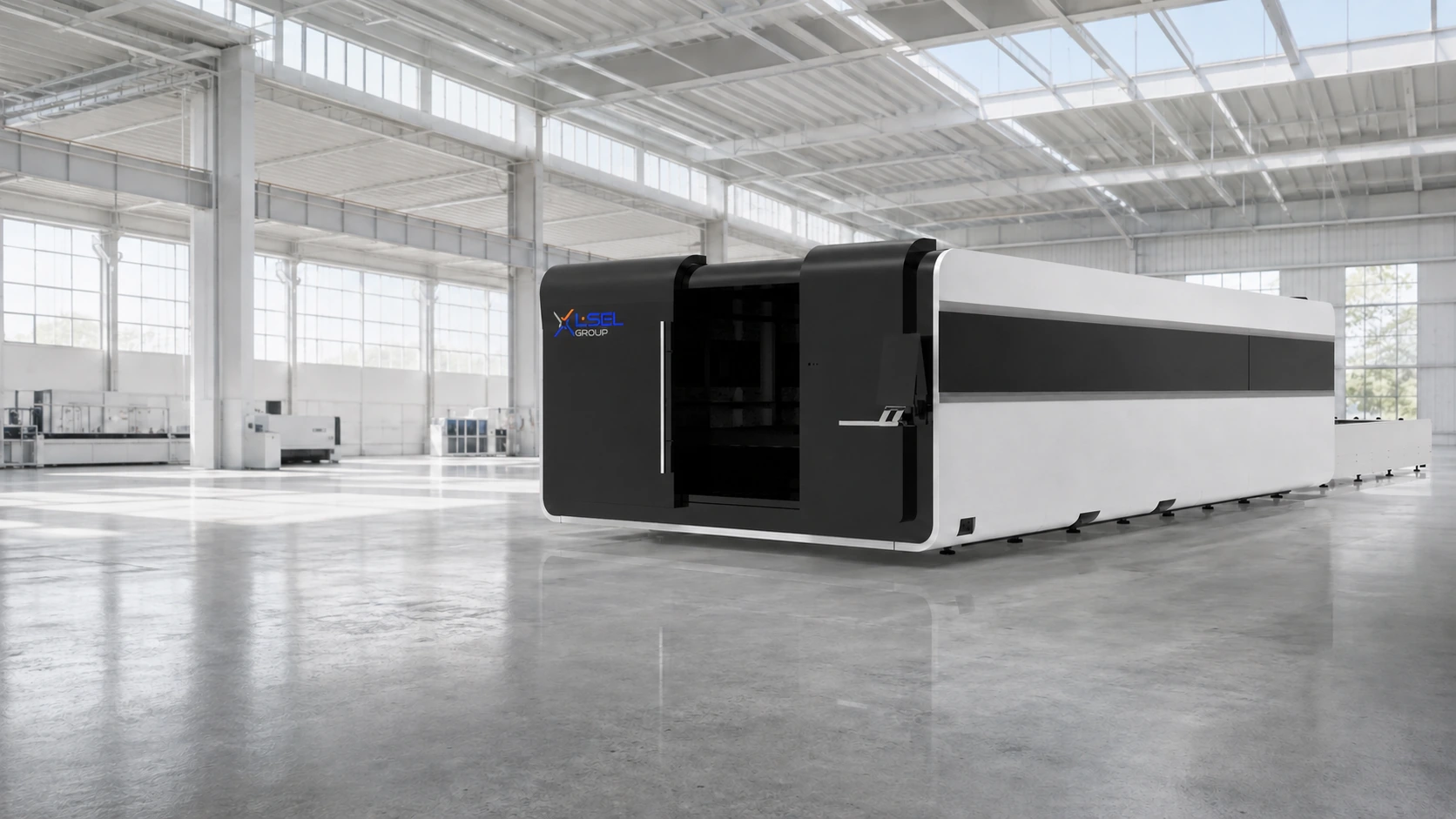 02Enclosed sheet laser cuttersEnclosed sheet laser cutters
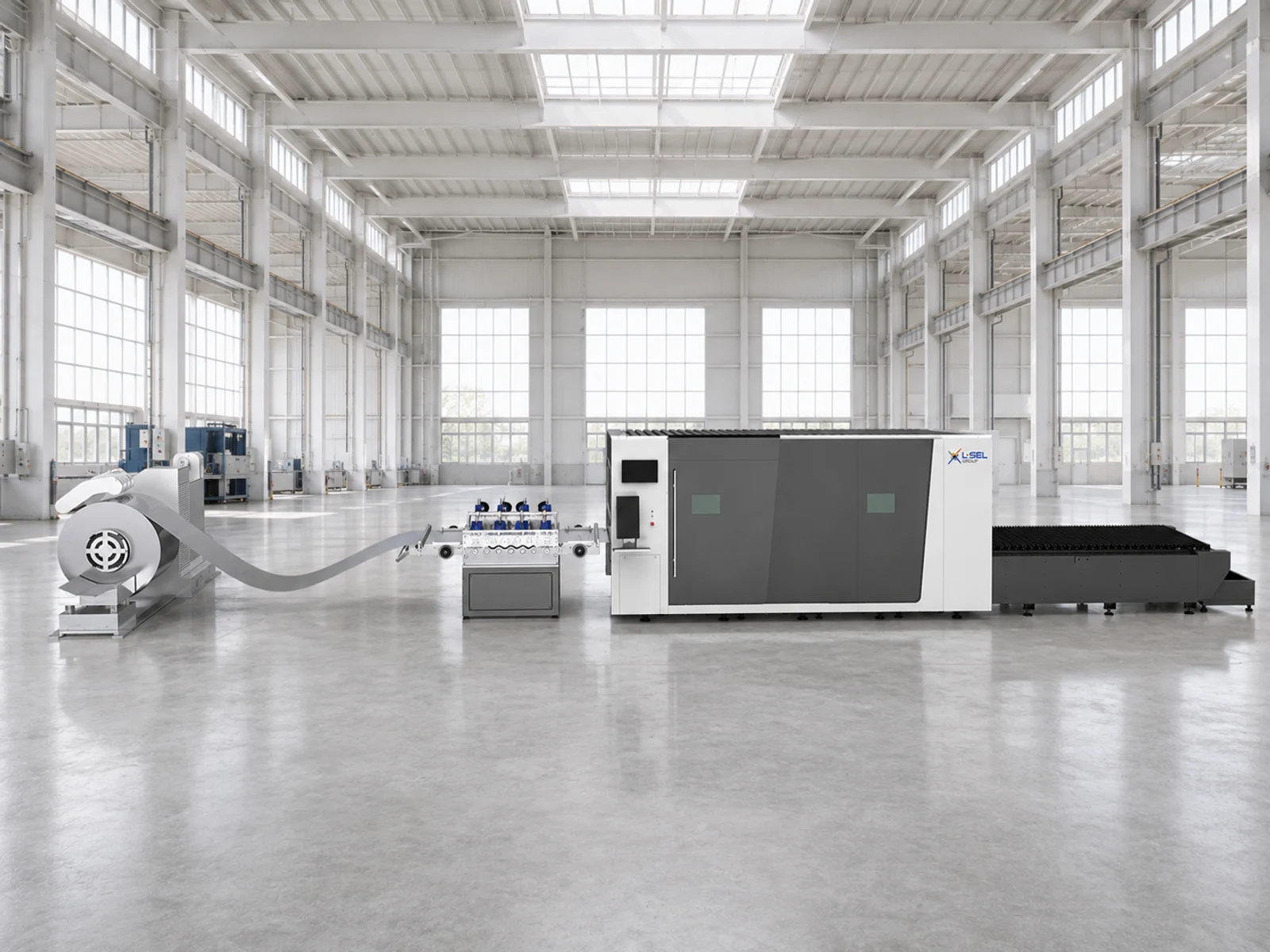 03Coil laser cutting systemsCoil laser cutting systems
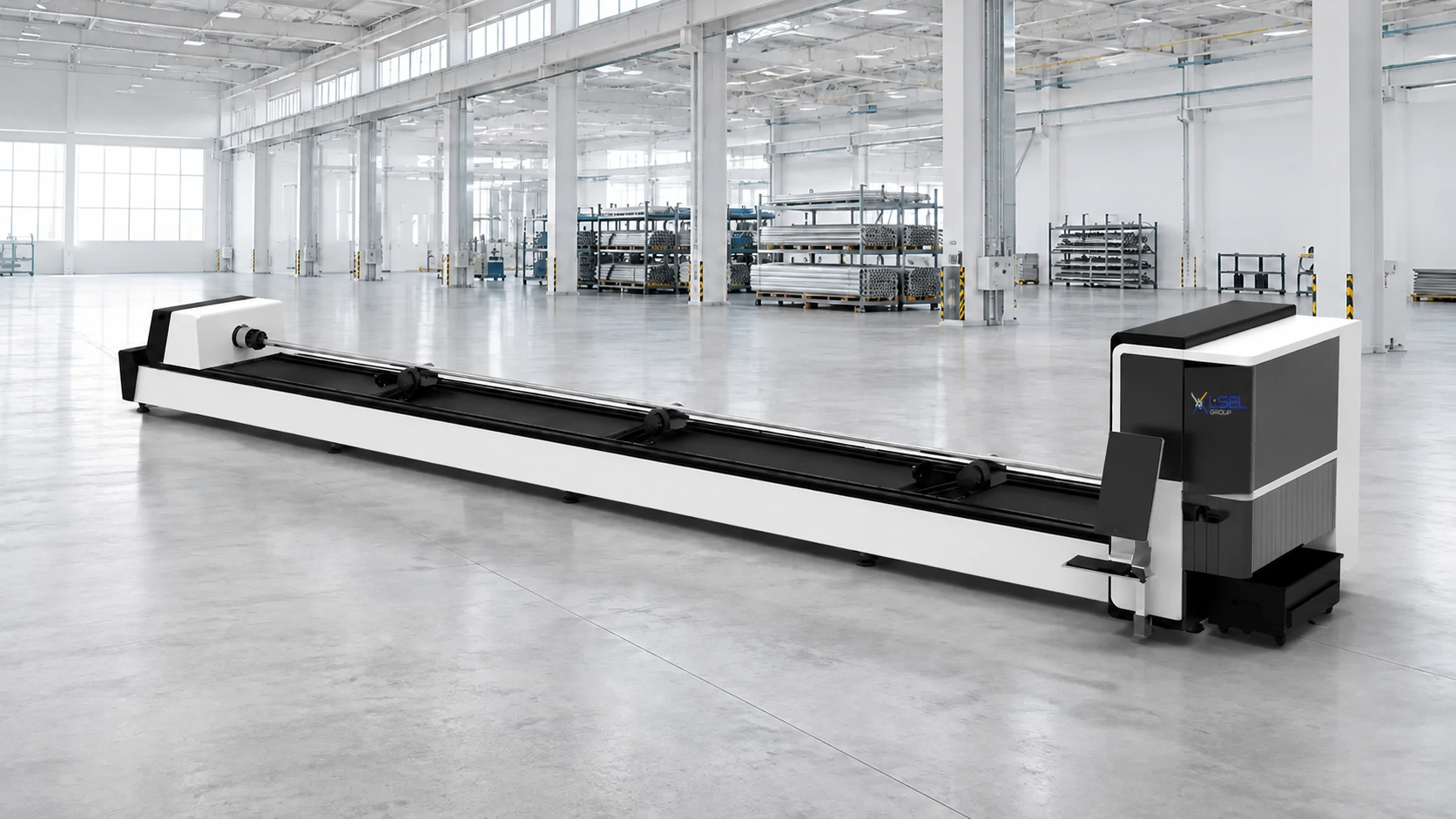
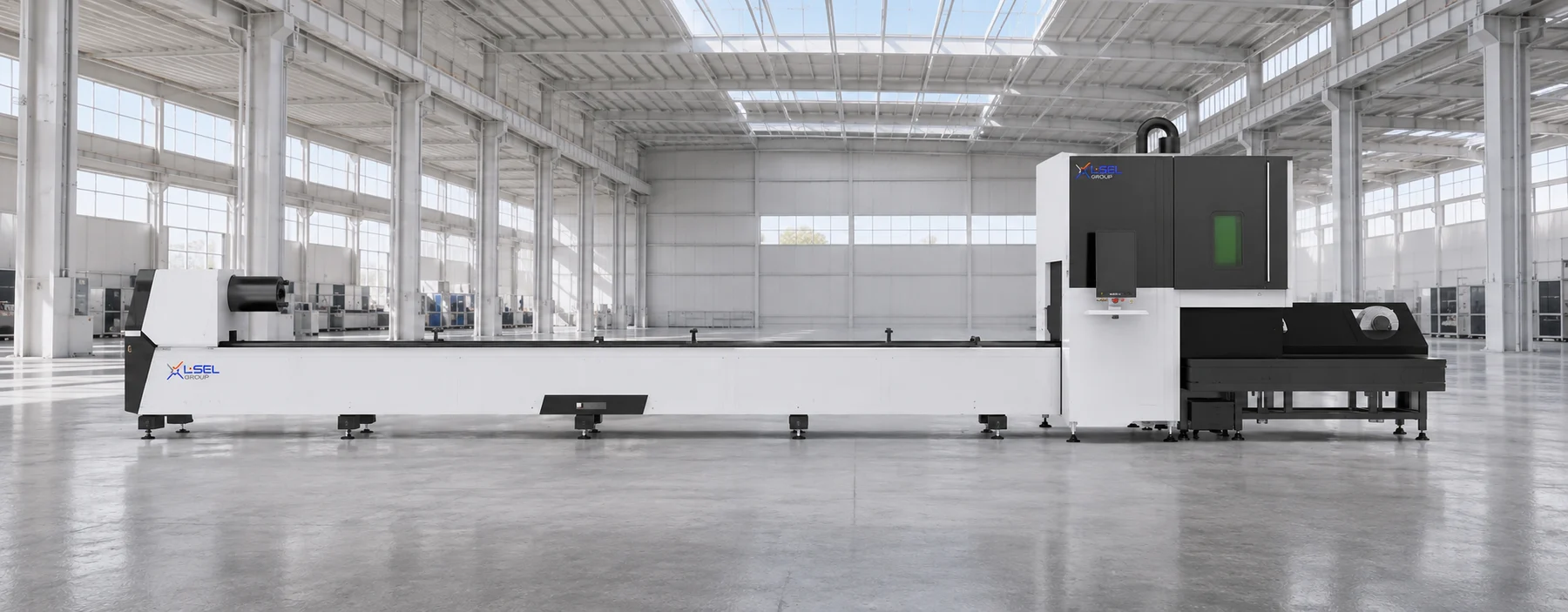 04Laser tube cuttersLaser tube cutters
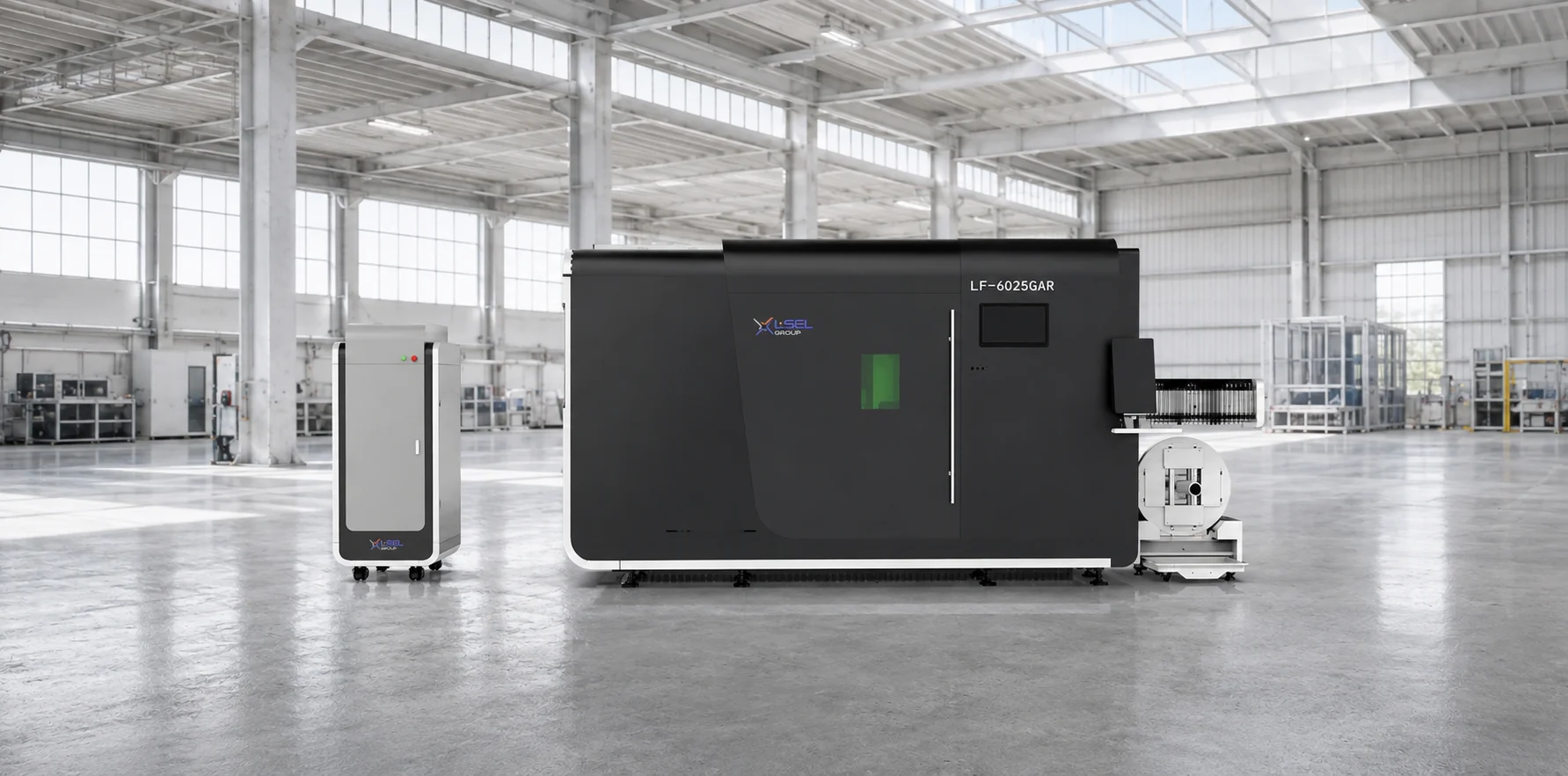 05Sheet-and-tube laser cuttersSheet-and-tube laser cutters
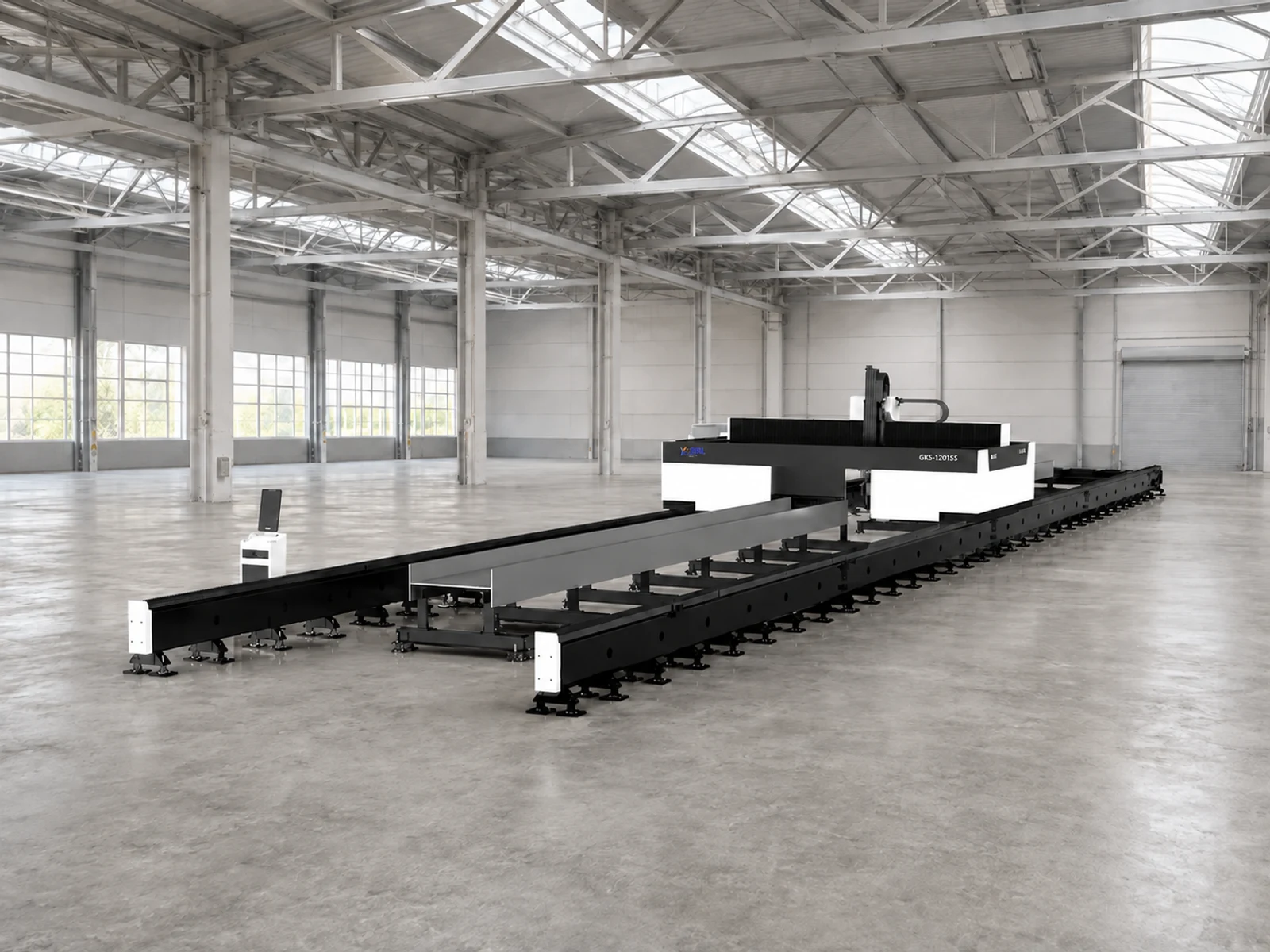 063D and structural-profile laser cutting systems3D and structural-profile laser cutting systems
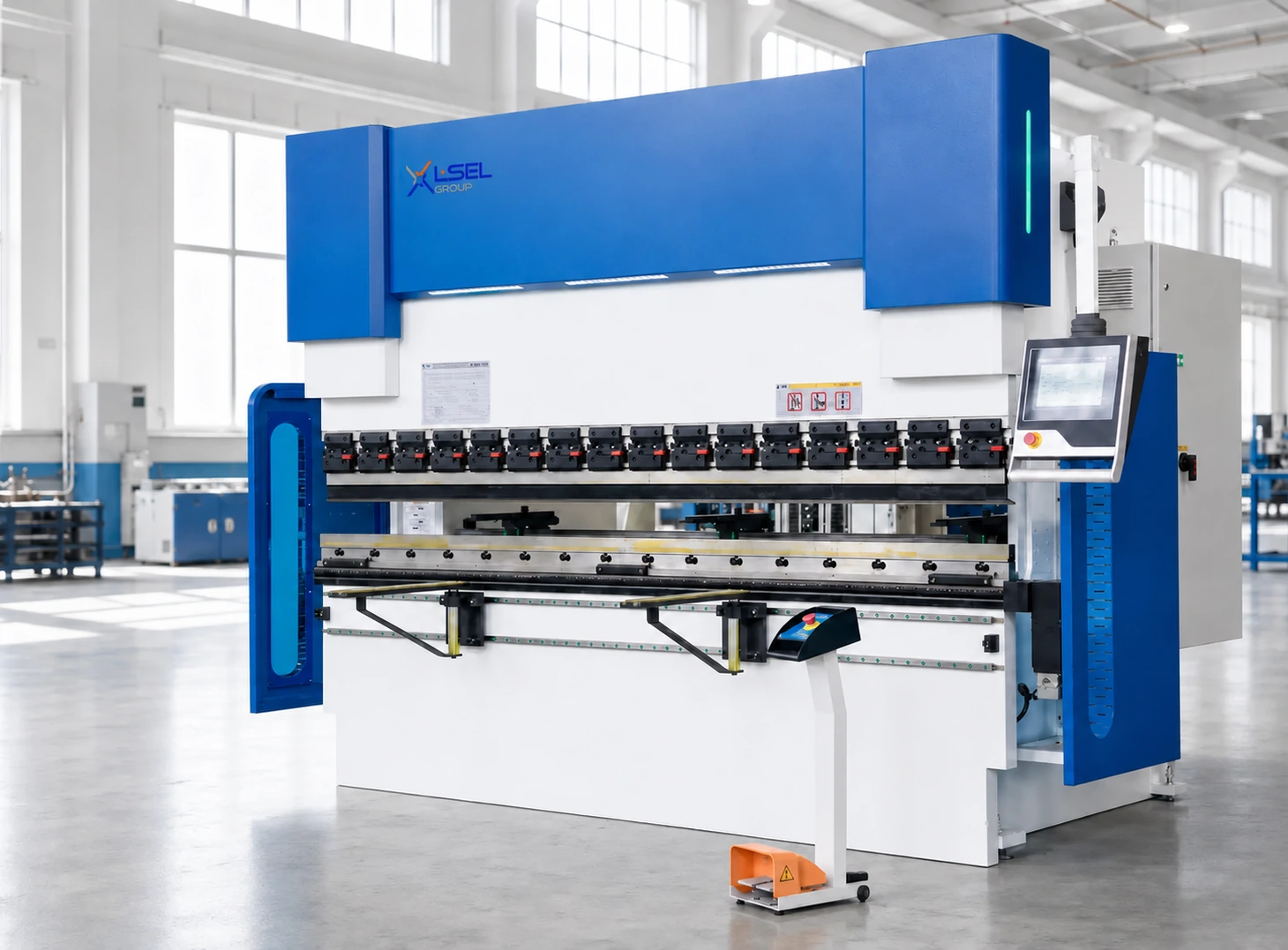 07Bending and forming machinesBending and forming machines
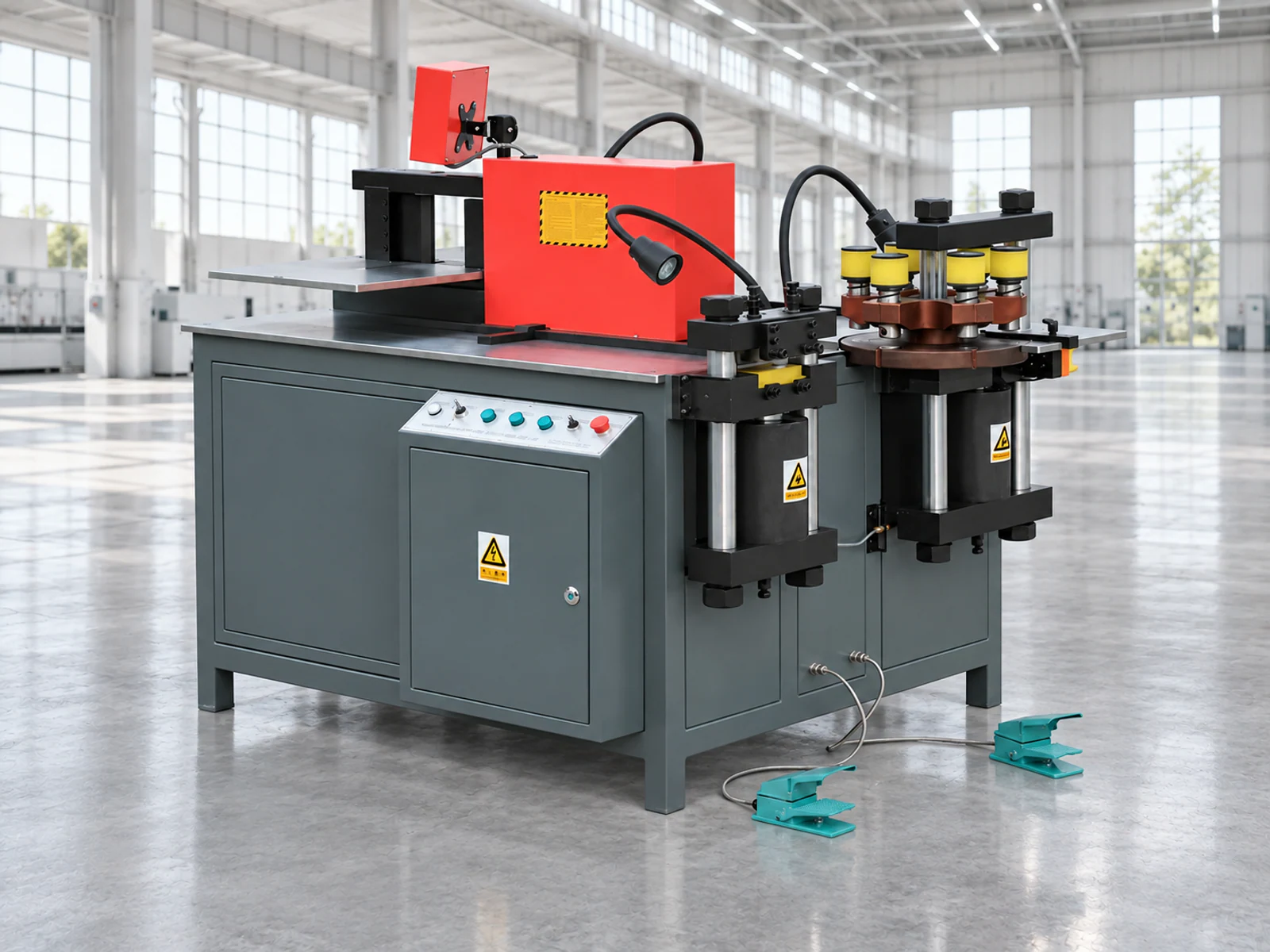 08Sheet and busbar processing machinesSheet and busbar processing machines
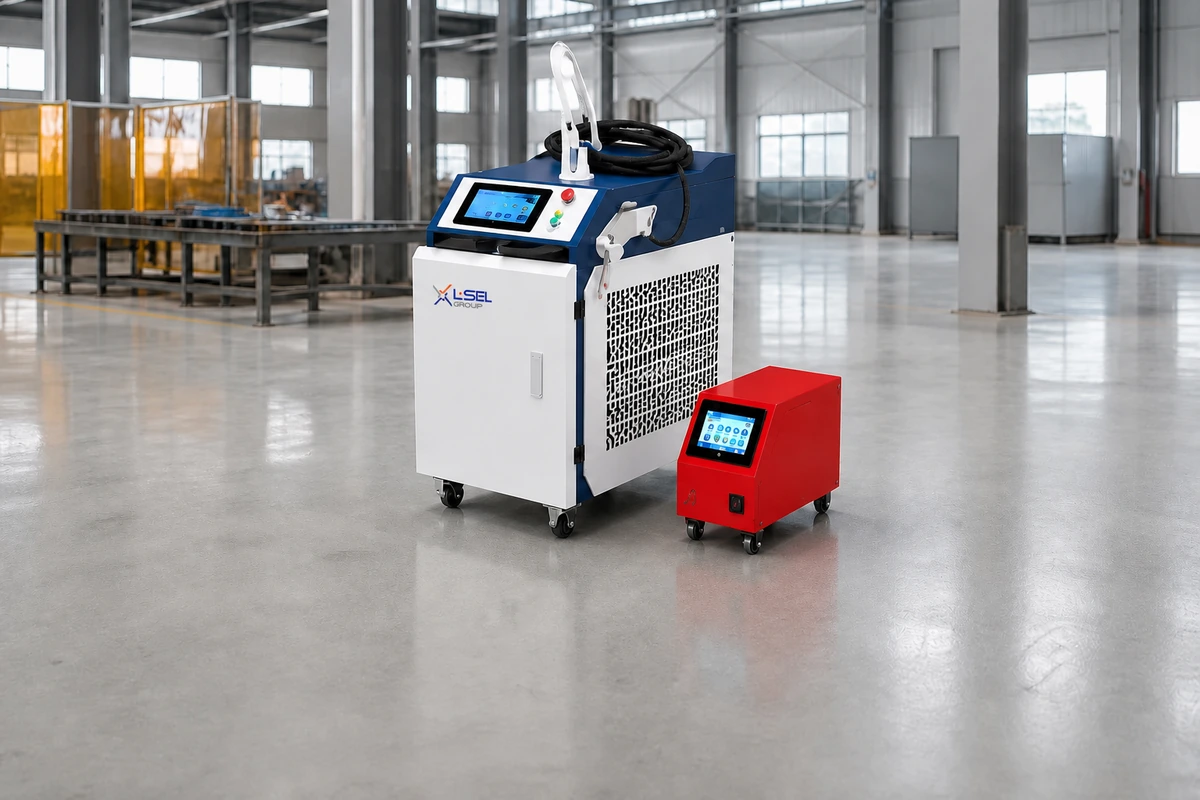 09Laser welding and multifunction systemsLaser welding and multifunction systems
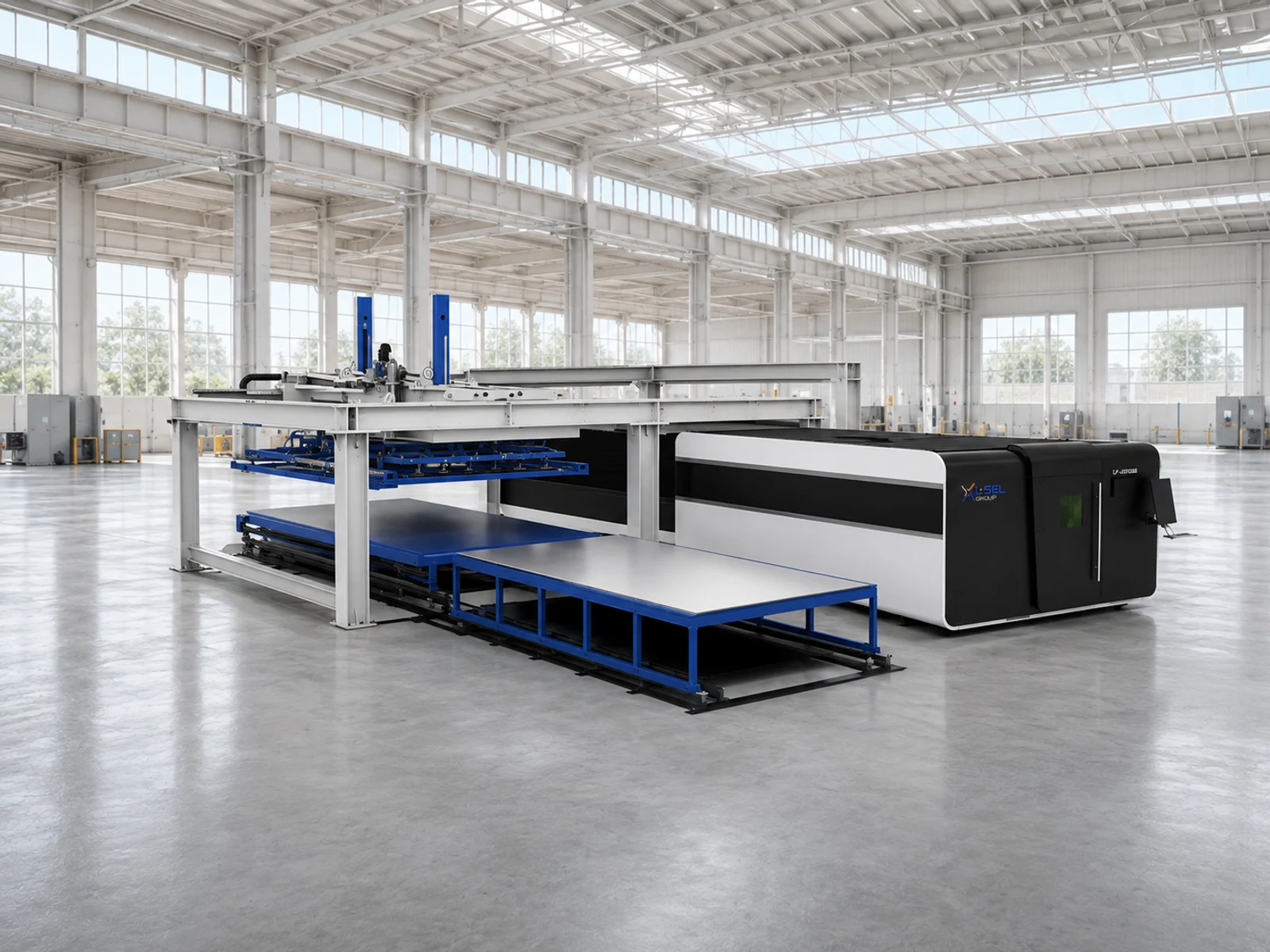 10Automation and robotics systemsAutomation and robotics systems
Equipment selection
What we need to select your equipment
Answers to these questions help remove unnecessary options and avoid underestimating future bottlenecks.
Define technology, power, gas and achievable pace.
Affect the working area, loading arrangement and floor space.
Shows whether flexibility or a specialised high-output line is needed.
Allows stable rather than peak productivity to be calculated.
Electricity, gases, foundation, climate and workshop logistics.
Commissioning, training, consumables and critical spare parts.
An agreed configuration for your production task
We define the process, power, equipment package, automation and site-preparation requirements. Material, thickness, workpiece format, required throughput and future expansion of the production area define the right solution more precisely than a catalogue model name.
Equipment type · power · package · site preparation
Configure the solution→
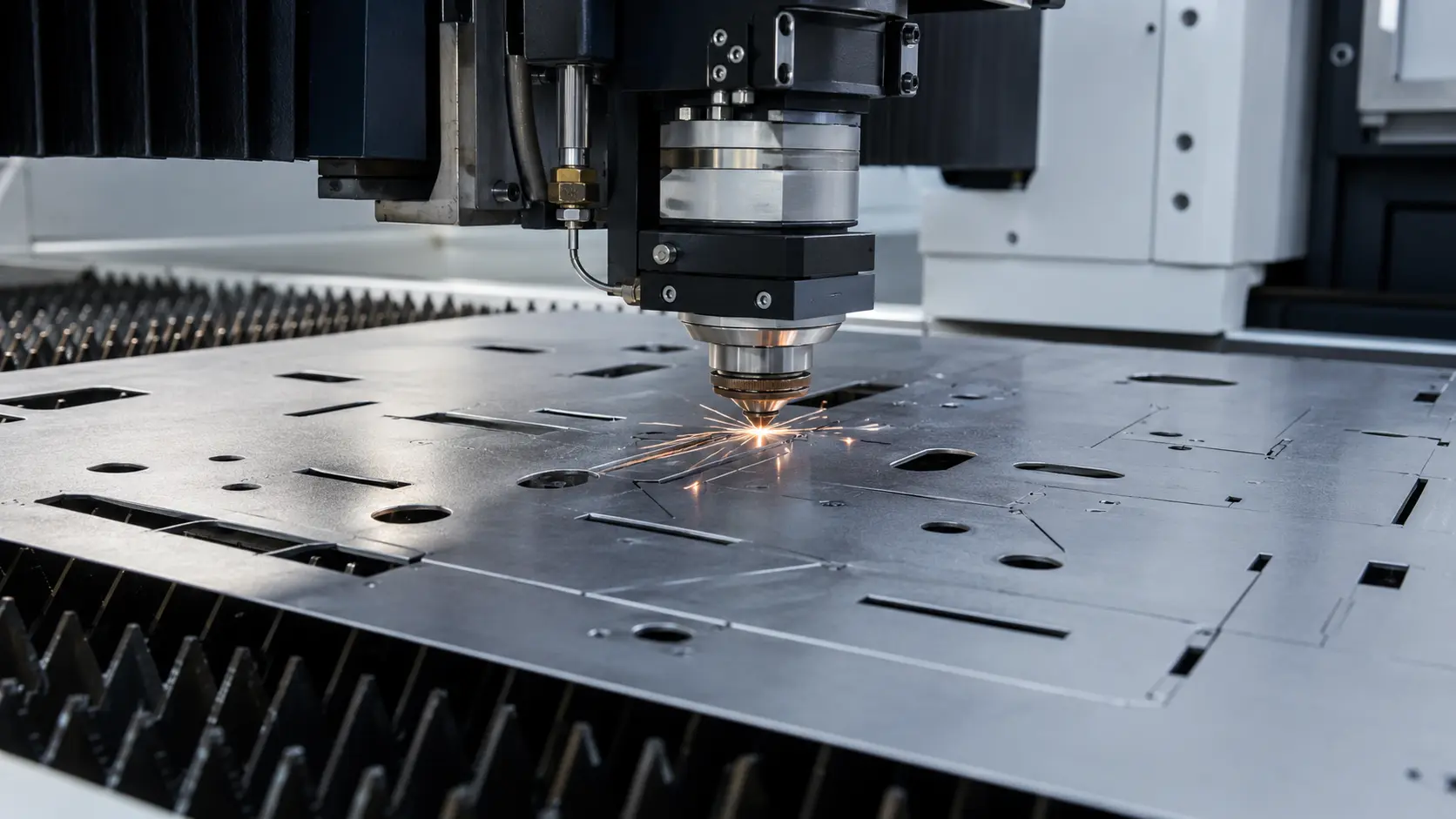
How to Choose a Fiber Laser Cutting Machine for Metal
When a company chooses a fiber laser cutting machine for the first time, the discussion quickly narrows to power: 3, 6, 12, 20 kW, and more. That is understandable — the number is easy to compare, stands out in a quotation, and looks like a direct measure of the machine's capability. In real production, however, laser power is only one part of the system.
Learn moreTechnology built around your result
We select more than a model: we configure the solution for the part, material, batch profile and required production pace.
Delivery is only the middle of the projectThe result comes from installation, setup, training and stable operation in your workshop.
What we need to select your equipment
Answers to these questions help remove unnecessary options and avoid underestimating future bottlenecks.
Define technology, power, gas and achievable pace.
Affect the working area, loading arrangement and floor space.
Shows whether flexibility or a specialised high-output line is needed.
Allows stable rather than peak productivity to be calculated.
Electricity, gases, foundation, climate and workshop logistics.
Commissioning, training, consumables and critical spare parts.
An agreed configuration for your production task
We define the process, power, equipment package, automation and site-preparation requirements. Material, thickness, workpiece format, required throughput and future expansion of the production area define the right solution more precisely than a catalogue model name.
Equipment type · power · package · site preparation
Configure the solution→How to Choose a Fiber Laser Cutting Machine for Metal
When a company chooses a fiber laser cutting machine for the first time, the discussion quickly narrows to power: 3, 6, 12, 20 kW, and more. That is understandable — the number is easy to compare, stands out in a quotation, and looks like a direct measure of the machine's capability. In real production, however, laser power is only one part of the system.
Learn moreTechnology built around your result
We select more than a model: we configure the solution for the part, material, batch profile and required production pace.
Delivery is only the middle of the projectThe result comes from installation, setup, training and stable operation in your workshop.
What our equipment delivers
Quality, pace and flexibility in daily work
Equipment should make everyday work simpler, not add new complexity.
A configured process helps achieve a consistent result across a production run.
Controlled parameters reduce variation between parts.
Technology and tooling can be selected for different tasks.
Material, thickness and the part task guide the technology selection.
The configuration should suit the required volume and operation sequence.
Service and components help keep the working process running.
The result is more than one operation
We consider how the equipment will work with preparation, the next stages and the real workload of the production area.
They define the technology, tooling and operating mode.
They show where flexibility is needed and where a steady pace matters.
We consider preparation, part movement and the process after machining.

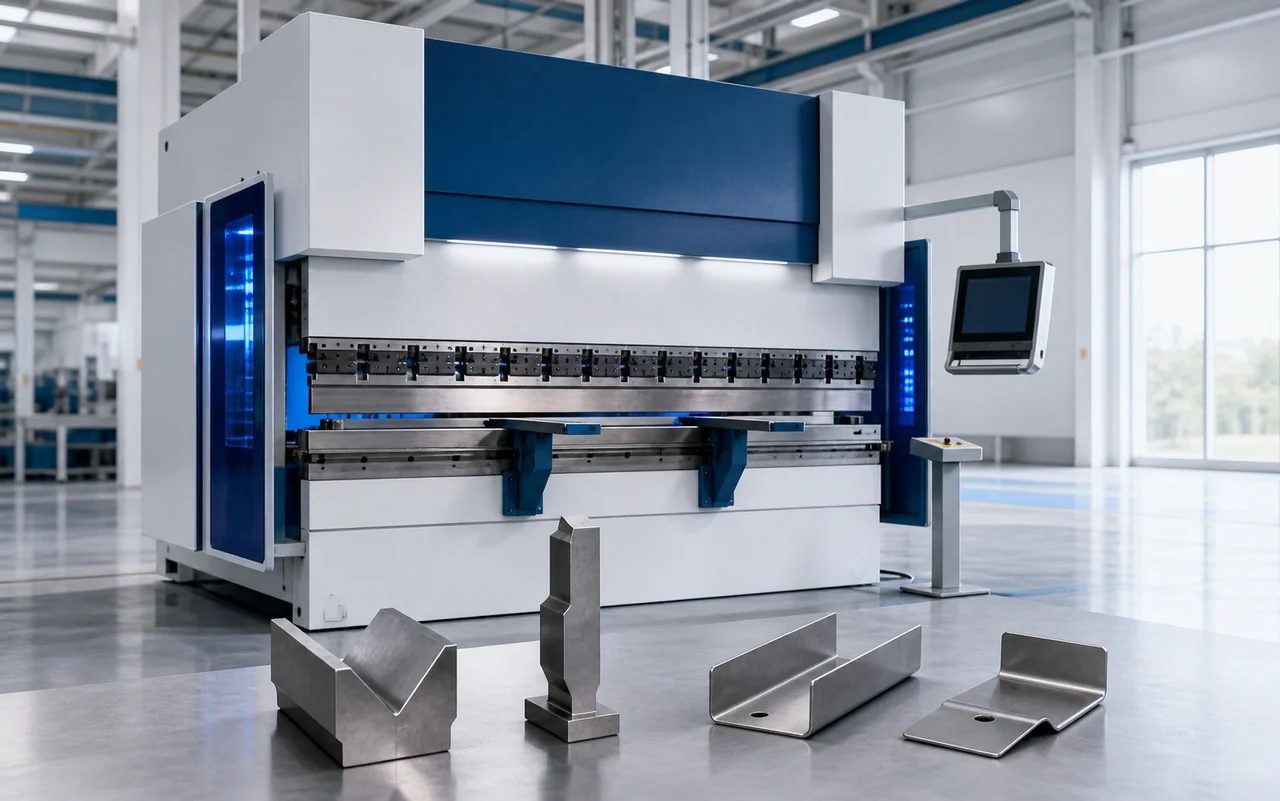
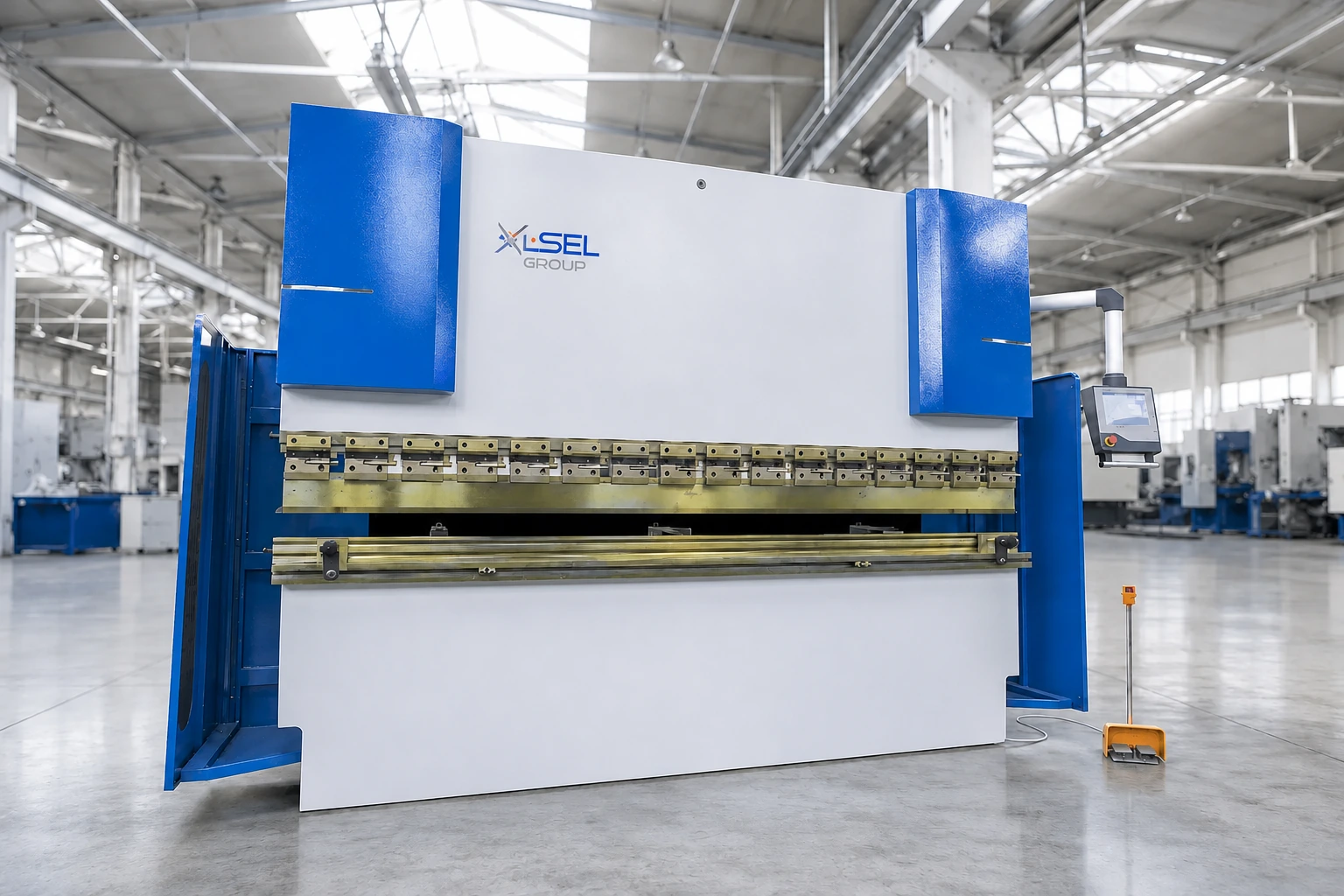
How to Choose a Press Brake: Length, Force, Tooling, and Your Real Part Mix
A press brake is easy to compare by two large numbers: working length and force. In production, however, machine suitability is determined by a much wider set of constraints. A press can have enough nominal tonnage and still fail to suit a part because of a short flange, unsuitable backgauge geometry, interference with the punch, insufficient stroke, or insufficient open height. Conversely, a machine with lower nominal force may process most of the real part mix faster if it better matches the actual bend lengths and changeover pattern.
Learn moreTechnology for your production process
First we define the input, then align the technology, configuration and commissioning.
We select the process for the part, material and required result.
We align equipment, necessary options and production-area preparation.
We plan handover to work, training and the service scope.
Quality, pace and flexibility in daily work
Equipment should make everyday work simpler, not add new complexity.
A configured process helps achieve a consistent result across a production run.
Controlled parameters reduce variation between parts.
Technology and tooling can be selected for different tasks.
Material, thickness and the part task guide the technology selection.
The configuration should suit the required volume and operation sequence.
Service and components help keep the working process running.
The result is more than one operation
We consider how the equipment will work with preparation, the next stages and the real workload of the production area.
They define the technology, tooling and operating mode.
They show where flexibility is needed and where a steady pace matters.
We consider preparation, part movement and the process after machining.
How to Choose a Press Brake: Length, Force, Tooling, and Your Real Part Mix
A press brake is easy to compare by two large numbers: working length and force. In production, however, machine suitability is determined by a much wider set of constraints. A press can have enough nominal tonnage and still fail to suit a part because of a short flange, unsuitable backgauge geometry, interference with the punch, insufficient stroke, or insufficient open height. Conversely, a machine with lower nominal force may process most of the real part mix faster if it better matches the actual bend lengths and changeover pattern.
Learn moreTechnology for your production process
First we define the input, then align the technology, configuration and commissioning.
We select the process for the part, material and required result.
We align equipment, necessary options and production-area preparation.
We plan handover to work, training and the service scope.
Project commissioning
More than equipment: a complete project launch
We align selection, configuration, site preparation, commissioning and service as one project.
We discuss products, operations and equipment requirements.
We define the process, configuration and required tooling.
We document the agreed project scope.
We agree on installation space, connections and logistics.
From a model to a working production area
Supply is only one part of the project. We connect it with installation, setup, training and ongoing support.

From the first conversation to production work
Start with the production task
We consider the part, material, batch size, pace and site conditions. This helps define a working configuration rather than simply choose a model.
Agree the full route
The proposal defines the supply scope, site preparation and commissioning sequence so the stages do not exist separately.
- 01Commissioning
We install, set up and train the team.
- 02Planned maintenance
Scheduled work and equipment checks in production operation.
- 03Diagnostics and support
We help resolve technical questions after commissioning.

What must be included in a technical specification for buying a laser cutting machine
Before writing the specification, answer four questions separately. Which parts must the new equipment produce? What volume and operating pattern are expected? Which operations before and after cutting belong to the same work area? Who will accept the result? Without these answers, the document becomes a wish list that cannot support evaluation of configuration or budget.
Learn moreOne partner for selection, commissioning and service
We begin with the production task and continue supporting the equipment after commissioning.
What stays with us
Technical questions, operator training, planned work and component selection support the real work of the production area.
When the task changes
We help refine the configuration for new parts, volume or operation sequence.
More than equipment: a complete project launch
We align selection, configuration, site preparation, commissioning and service as one project.
We discuss products, operations and equipment requirements.
We define the process, configuration and required tooling.
We document the agreed project scope.
We agree on installation space, connections and logistics.
From a model to a working production area
Supply is only one part of the project. We connect it with installation, setup, training and ongoing support.
From the first conversation to production work
Start with the production task
We consider the part, material, batch size, pace and site conditions. This helps define a working configuration rather than simply choose a model.
Agree the full route
The proposal defines the supply scope, site preparation and commissioning sequence so the stages do not exist separately.
- 01Commissioning
We install, set up and train the team.
- 02Planned maintenance
Scheduled work and equipment checks in production operation.
- 03Diagnostics and support
We help resolve technical questions after commissioning.
What must be included in a technical specification for buying a laser cutting machine
Before writing the specification, answer four questions separately. Which parts must the new equipment produce? What volume and operating pattern are expected? Which operations before and after cutting belong to the same work area? Who will accept the result? Without these answers, the document becomes a wish list that cannot support evaluation of configuration or budget.
Learn moreOne partner for selection, commissioning and service
We begin with the production task and continue supporting the equipment after commissioning.
What stays with us
Technical questions, operator training, planned work and component selection support the real work of the production area.
When the task changes
We help refine the configuration for new parts, volume or operation sequence.
Equipment catalogue
Open sheet laser cutters
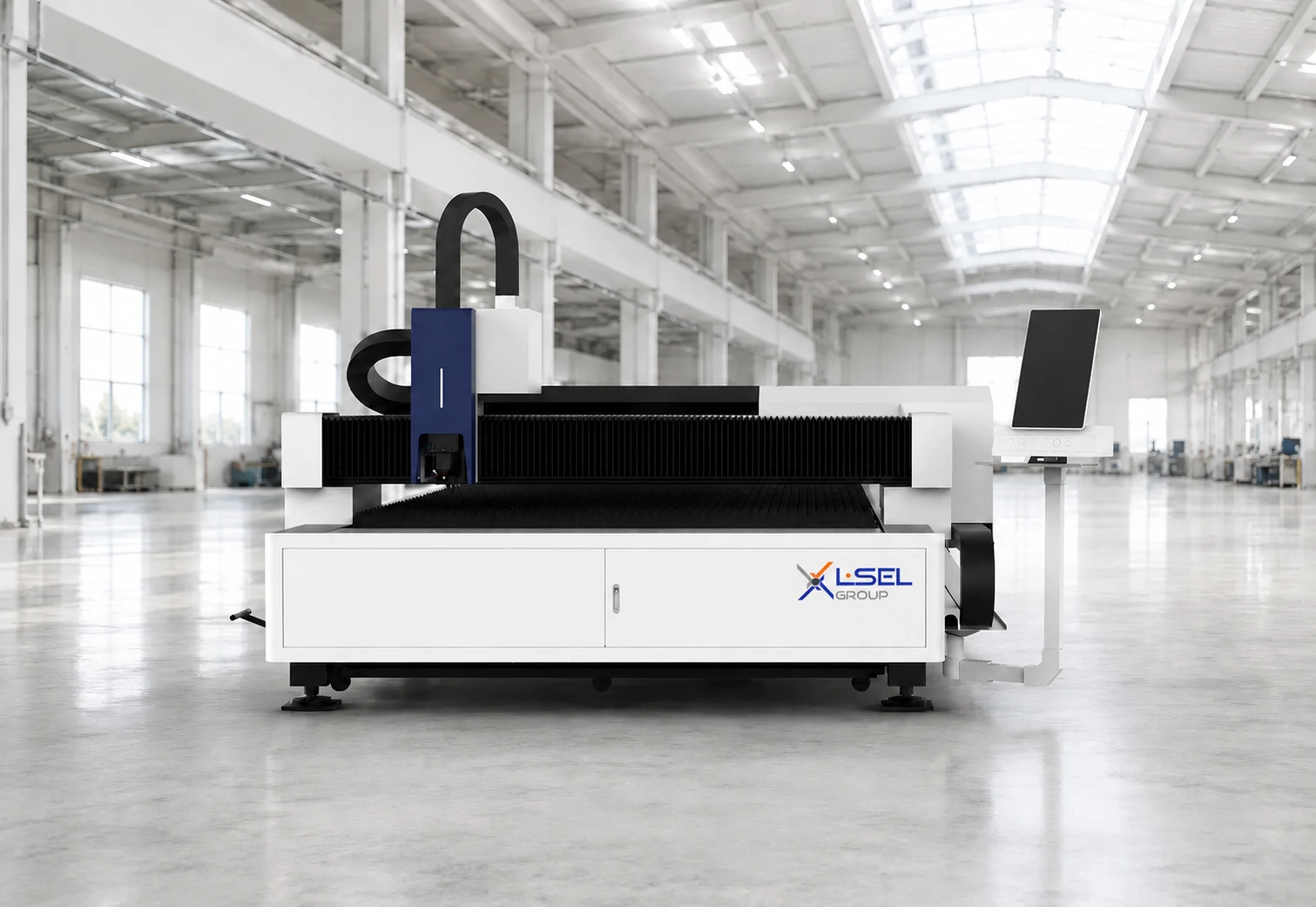
LF3015CN
Article: 10001
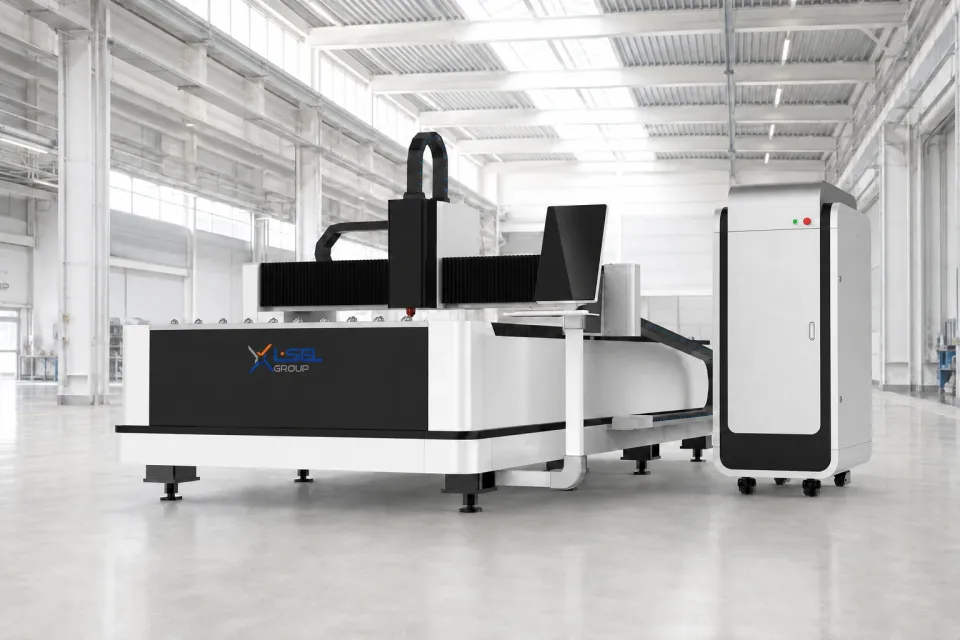
Open-bed sheet laser
A single open 3000 × 1500 mm table with direct sheet access. A model for straightforward stock logistics and a configuration matched to the actual job.
- Source power, kW
- 1 / 2 / 3 / 4 / 6
- Working area, mm
- 3000 × 1500
- Layout
- Open bed
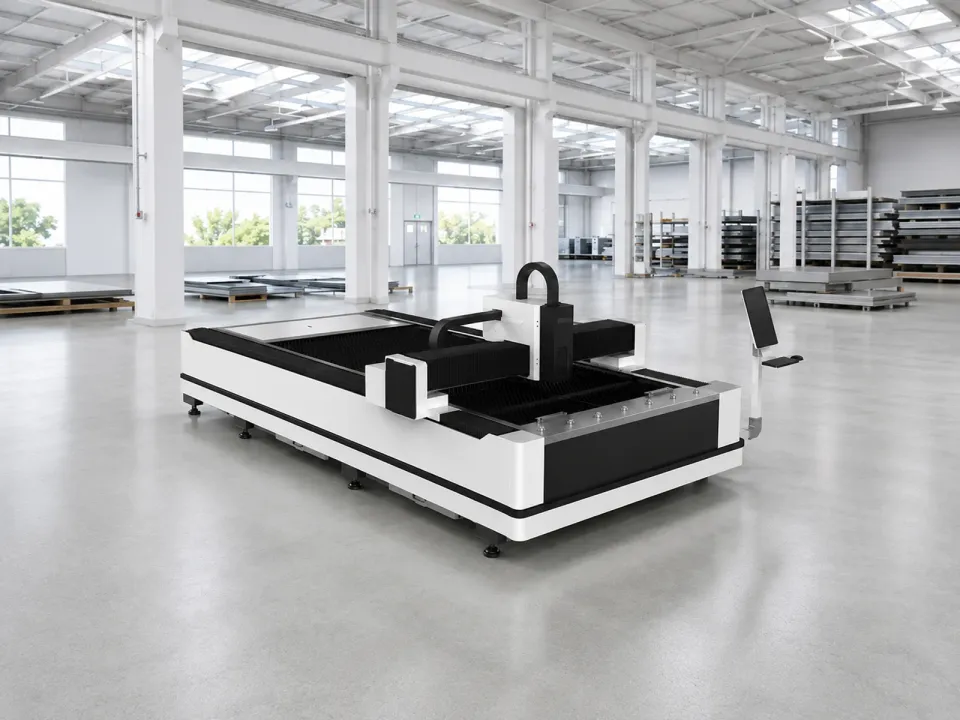
LF3015LN, LF4020LN, LF6025LN
Article: 10004
Open-bed sheet laser
An open-access working area in several standard formats. A sheet cutting series configured for your application.
- Source power, kW
- 1–12
- Formats, mm
- 3050 × 1520 — 6100 × 2550
- Layout
- Open bed
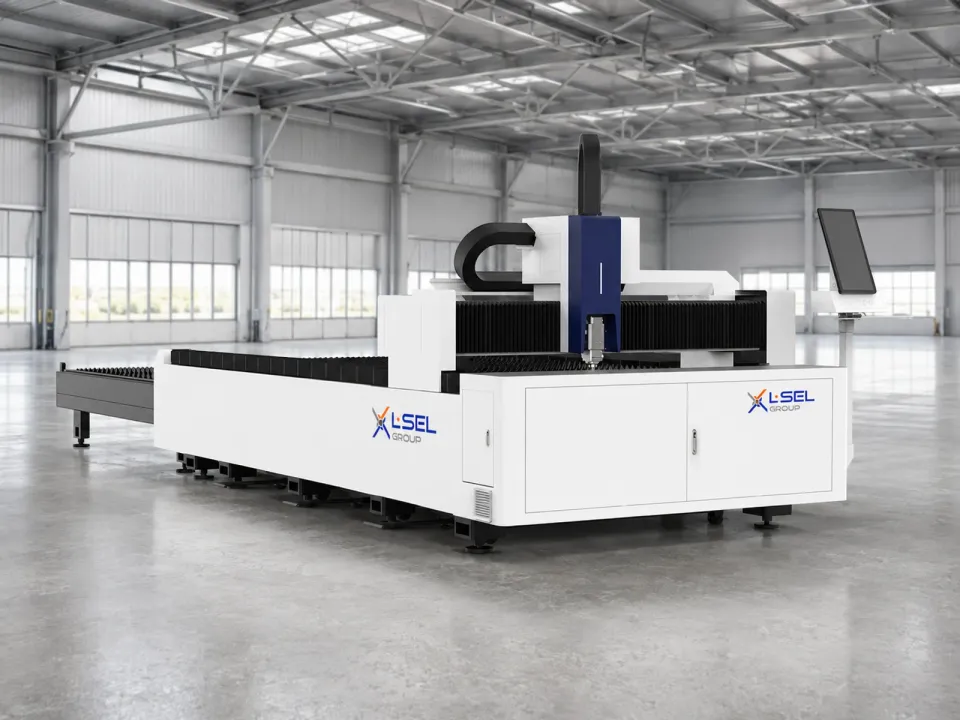
MK-3015E, MK-4020E, MK-6020E, MK-6025E, MK-8025E
Article: 10059
Exchange-table sheet laser
An open cutting area with exchange tables for sheet-metal parts. Preparation of the next sheet can be organized separately from the current cutting job.
- Source power, kW
- 1.5–30
- Formats, mm
- 3000 × 1500 — 8000 × 2500
- Layout
- Open, exchange tables
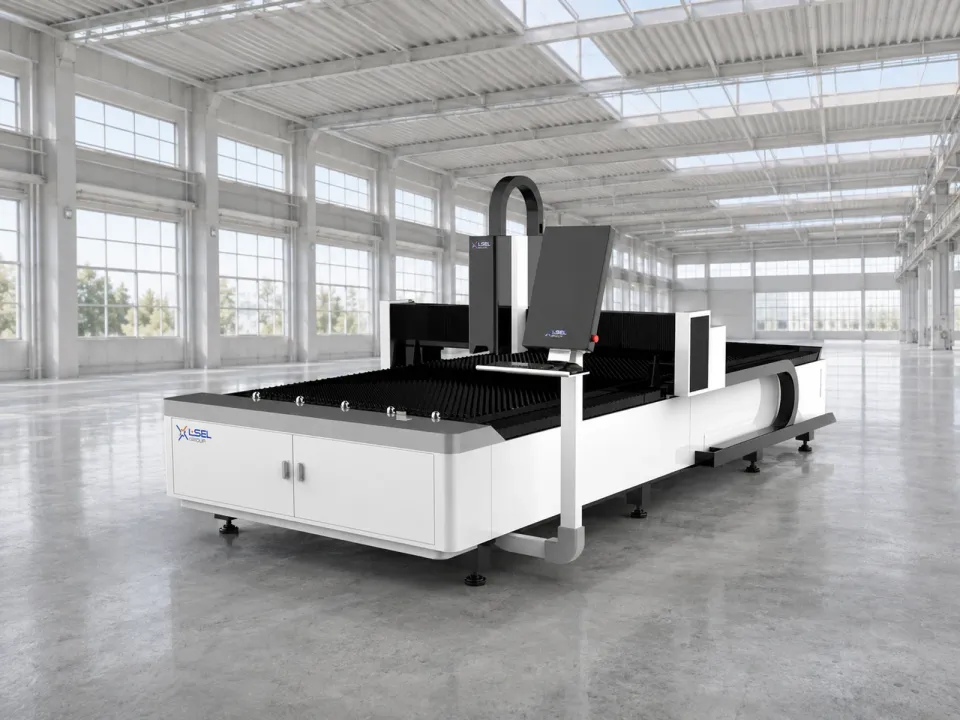
LF3015E Pro
Article: 10015
Compact open-bed sheet laser
A 3050 × 1530 mm working area and a choice of 1–3 kW sources. A practical open series for in-house standard-sheet cutting and varied small production batches.
- Source power, kW
- 1–3
- Working area, mm
- 3050 × 1530
- Layout
- Open bed
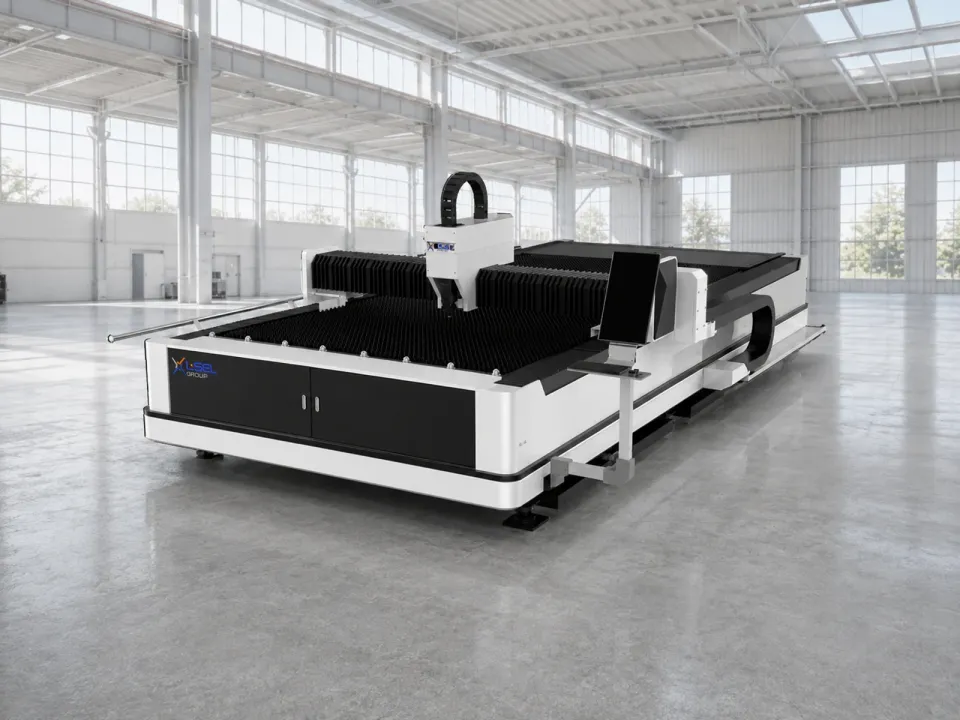
LF3015CV, LF4020CV
Article: 10014
Open single-table laser
One open working platform, direct sheet access and a 3 or 6 kW source. The series combines convenient loading with dynamic cutting-head motion.
- Source power, kW
- 3 / 6
- Formats, mm
- 3050 × 1530 / 4100 × 2050
- Layout
- Open bed
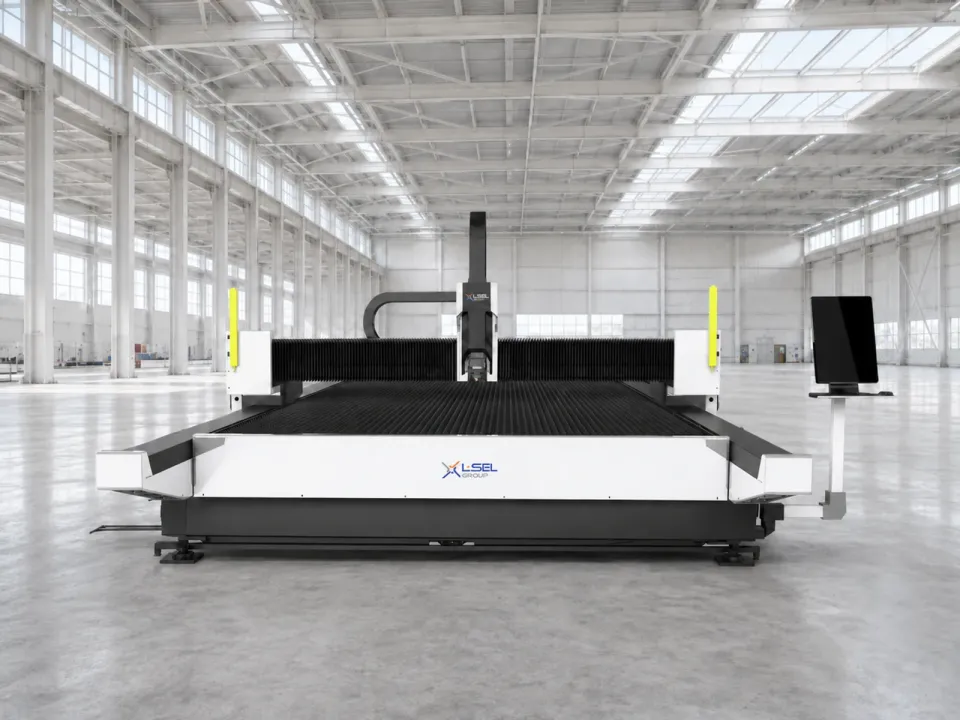
26031SE, 24031SE, 13031SE
Article: 10046
Large-format sheet laser
An open system for long sheets with a 3200 mm working width. For parts that are inconvenient to split to suit a standard short bed.
- Source power, kW
- 12–40
- Formats, mm
- 13100 × 3200 — 26200 × 3200
- Layout
- Open bed
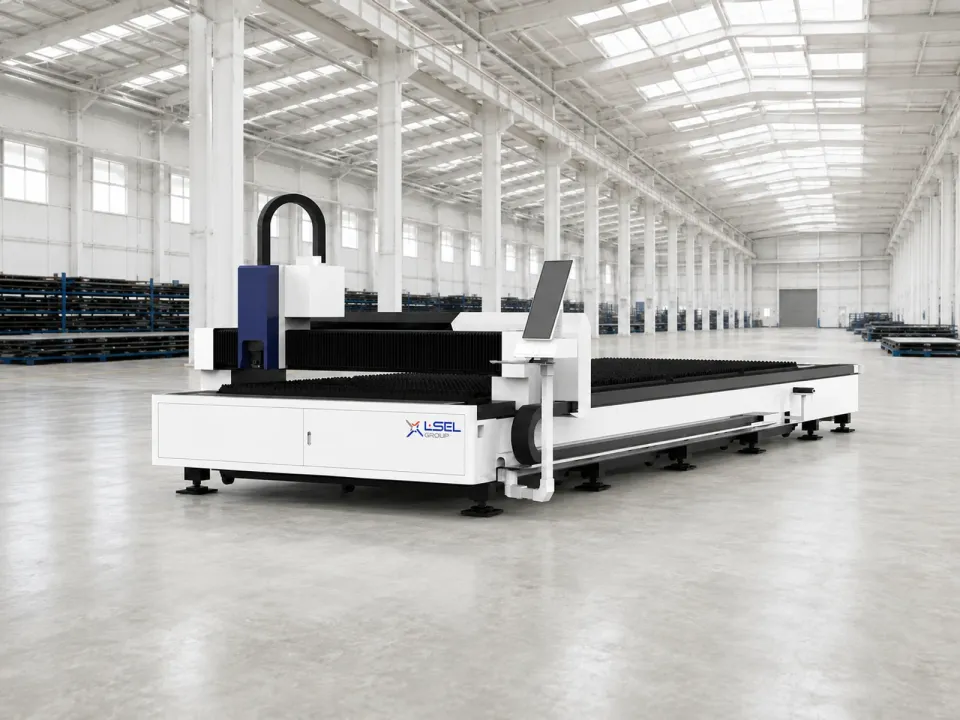
MK-3015S, MK-4020S, MK-6020S, MK-6025S
Article: 10002
Open-bed sheet laser
An open table with direct access to the sheet. A series for manufacturers who need convenient loading and a choice of standard blank formats.
- Source power, kW
- 1.5–30
- Formats, mm
- 3000 × 1500 — 6000 × 2500
- Layout
- Open bed
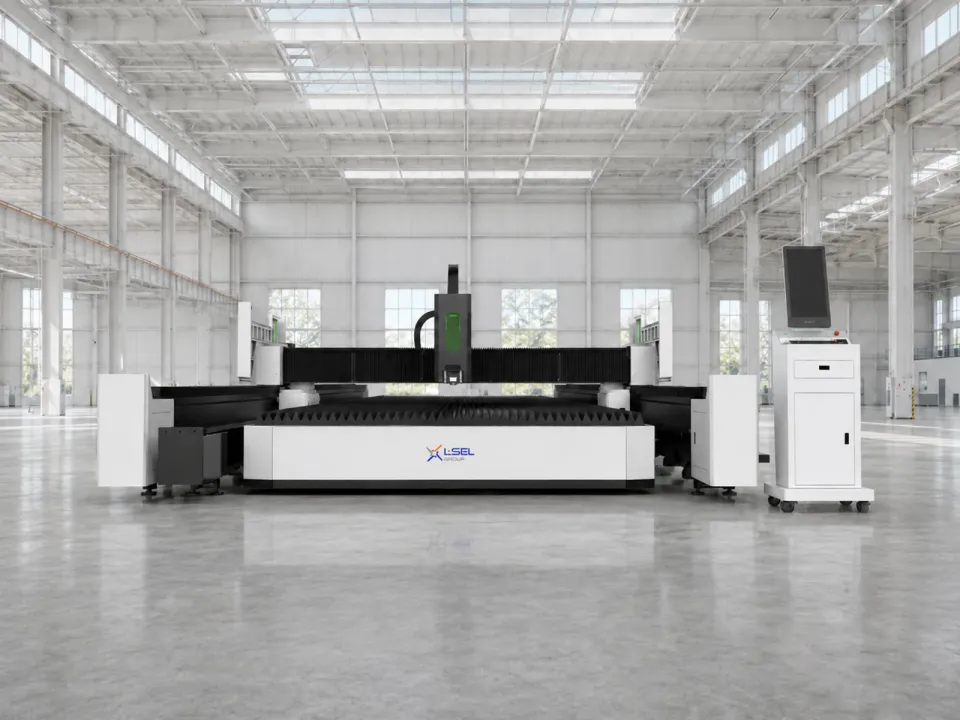
16032SL, 24032SL
Article: 10047
Modular large-format laser
Long-sheet cutting on a 16 or 24 metre bed. A modular platform for oversized parts and high-power sources.
- Source power, kW
- 30–135
- Formats, mm
- 16000 × 3200 / 24000 × 3200
- Layout
- Open bed
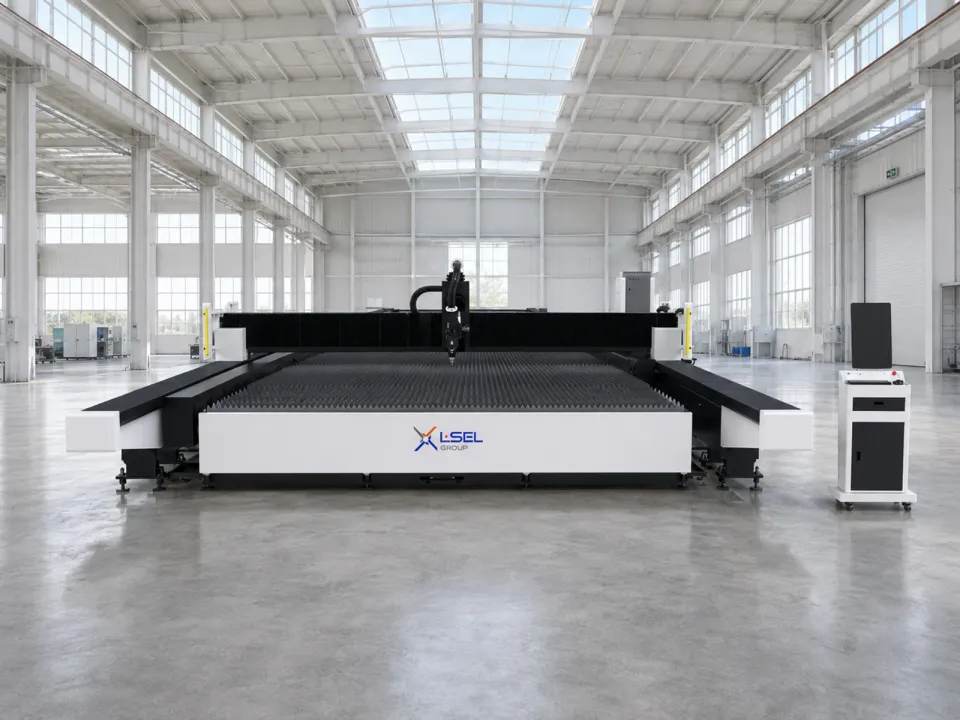
GKS14040SA, GKS40040SA, GKS60060SA
Article: 10048
Ultra-wide sheet laser
Large working areas for long and wide parts. Factory formats reach 60000 × 6000 mm, with an individually planned production area.
- Source power, kW
- 30–135
- Formats, mm
- 14000 × 4000 — 60000 × 6000
- Layout
- Open bed
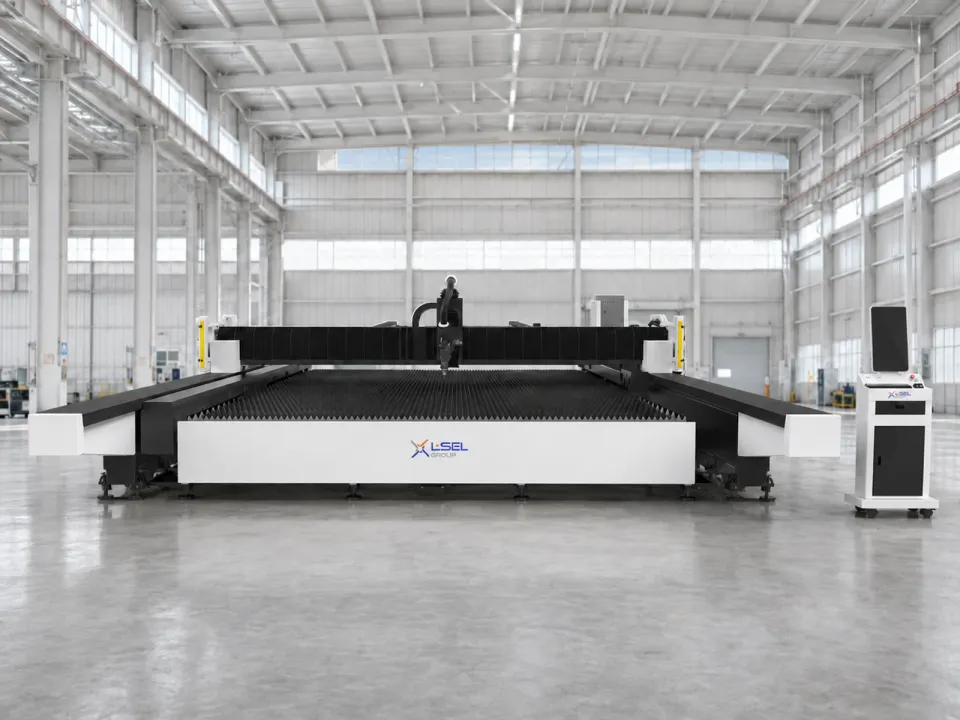
10050SAG, 12040SAG, 14040SAG, 16040SAG, 40040SAG, 60060SAG
Article: 10051
Laser with a custom large working area
Wide-format cutting with a selected working length and width. For large parts requiring coordinated loading, cutting and unloading arrangements.
- Source power, kW
- 12–135
- Custom series envelope: length × width, m
- 6–60 × 4–6
- Layout
- Open bed
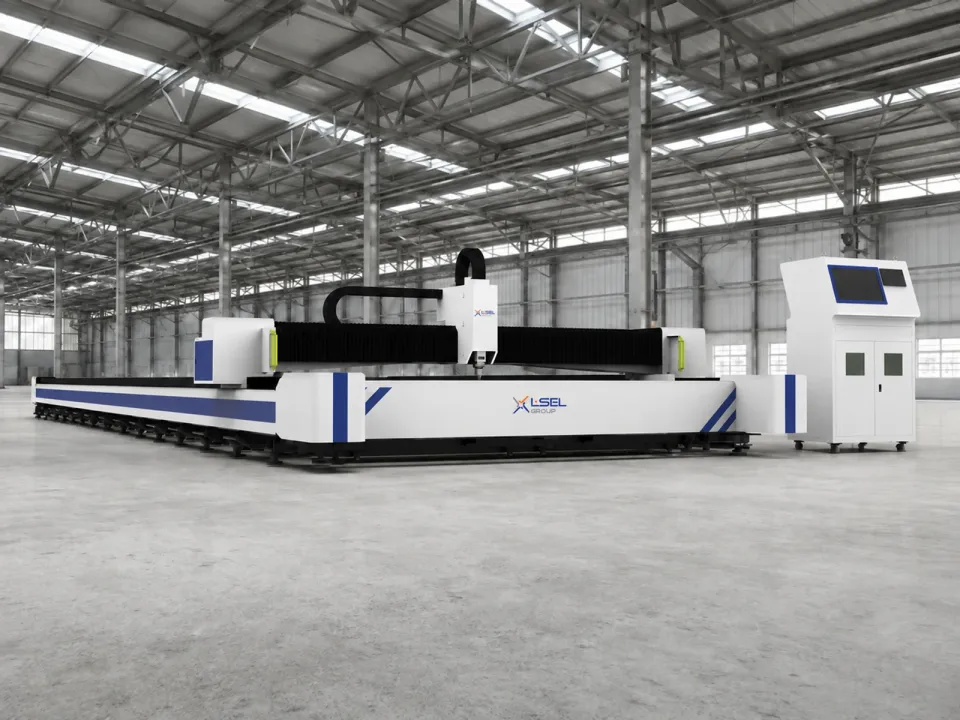
MK-H
Article: 10063
Large-format ground-rail laser
A modular open system for long sheets and large flat parts. Working-area length and width are specified around the production task.
- Source power, kW
- ≤80
- Layout
- Modular bed
- Control
- CNC
Enclosed sheet laser cutters
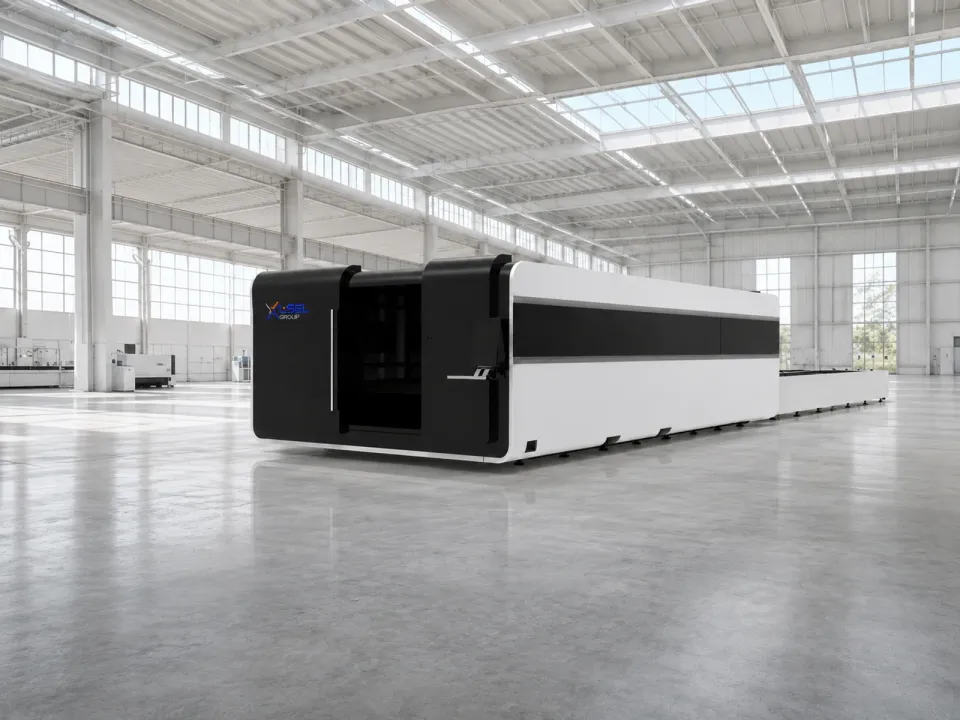
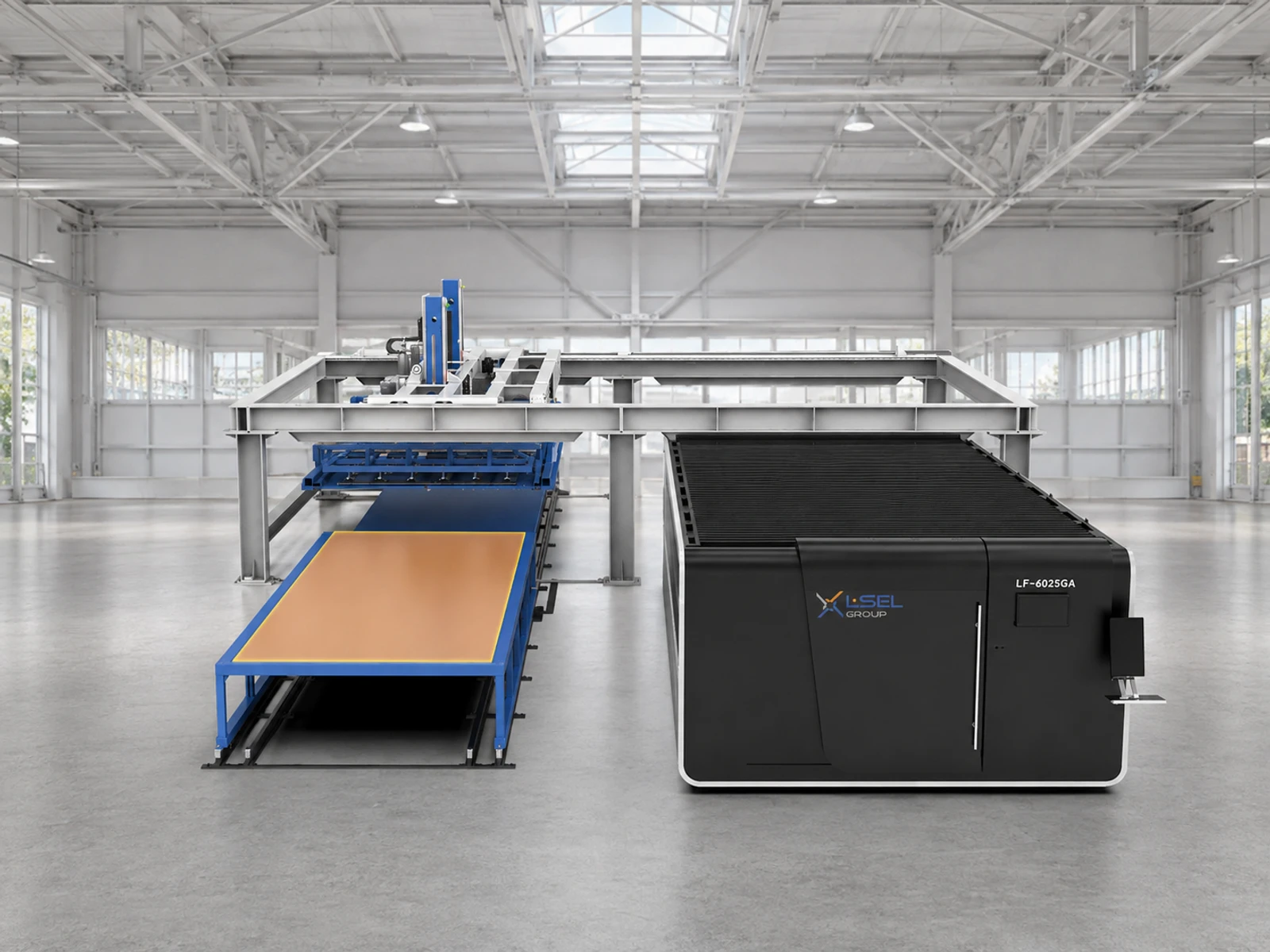
LF3015GA, LF4020GA, LF6025GA
Article: 10003
Enclosed laser with exchange tables
A protective enclosure and exchange tables for organised sheet processing. While the machine cuts on one table, the other can be prepared for the next cycle.
- Source power, kW
- 1.5–12
- Formats, mm
- 3050 × 1530 — 6050 × 2530
- Layout
- Enclosed, exchange tables
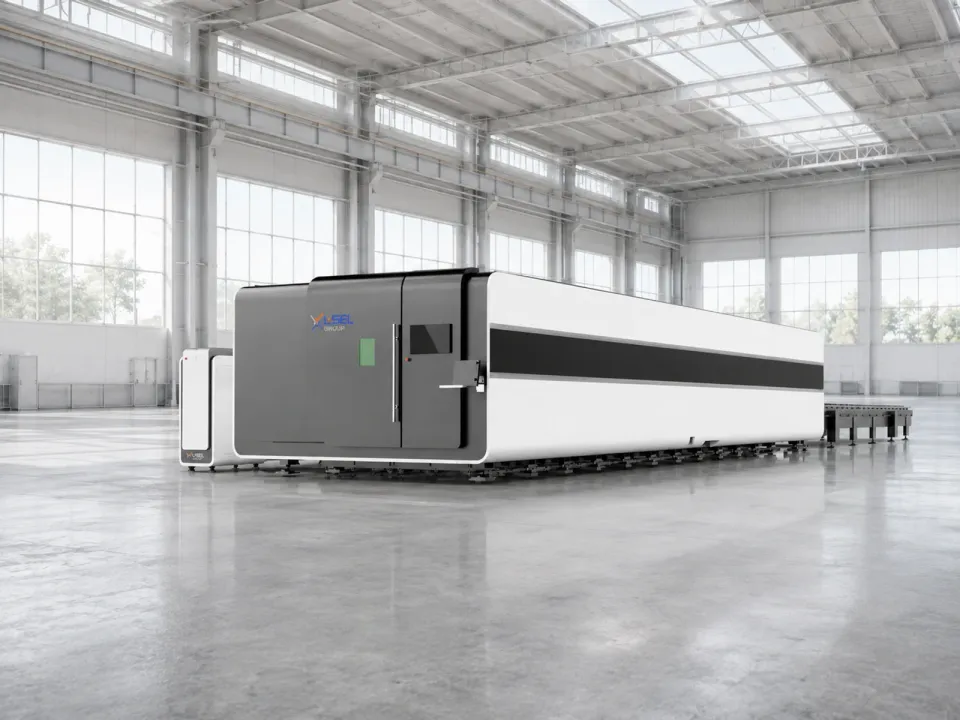
LF4020GH, LF6025GH, LF12025GH
Article: 10012
High-power enclosed sheet laser
An enclosed system for large sheets and demanding production workloads. Three working formats and 8–60 kW sources allow configuration around the material and required cutting output.
- Source power, kW
- 8–60
- Formats, mm
- 4050 × 2030 — 12500 × 2550
- Layout
- Enclosed, exchange tables
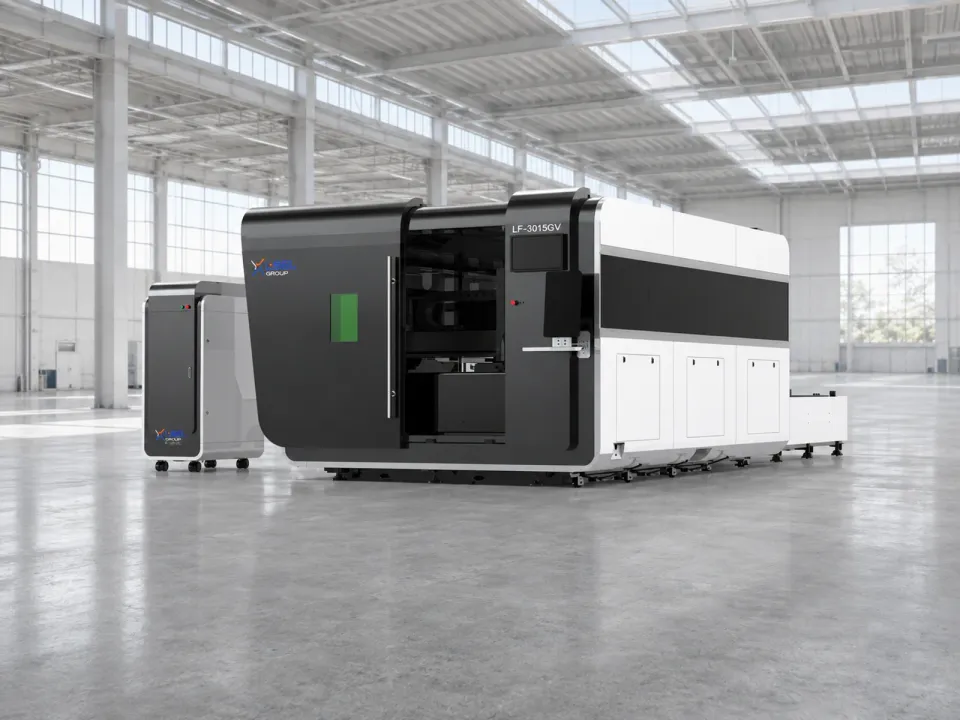
LF-3015GV, LF-4020GV, LF-6020GV
Article: 10013
High-dynamic enclosed laser
An enclosed sheet series with 3, 6 or 12 kW power. For manufacturers seeking shorter auxiliary moves between contours and an organised flow of sheet metal parts.
- Source power, kW
- 3 / 6 / 12
- Formats, mm
- 3050 × 1530 — 6030 × 2030
- Workpiece mass, kg
- 1200–3200
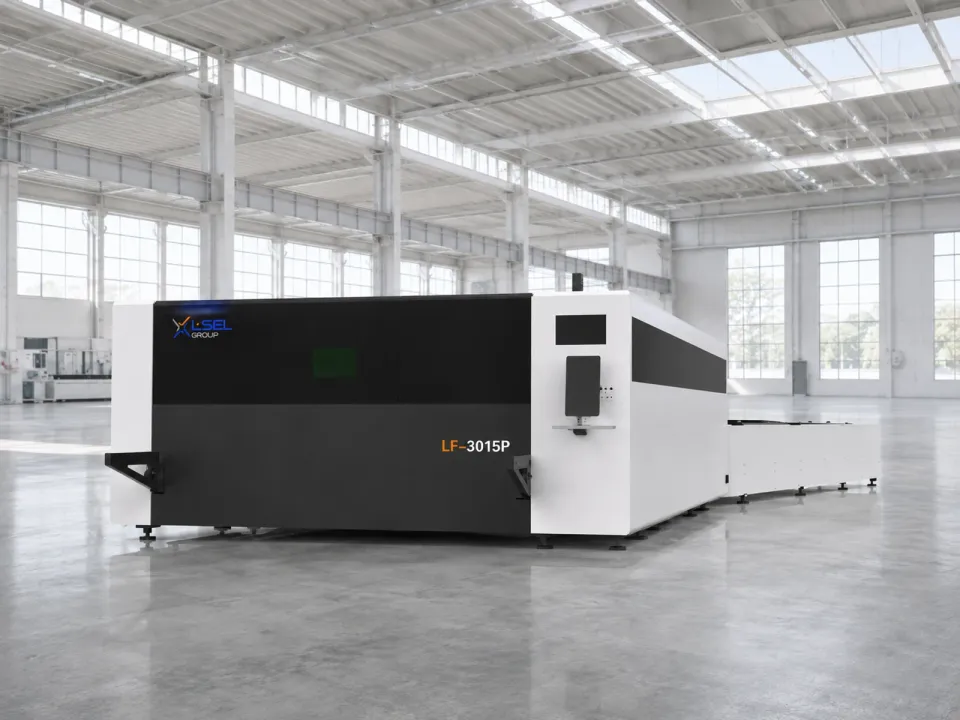
LF3015P
Article: 10016
Compact enclosed sheet laser
An enclosed machine with a 3000 × 1500 mm working area and a source in the 1–6 kW range. For standard-sheet cutting where a protective enclosure and compact work area are needed.
- Source power, kW
- 1–6
- Working area, mm
- 3000 × 1500
- Workpiece mass, kg
- 500
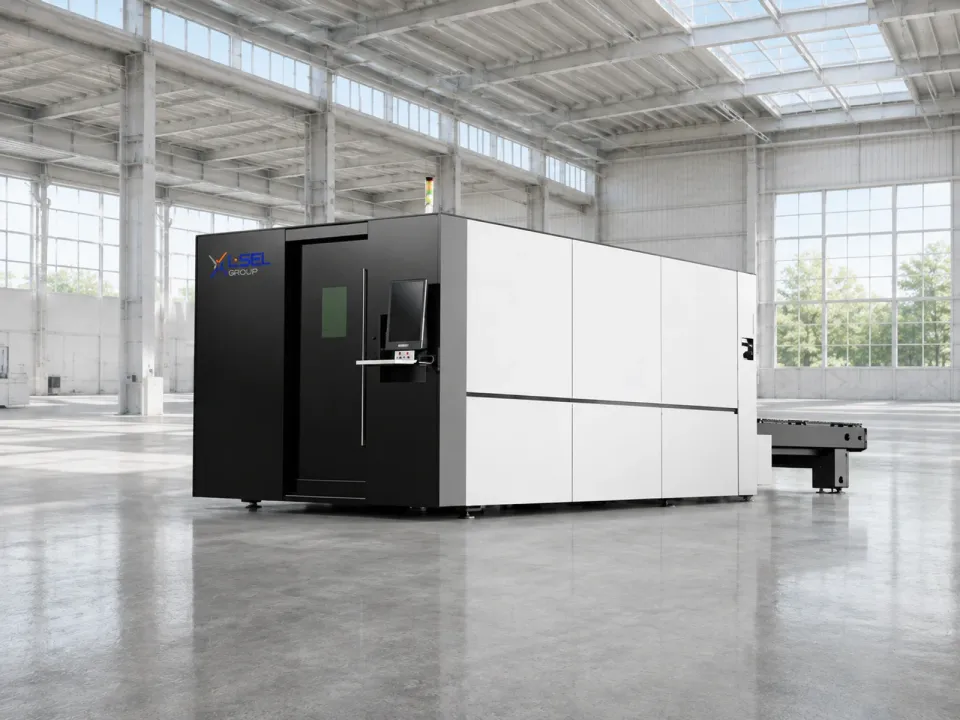
GA III
Article: 10017
Enclosed laser with exchange tables
A third-generation sheet series with an enclosure, exchange platforms and 3, 6 or 12 kW power. For organised cutting with the next sheet prepared outside the active cutting zone.
- Source power, kW
- 3 / 6 / 12
- Formats, mm
- 3050 × 1500 — 6050 × 2530
- Layout
- Enclosed, exchange tables
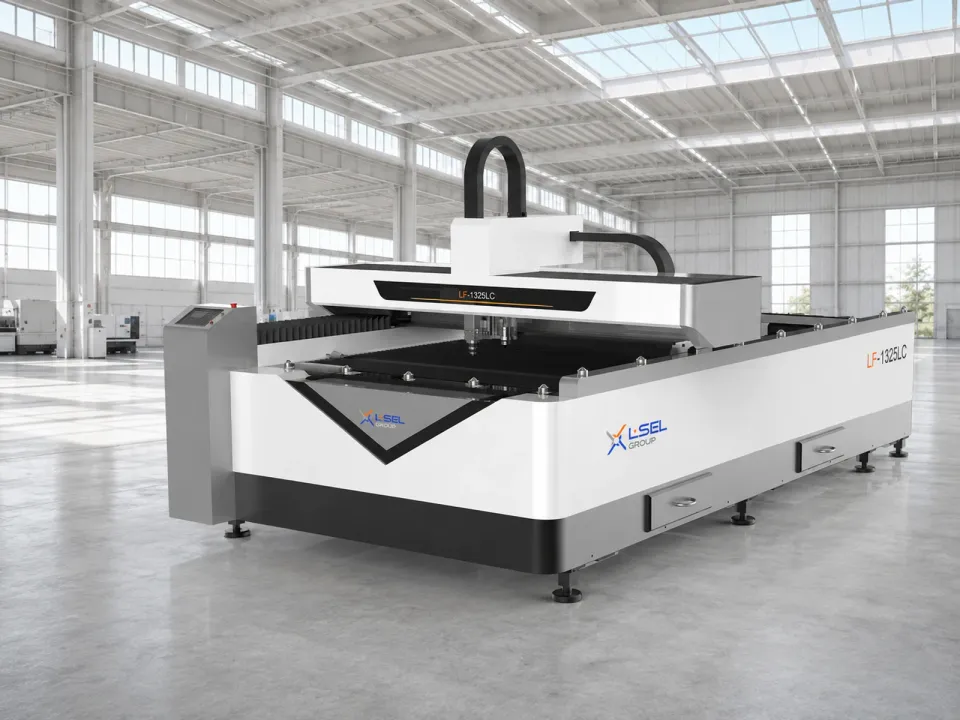
LF1325LC
Article: 10024
Metal and non-metal laser
An open 2500 × 1300 mm platform with two different sources: 500 W fiber and 150 W CO₂. For workshops processing thin metal alongside non-metal materials suitable for laser cutting.
- Working area, mm
- 2500 × 1300
- Fiber source, kW
- 0.5
- CO₂ source, kW
- 0.15
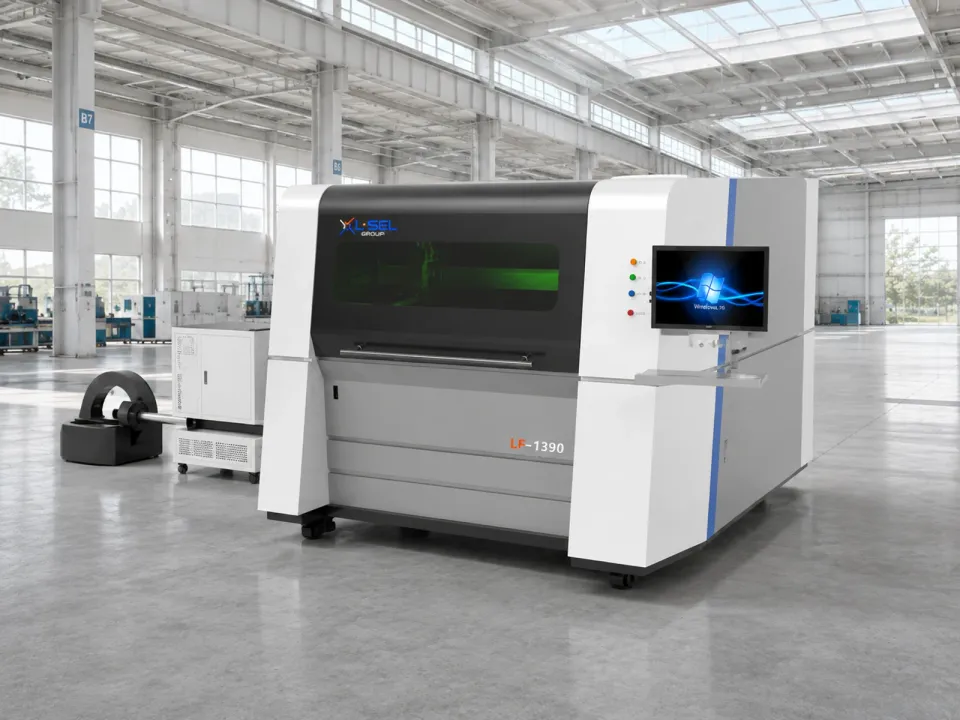
LF1390
Article: 10025
Compact enclosed laser
A 1300 × 900 mm working area for smaller sheet parts. An enclosed body and screw drives suit a cell where a standard full-size sheet laser does not match the main product dimensions.
- Working area, mm
- 1300 × 900
- Source power, kW
- 0.5–3
- Positioning repeatability, mm
- ±0.02
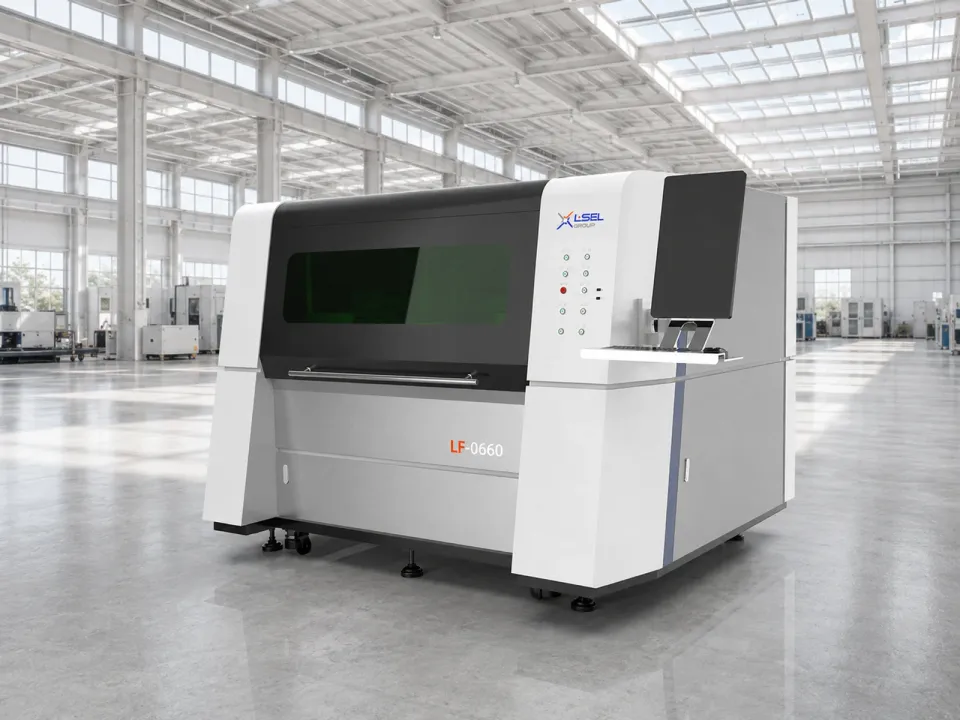
LF0660
Article: 10026
Small-part laser
An enclosed fiber system with a 600 × 600 mm working area. A compact format for small blanks, development parts and batches that do not require a full-size sheet table.
- Working area, mm
- 600 × 600
- Source power, kW
- 0.5–3
- Positioning repeatability, mm
- ±0.02
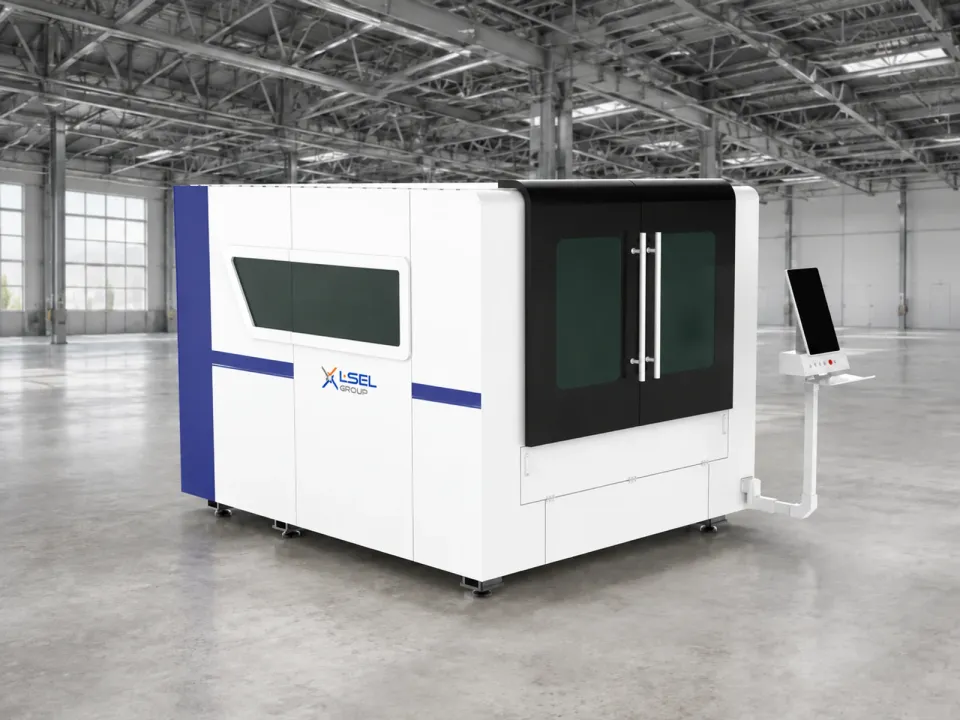
MK-P
Article: 10061
Compact enclosed sheet laser
An enclosed cutting area with a pull-out loading platform. A series for workshops that need compact placement and convenient workpiece access.
- Layout
- Enclosed cabin
- Configuration
- Pull-out table
- Control
- CNC
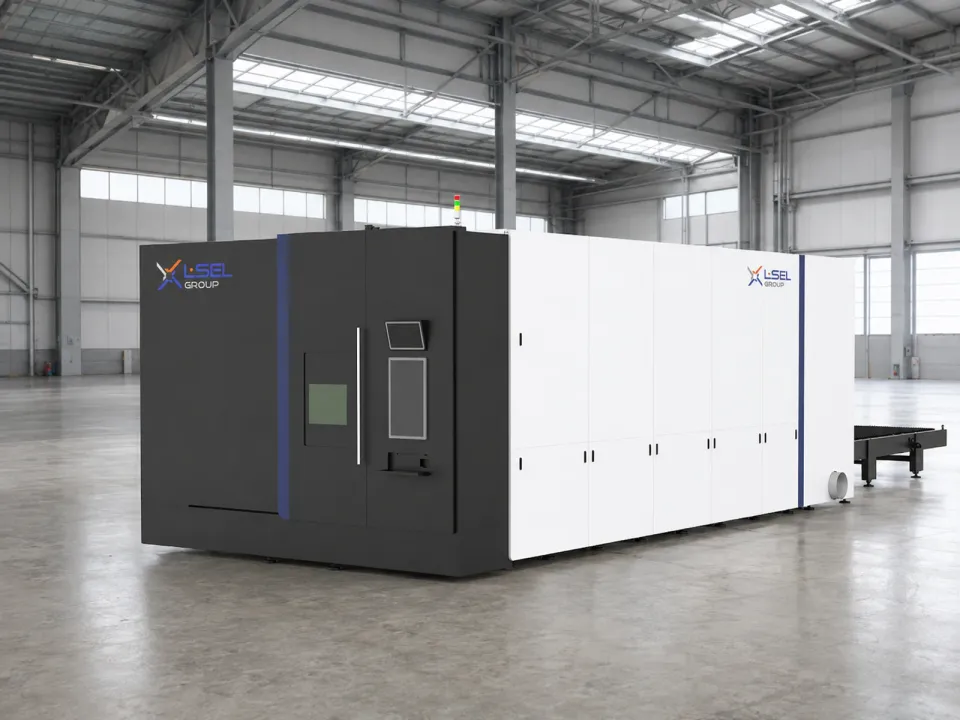
MK-G
Article: 10062
High-power enclosed sheet laser
An enclosed exchange-table system for intensive sheet-metal cutting. The series offers 12–80 kW sources; the appropriate power is selected around your parts.
- Source power, kW
- 12–80
- Layout
- Enclosed, exchange tables
- Control
- CNC
Coil laser cutting systems
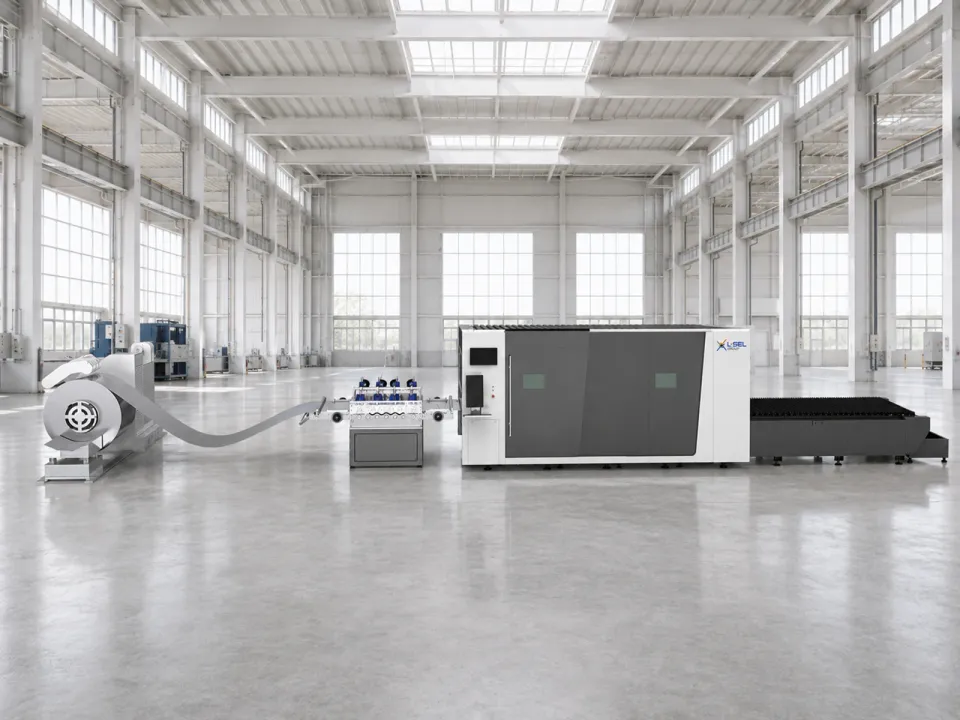
GKS-CPL3015B, GKS-CPLS6015B
Article: 10045
Coil laser cutting line
Uncoiling, levelling and laser cutting in one material route. For repeat thin-sheet parts suited to production from coiled metal.
- Coil width, mm
- 500–1500
- Maximum coil weight, t
- 10
- Source power, kW
- 1–6
Laser tube cutters
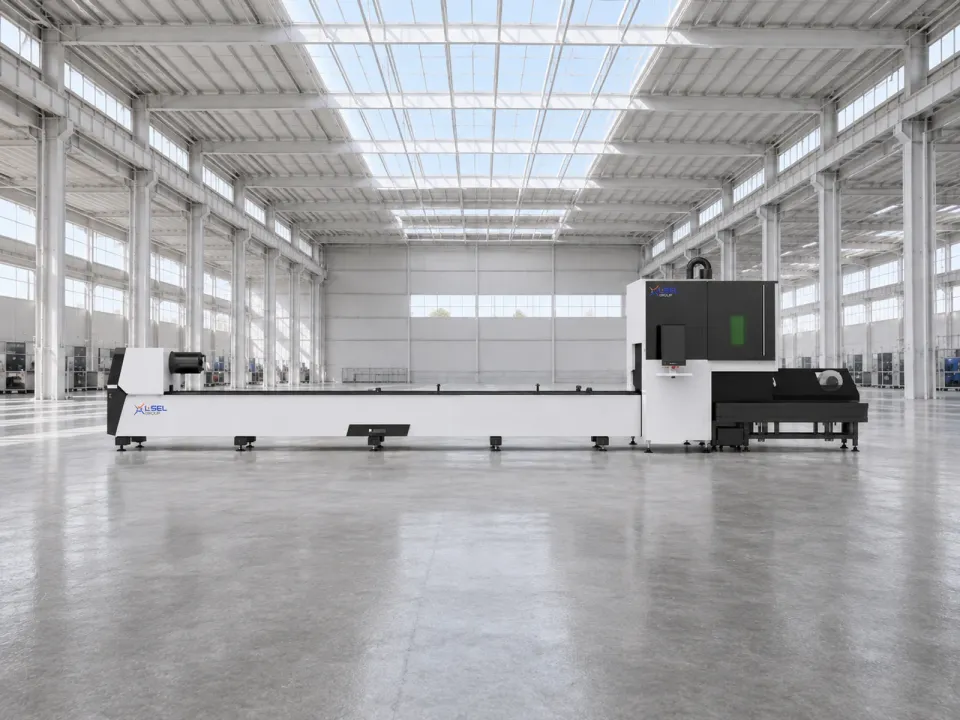
GKS-6024T2, GKS-6036T2
Article: 10005
Two-chuck tube laser
Round and square tube cutting with two-chuck workholding. Two configurations cover different stock sizes and workpiece weights.
- Source power, kW
- 3 / 4 / 6
- Round tube, mm
- 20–350
- Effective cutting length, mm
- 6500
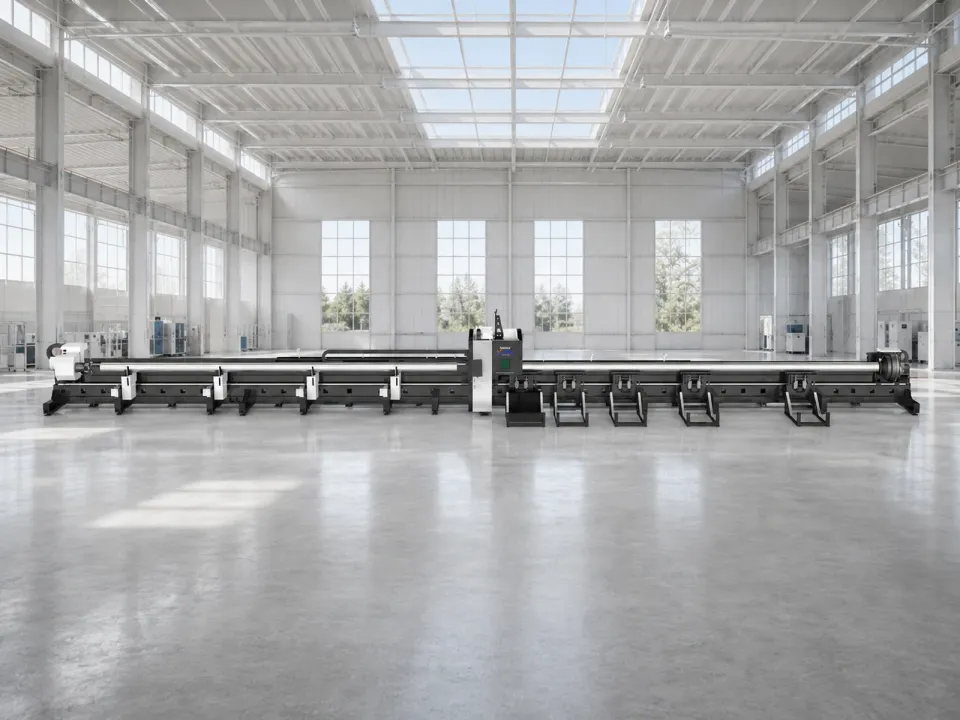
12050T3, 12065T3, 36T3
Article: 10018
Three-chuck tube laser
Three travelling chucks for long and heavy tubes. The range covers different sections and loads, from the 36T3 configuration to 12065T3 for workpieces weighing up to 3000 kg.
- Source power, kW
- 3–30
- Round tube, mm
- 30–600
- Workpiece mass, kg
- 1200–3000
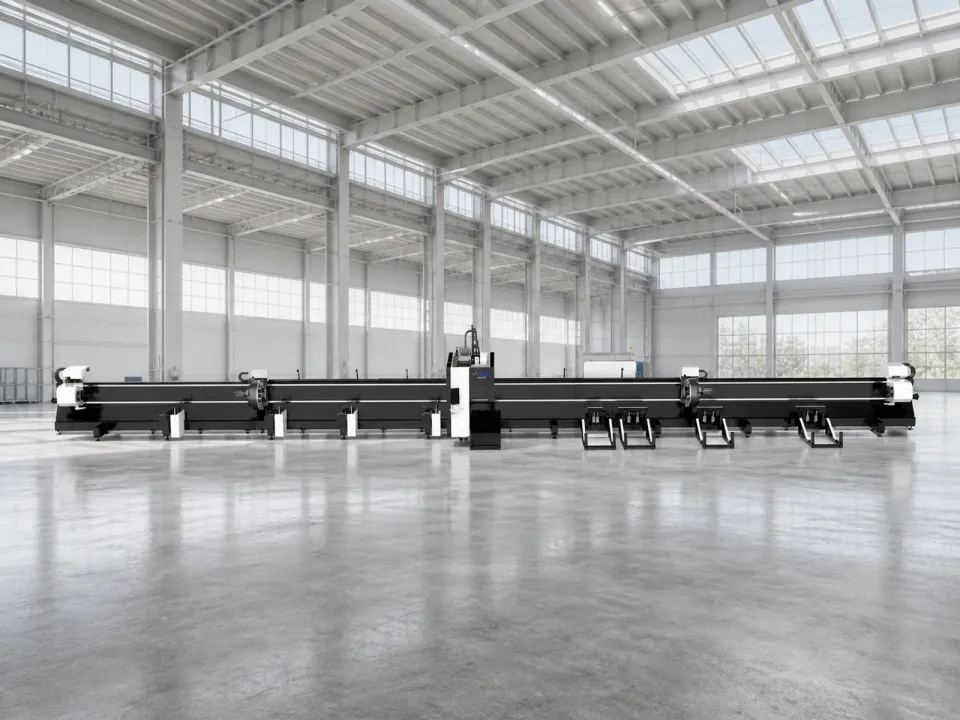
12050T4
Article: 10019
Heavy-duty four-chuck tube laser
A system for round tube up to 500 mm, square section up to 350 × 350 mm and workpieces up to 2000 kg. Four travelling chucks support long profiles at different processing stages.
- Source power, kW
- 6–20
- Round tube, mm
- 50–500
- Workpiece mass, kg
- 2000
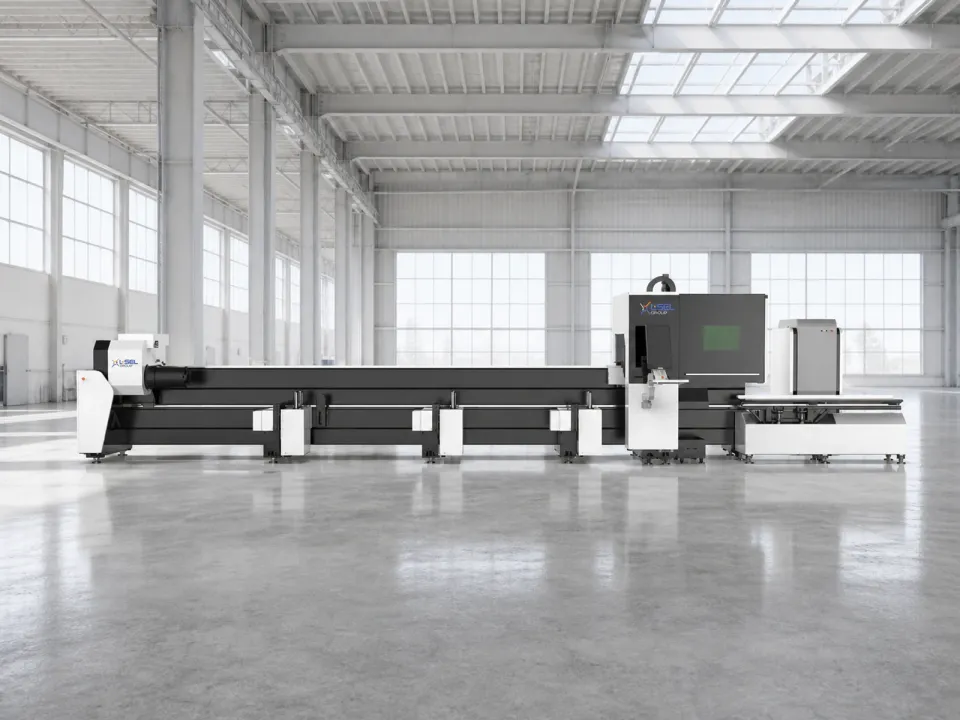
6024TM, 6028TM
Article: 10021
Versatile tube laser
A two-chuck series for round and square tubes up to 240 or 280 mm. A travelling front chuck helps reduce the end remnant while maintaining clamping during the final cut.
- Source power, kW
- 1.5–6
- Round tube, mm
- 20–280
- Workpiece mass, kg
- 400 / 800
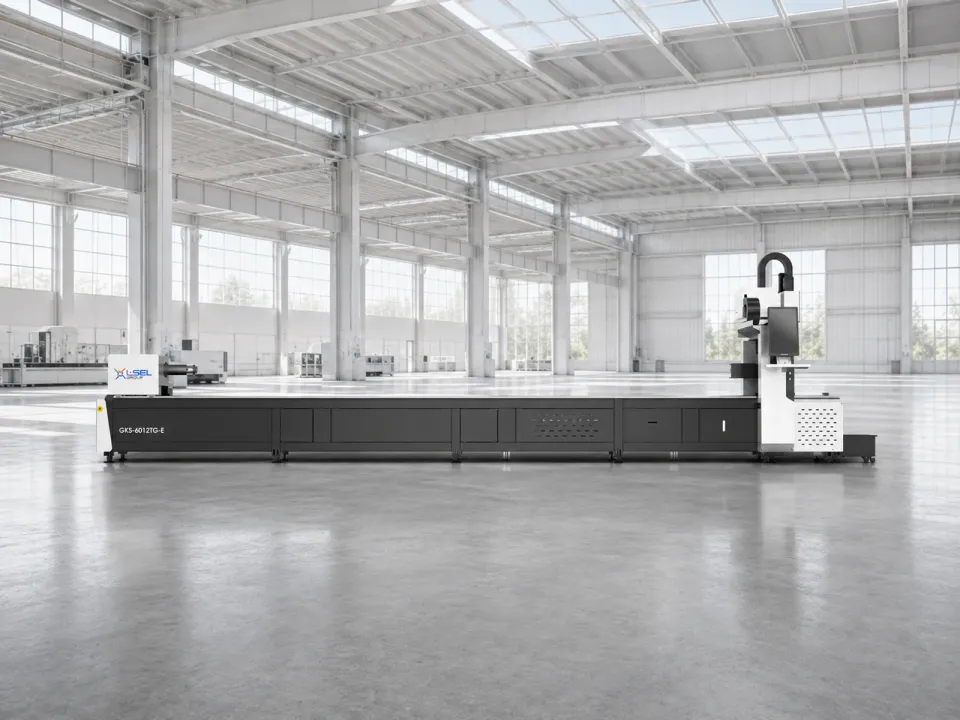
6012 TG-E, 6016 TG-E
Article: 10022
Compact tube laser
An integrated series for small tube sections from 10 to 120 or 160 mm. A 1.5 or 3 kW source, 6500 mm working length and maximum tube weight of 80 kg.
- Source power, kW
- 1.5 / 3
- Round tube, mm
- 10–160
- Workpiece mass, kg
- 80
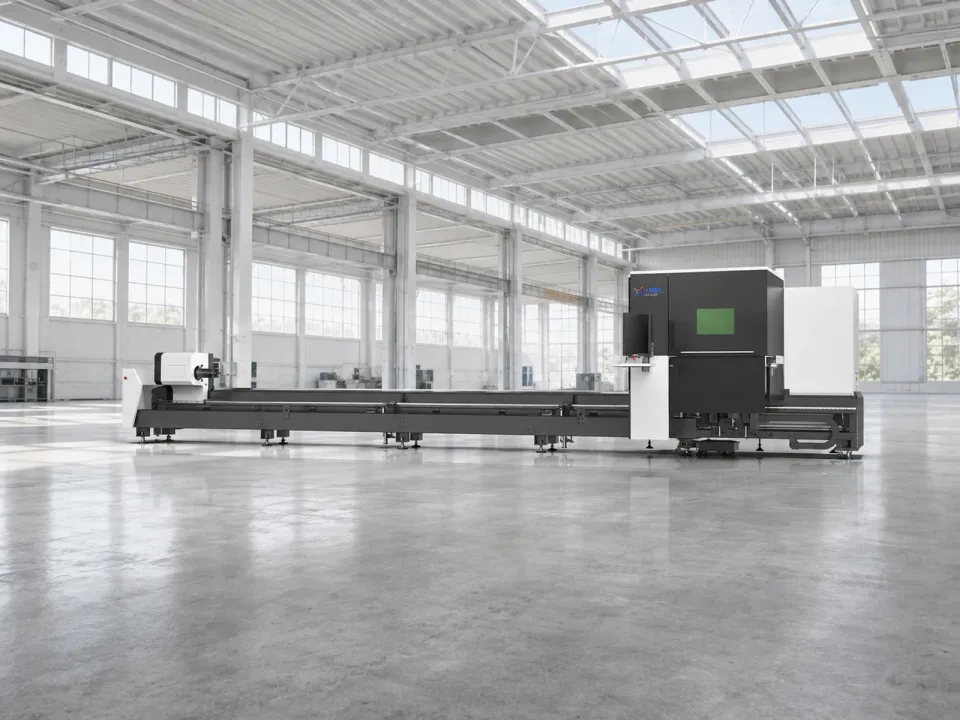
TM II
Article: 10023
Small-profile tube laser
A two-chuck series for tubes up to 120 or 160 mm with bevel-cutting capability. Sources of 1.5, 3 or 6 kW and different rotation dynamics for the two chuck sizes.
- Source power, kW
- 1.5 / 3 / 6
- Round tube, mm
- 10–160
- Workpiece mass, kg
- 80
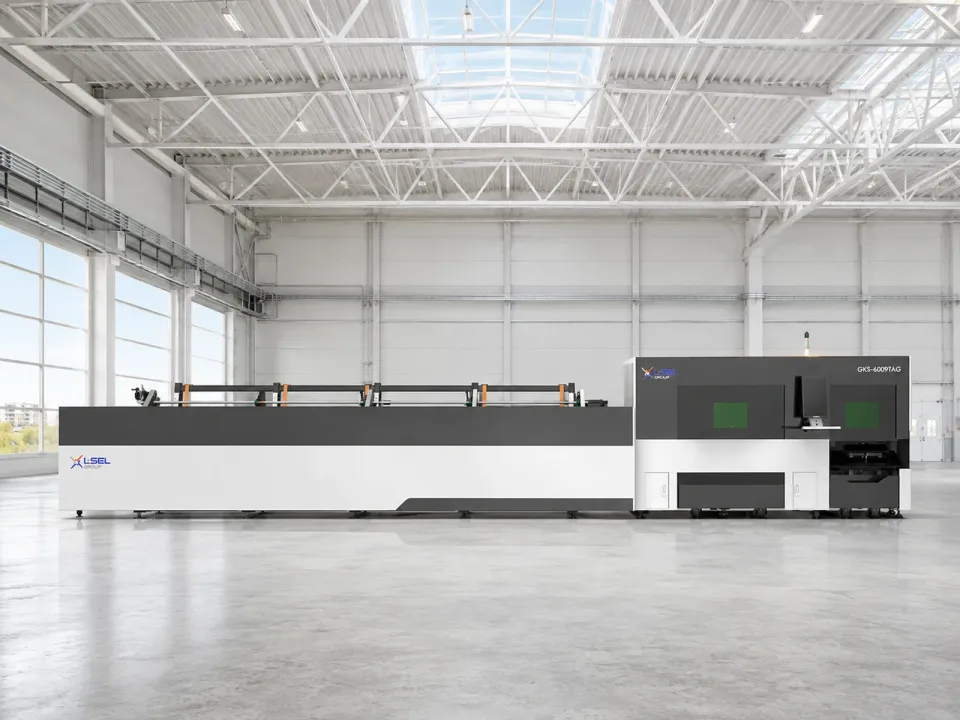
GKS-6009TAG
Article: 10054
Bevel tube laser with automatic loading
A two-chuck system for small tubes with automatic loading. A swivelling head prepares inclined edges for subsequent assembly.
- Source power, kW
- 1.5 / 3
- Round tube, mm
- 20–90
- Effective cutting length, mm
- 6500
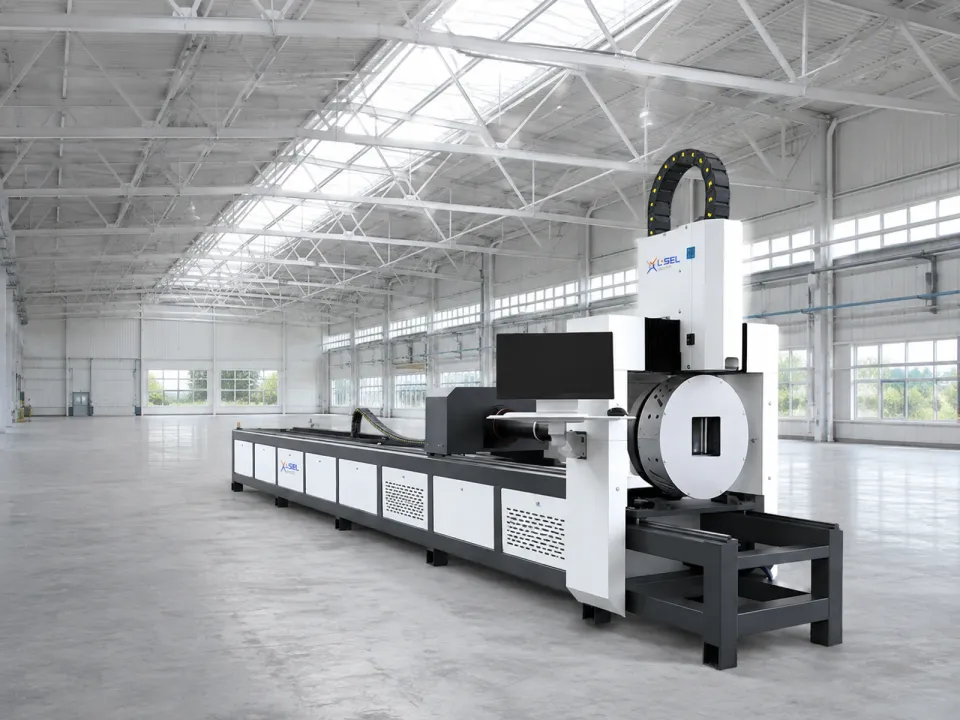
Ø19–120 / □19–120
Article: 10055
19–120 mm front-chuck-offset tube laser
A compact solution for small round and square tubes. Front-chuck offset helps retain the final section of the workpiece.
- Source power, kW
- 1.5
- Round tube, mm
- 19–120
- Effective cutting length, mm
- 6100
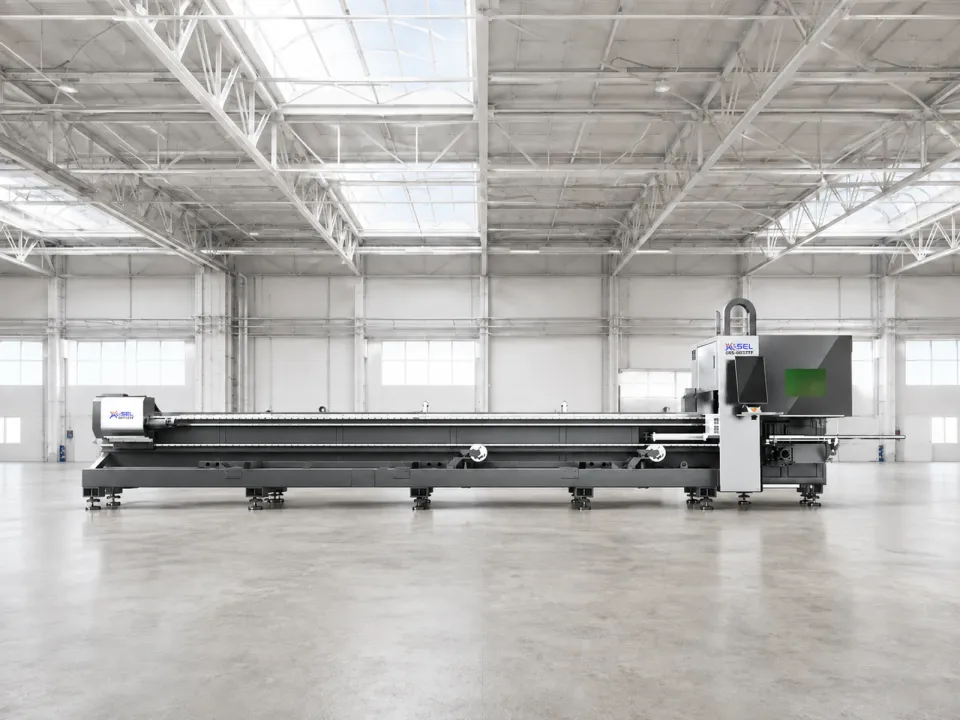
6012TF, 6016TF
Article: 10056
Side-mounted tube laser
Two configurations for tubes up to 120 or 160 mm. Side-mounted working components and front-chuck offset provide easier workpiece access.
- Source power, kW
- 1.5 / 3 / 6
- Round tube, mm
- 10–160
- Effective cutting length, mm
- 6500
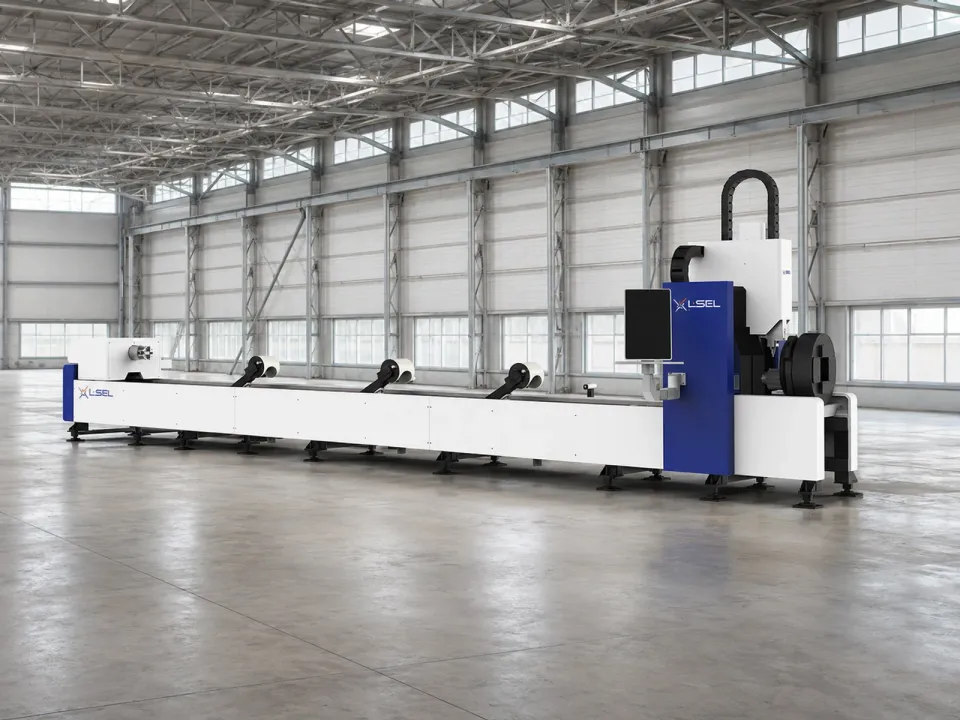
MK-6012TY, MK-6016TY
Article: 10065
Tube laser
A two-chuck laser for round and square tubes. Two factory models cover sections up to 120 or 160 mm.
- Source power, kW
- 1–6
- Round tube, mm
- 10–160
- Chuck count
- 2
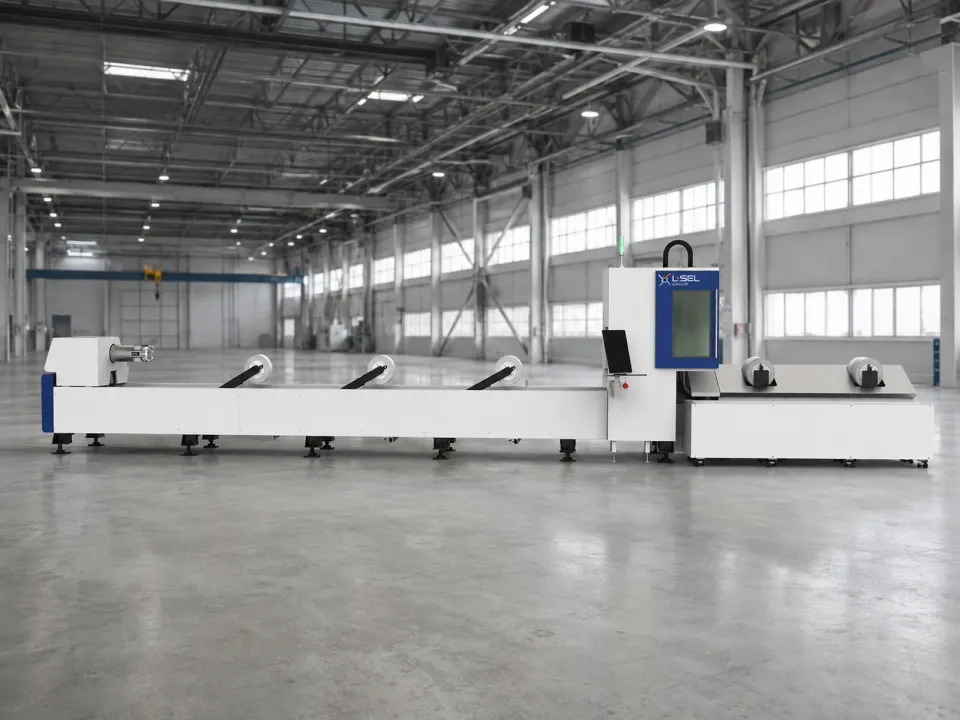
MK-T2W
Article: 10066
Two-chuck tube laser
A dedicated tube laser with following supports and an unloading area. For workshops where tube parts form a separate production stream.
- Chuck count
- 2
- Control
- CNC
- Layout
- Following supports
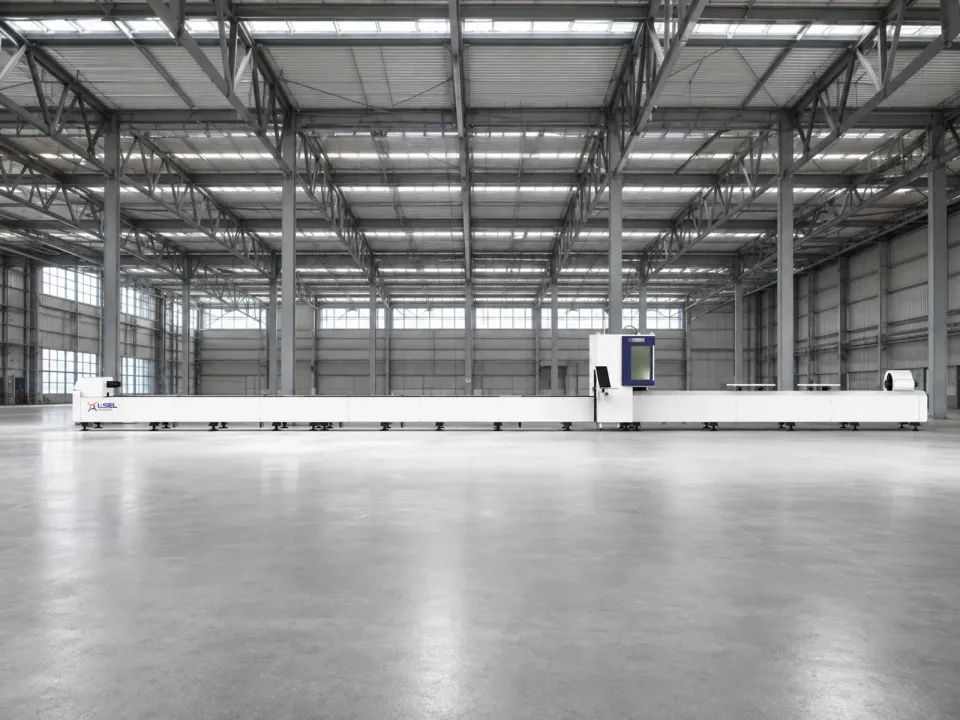
MK-6024T3W, MK-6028T3W, MK-6036T3W, MK-6052T3W
Article: 10067
Horizontal three-chuck tube laser
Three chucks and long-tube support for profile production. Four tabulated variants cover sections up to 240, 280, 360 or 520 mm.
- Source power, kW
- 1.5–20
- Round tube, mm
- 20–520
- Chuck count
- 3
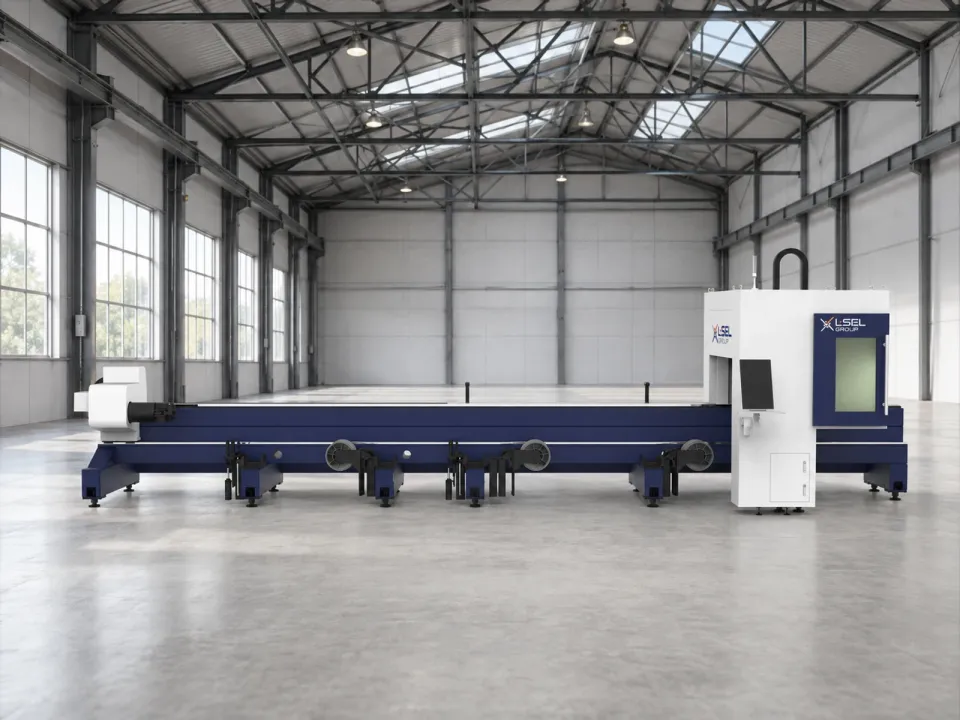
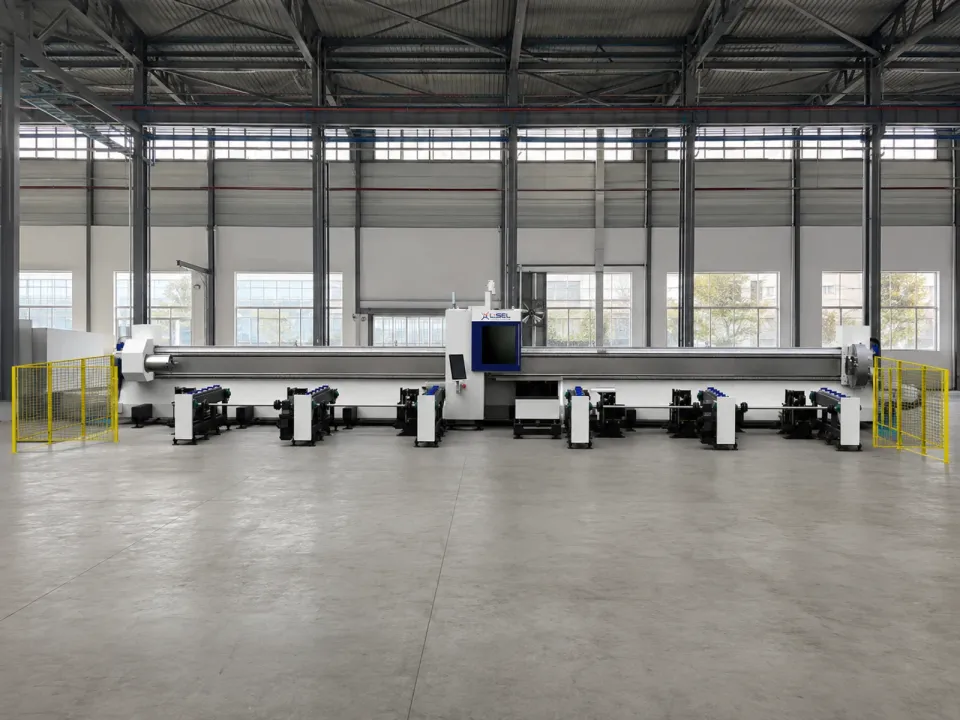
MK-T2C
Article: 10068
Side-mounted tube laser
A two-chuck side-mounted layout for tubes and profiles. Loading and workpiece access run along the machine bed.
- Chuck count
- 2
- Control
- CNC
- Layout
- Side-mounted bed
MK-T3C
Article: 10069
Side-mounted three-chuck tube laser
A side-mounted bed, three chucks and supports for long heavy tubes. The factory describes configurations handling whole tubes up to 12 m and 1200 kg.
- Effective cutting length, mm
- ≤12000
- Workpiece mass, kg
- ≤1200
- Chuck count
- 3
Sheet-and-tube laser cutters
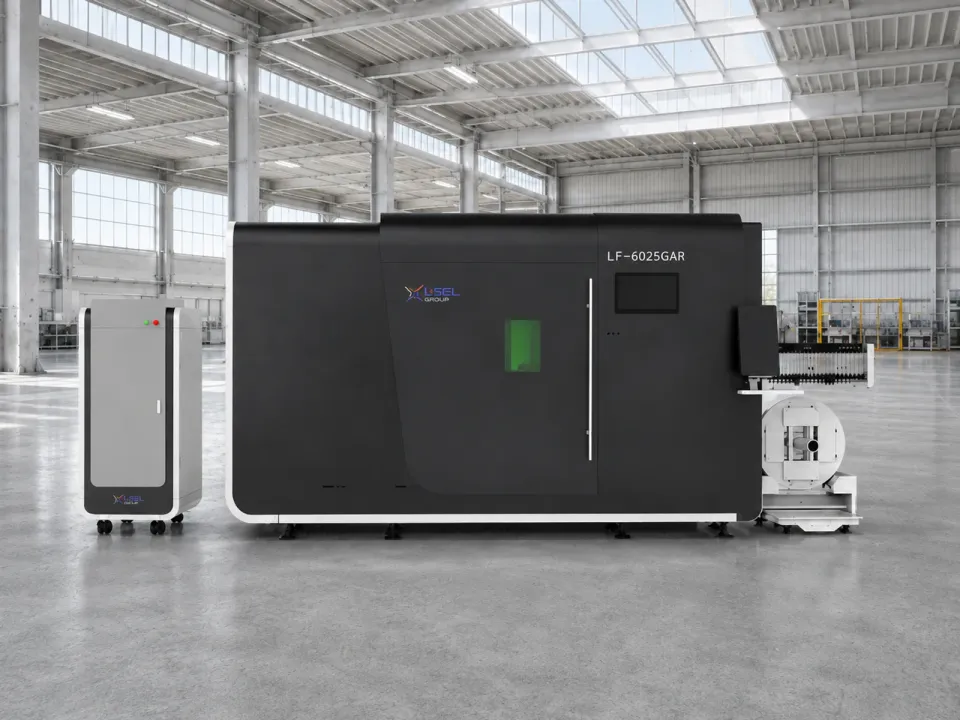
LF3015GAR, LF4020GAR, LF6025GAR, LF8025GAR
Article: 10006
Combined sheet and tube laser
A sheet cutting zone with exchange tables and a tube module in one system. For manufacturers processing both types of stock.
- Source power, kW
- 1.5–12
- Round tube, mm
- 20–240
- Layout
- Sheet and tube
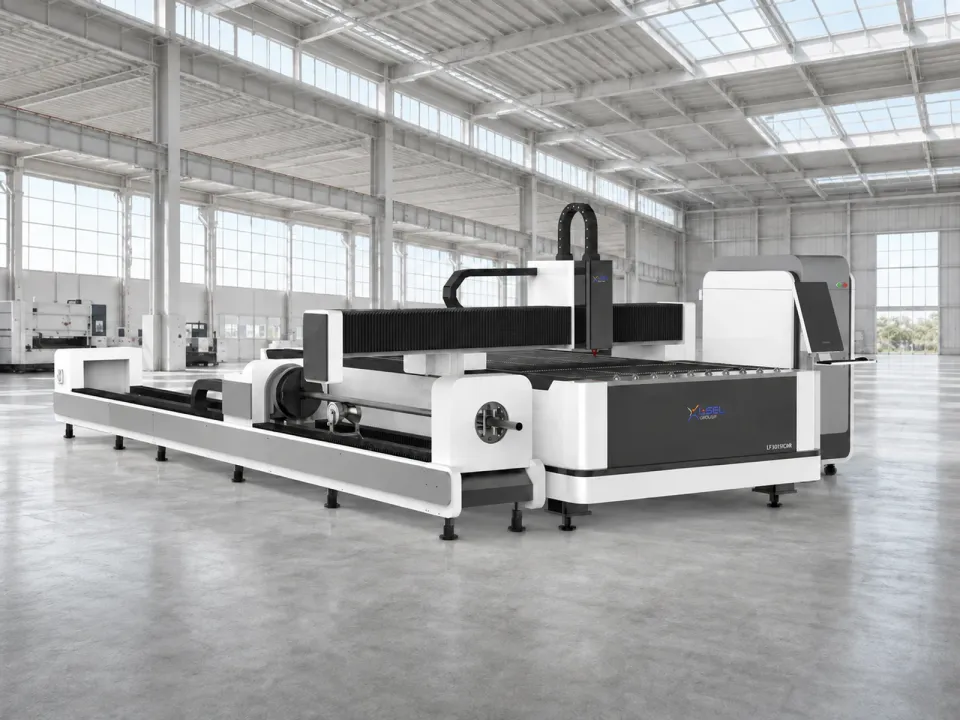
LF3015CNR
Article: 10027
Combined sheet and tube laser
An open 3050 × 1530 mm sheet table with a tube module. One system for production that makes both sheet components and structural tube parts.
- Working area, mm
- 3050 × 1530
- Source power, kW
- 1–12
- Layout
- Sheet and tube
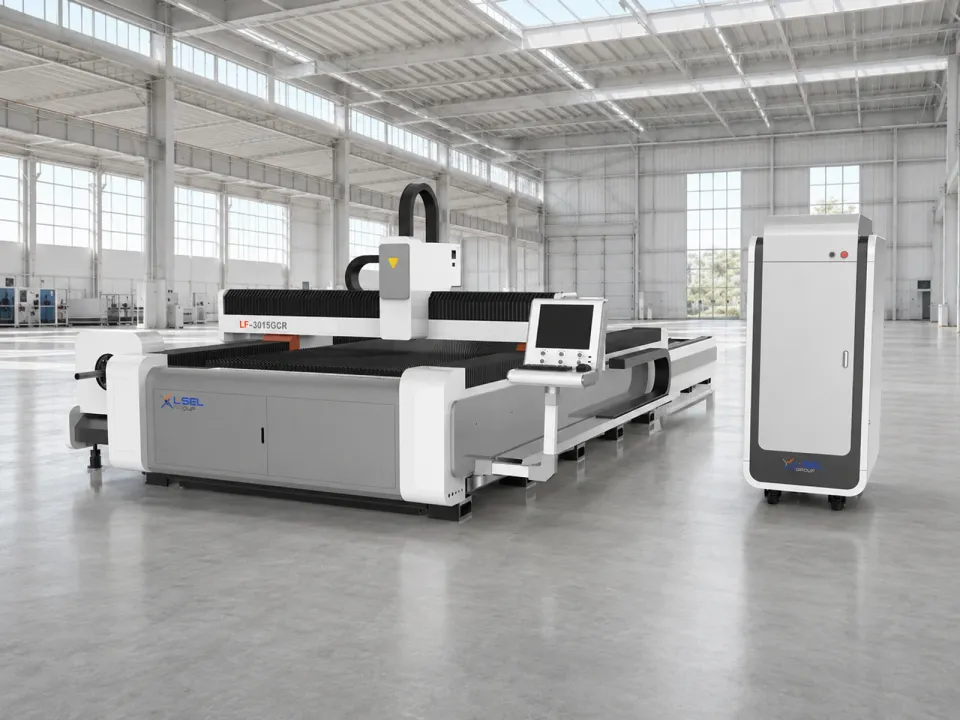
LF3015GCR
Article: 10028
Exchange-table sheet and tube laser
A 3050 × 1530 mm sheet area with exchange platforms and a tube-cutting module. For mixed production that needs to prepare the next sheet outside the active cutting zone.
- Working area, mm
- 3050 × 1530
- Source power, kW
- 1–12
- Layout
- Sheet and tube
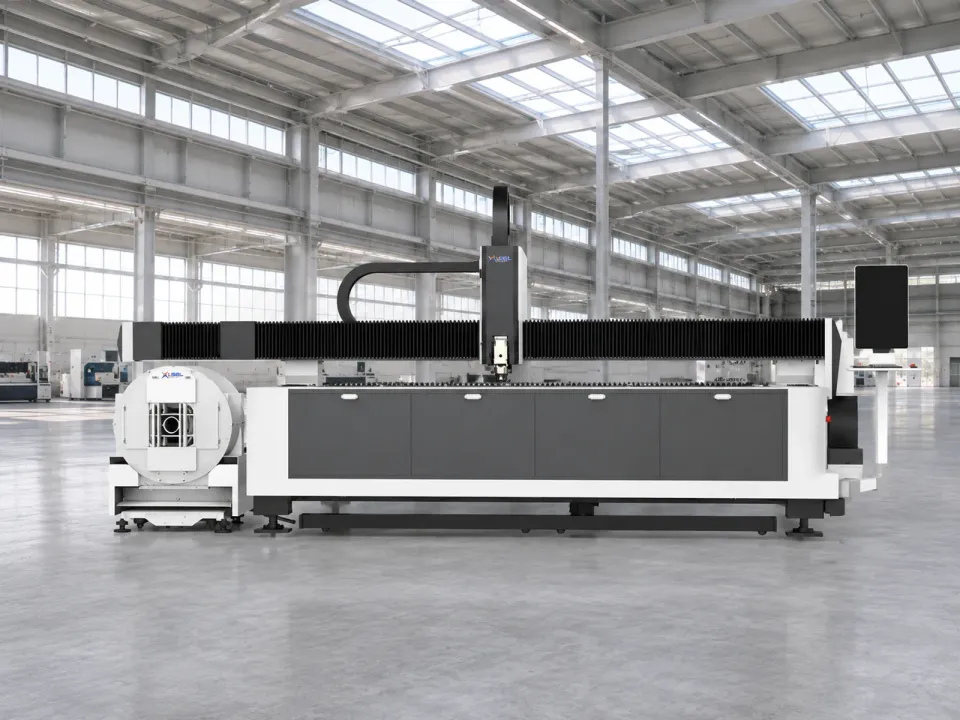
LF3015LNR, LF6025LNR
Article: 10029
Versatile sheet and tube laser
An open combined system with two sheet formats. Its pneumatic tube module handles round and square stock within the published 20–240 mm envelope.
- Formats, mm
- 3050 × 1530 / 6050 × 2530
- Source power, kW
- 1–12
- Round tube, mm
- 20–240
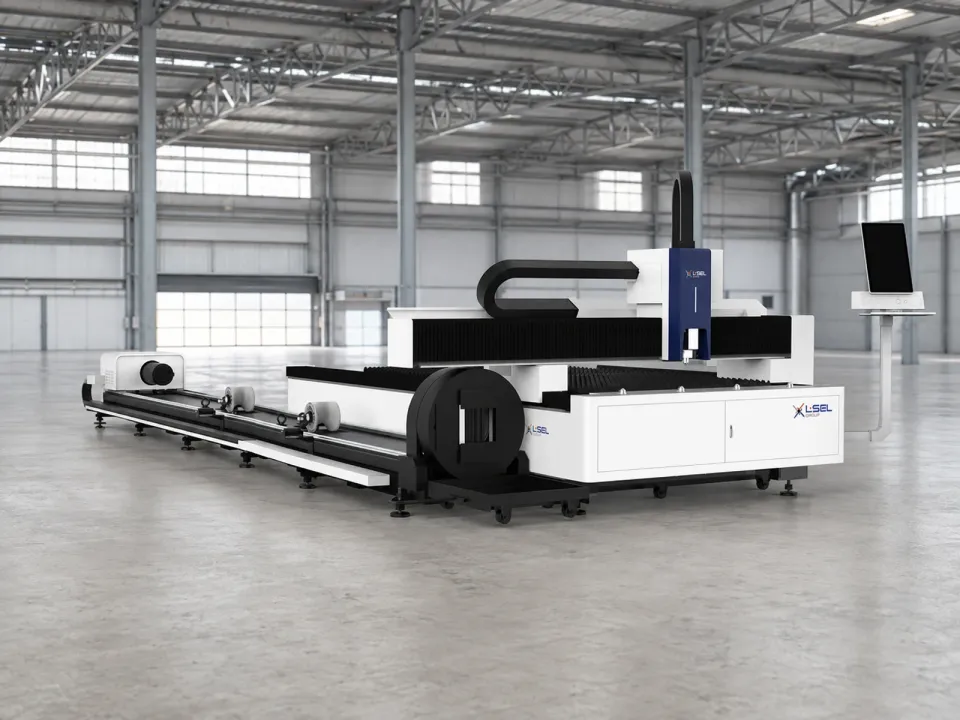
MK-3015ST, MK-4015ST, MK-6015ST, MK-4020ST, MK-6020ST, MK-6025ST, MK-8025ST
Article: 10071
Combined sheet-and-tube laser
An open sheet bed and tube module in one system. For mixed jobs requiring flat and profile parts.
- Source power, kW
- 1.5–30
- Round tube, mm
- 10–230
- Layout
- Sheet and tube
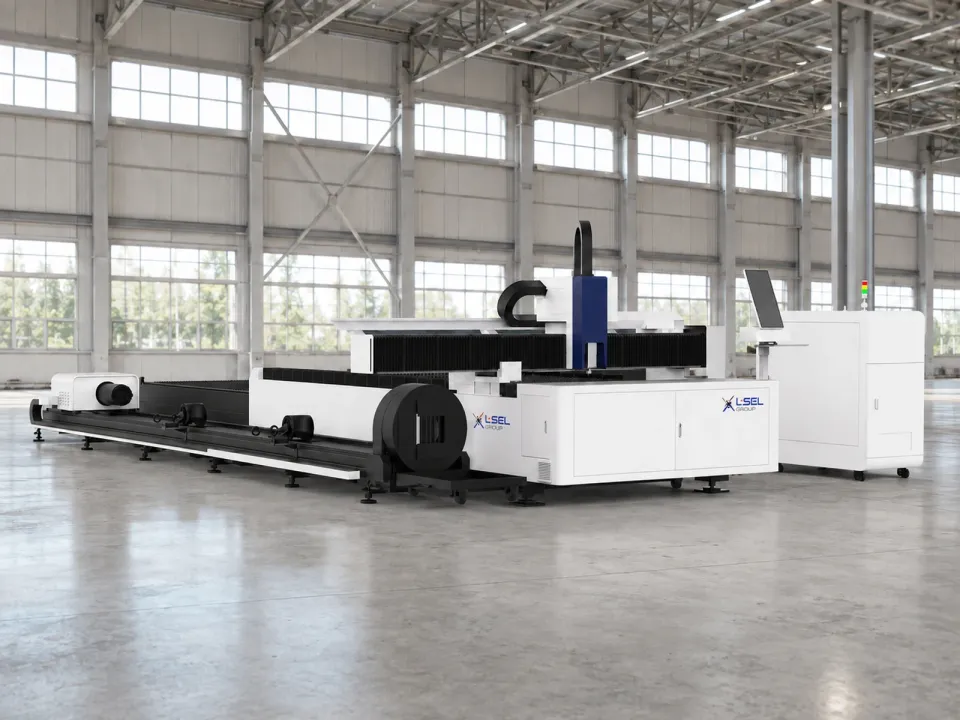
MK-3015ET, MK-4020ET, MK-6020ET
Article: 10072
Exchange-table sheet-and-tube laser
A combined system with two sheet platforms and a side tube laser. For mixed production with regular sheet cutting.
- Source power, kW
- 1.5–30
- Round tube, mm
- 20–230
- Formats, mm
- 3000 × 1500 — 6000 × 2000
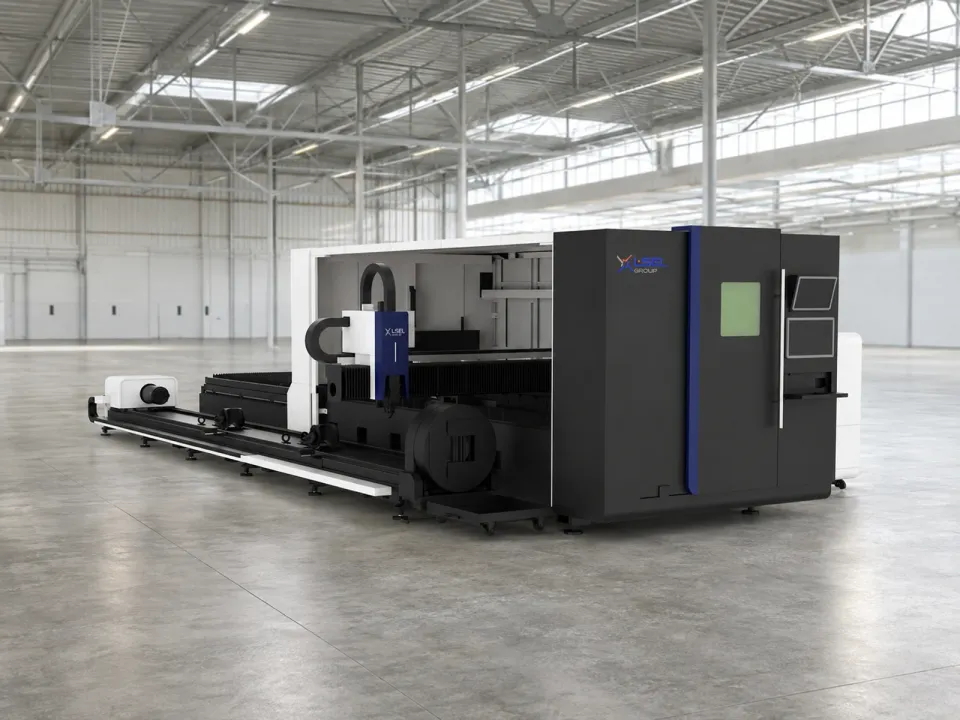
MK-CT
Article: 10073
Enclosed combined laser
An enclosure with exchange tables and a separate side tube module. For sheet and profile parts in one production route.
- Layout
- Enclosed sheet and tube
- Reference laser table exchange time, s
- 10
- Control
- CNC
3D and structural-profile laser cutting systems
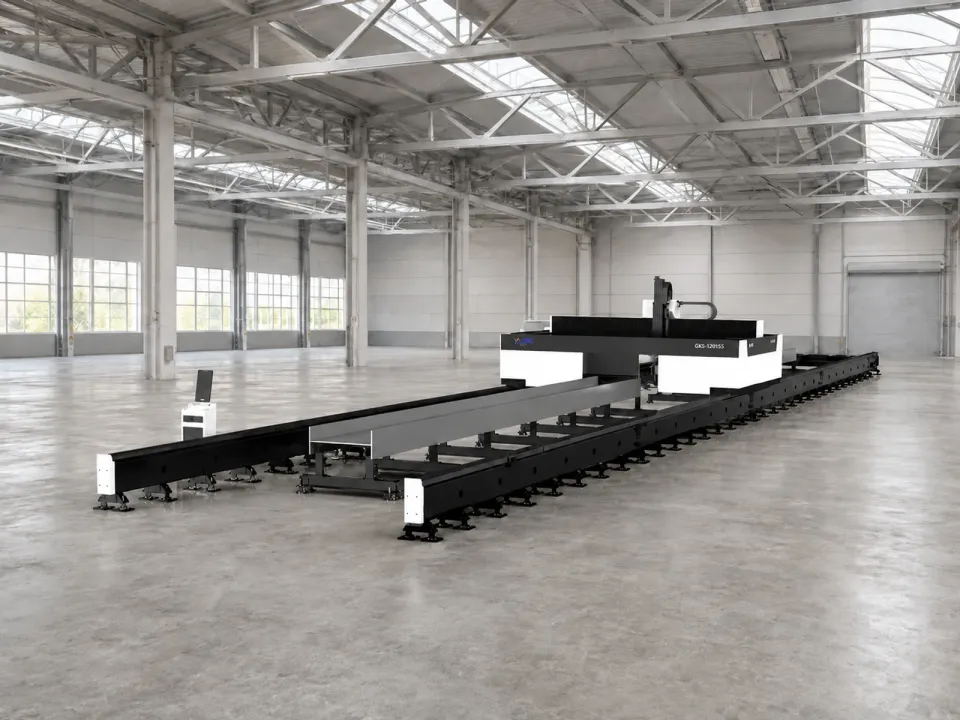
GKS-12015S
Article: 10053
Structural profile laser
Spatial processing of profiles and plate in one installation. Contours, holes and bevels prepared for subsequent structural assembly.
- Source power, kW
- 12 / 20 / 30
- Y-axis travel, mm
- 28000
- Z-axis travel, mm
- 1050
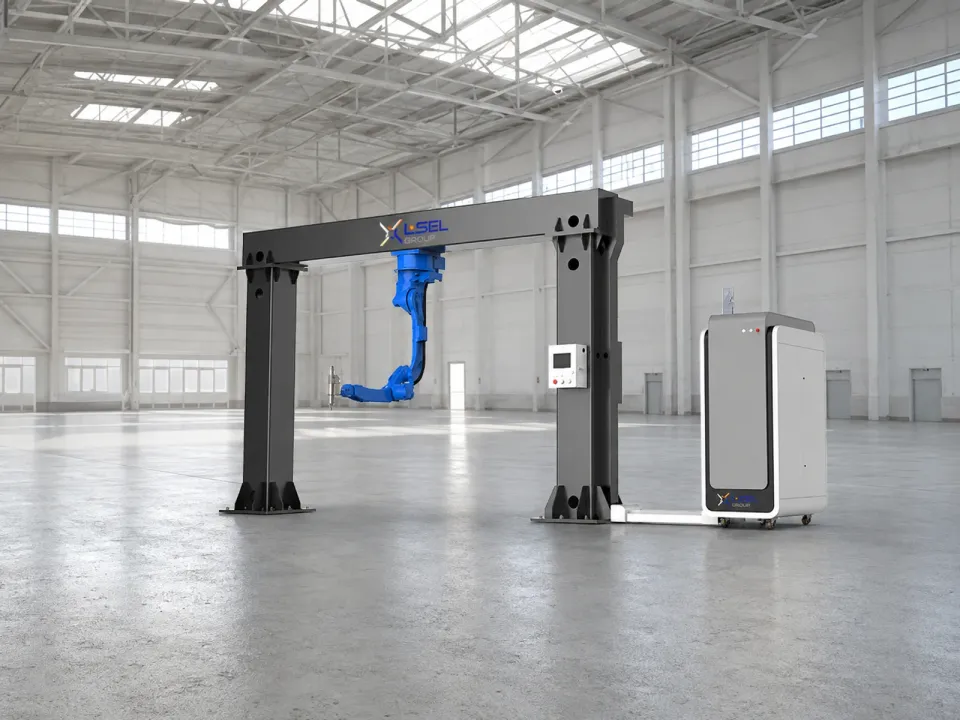
LF1800
Article: 10057
Laser cutting robot
Spatial laser processing of formed parts. A robot follows contours that are difficult to access with a conventional flat-bed machine.
- Source power, kW
- 1–4
- Robot arm radius, mm
- 1800
- Positioning repeatability, mm
- ±0.05
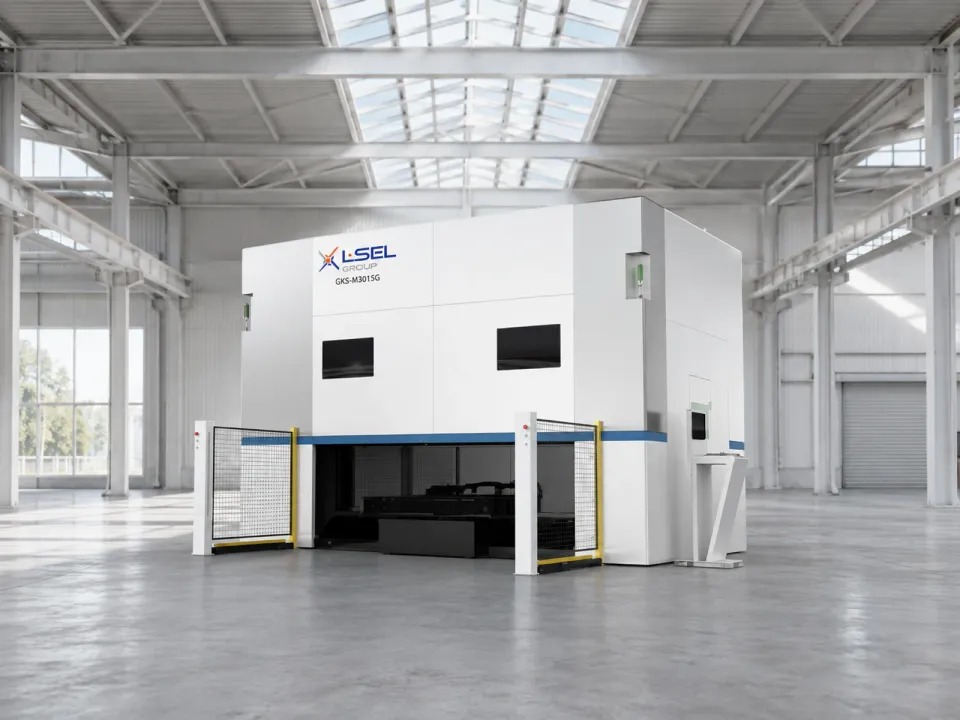
GKS-M3015G, GKS-M3122G, GKS-M4025G
Article: 10058
Five-axis laser for 3D parts
Spatial contour cutting with two rotary head axes. For formed parts requiring access from several directions.
- Z-axis travel, mm
- ≥650 / ≥750
- A-axis rotation, °
- ±135
- Positioning repeatability, mm
- ±0.03
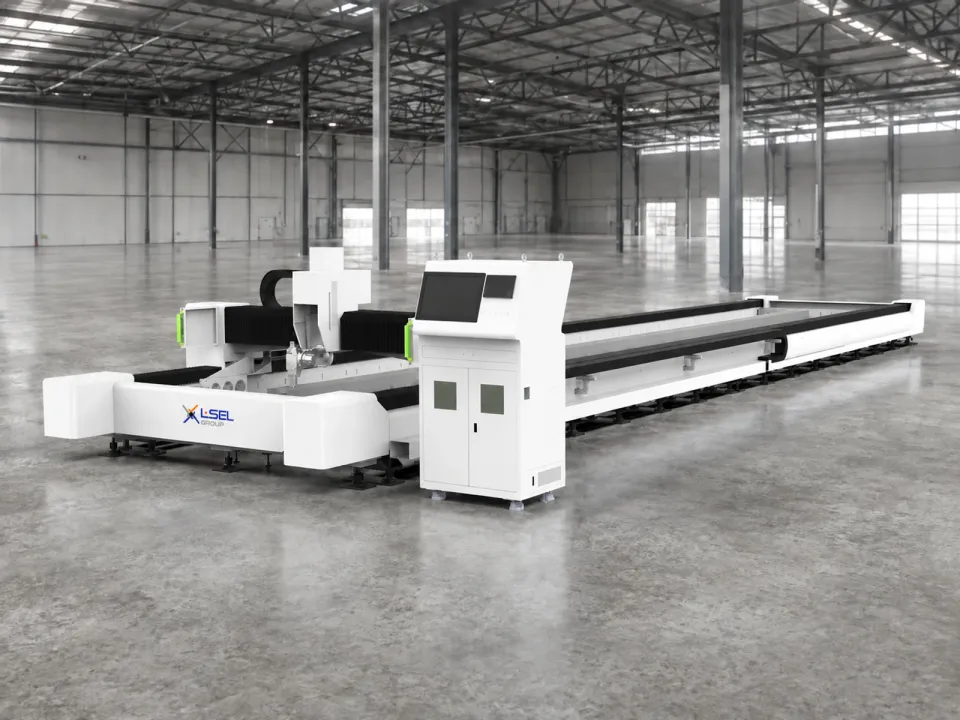
MK-HX
Article: 10064
Five-axis laser for steel profiles
Cut-to-length, holes, cutouts and bevels on I-beams, channels and angles. Five controlled axes allow machining on different profile faces.
- Source power, kW
- 6–20
- Profile length L, mm
- ≤12000
- Bevel range, °
- 0–45
Bending and forming machines
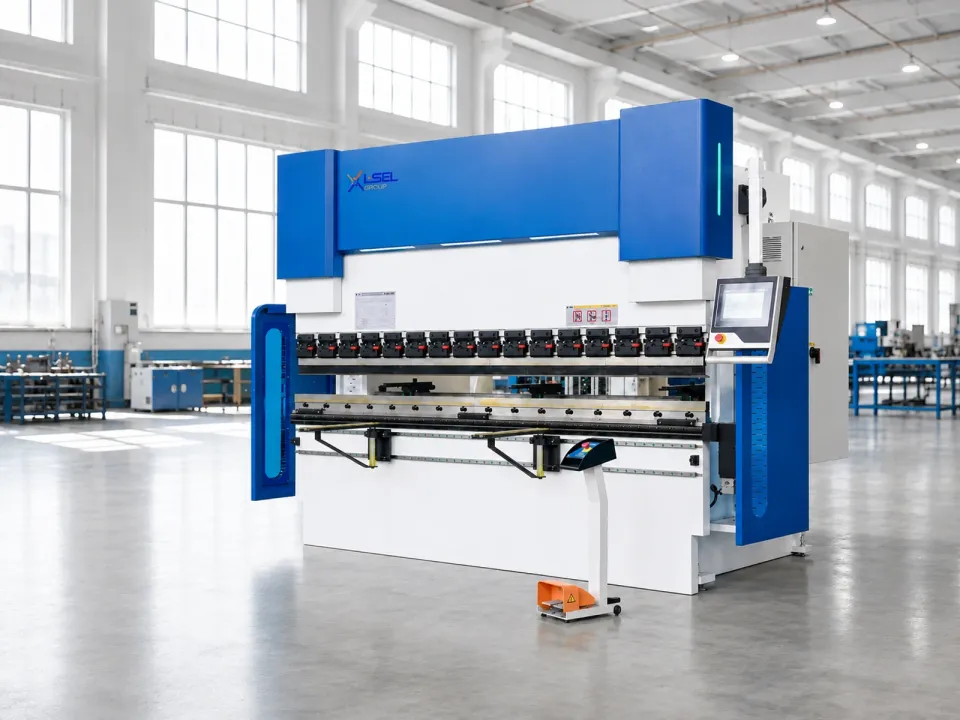
WAD 50T/1300, WAD 50T/2000, WAD 70T/1600, WAD 70T/2500, WAD 70T/3200, WAD 80T/2500, WAD 110T/2500, WAD 110T/3200, WAD 110T/4000, WAD 110T/4100, WAD 135T/3200, WAD 135T/4000, WAD 135T/4100, WAD 170T/2500, WAD 170T/3200, WAD 170T/4000, WAD 170T/4100, WAD 220T/2500, WAD 220T/3200, WAD 220T/4000, WAD 220T/5000, WAD 250T/2500, WAD 250T/3200, WAD 250T/4000, WAD 250T/5000, WAD 250T/6000, WAD 300T/3200, WAD 300T/4000, WAD 300T/5000, WAD 300T/6000, WAD 400T/3200, WAD 400T/4000, WAD 400T/5000, WAD 400T/6000, WAD 400T/8000, WAD 500T/4000, WAD 500T/5000, WAD 500T/6000, WAD 600T/3200, WAD 600T/4000, WAD 600T/5000, WAD 600T/6000, WAD 600T/7000, WAD 700T/6000, WAD 800T/6000, WAD 800T/7000, WAD 800T/8000, WAD 800T/10000
Article: 10007
CNC press brake
Electro-hydraulic synchronisation and CNC control for repeatable bending. Force and working length are selected for your parts and tooling.
- Force, kN
- 500–8000
- Bending length, mm
- 1300–10000
- Control
- CNC
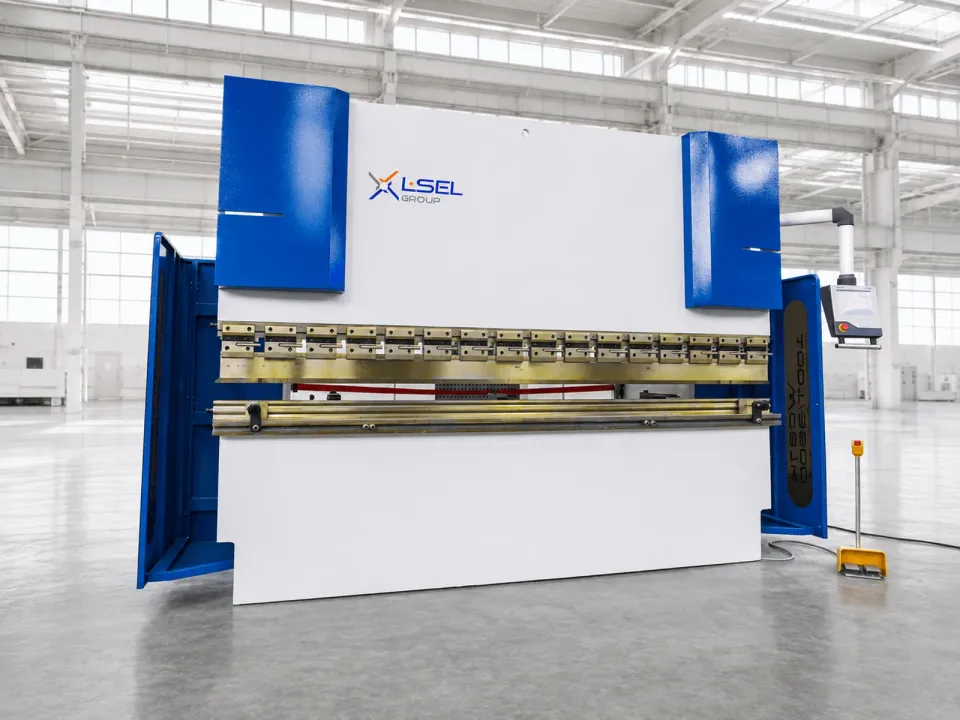
WC67K/WC67E
Article: 10031
NC hydraulic press brake
The WC67K/WC67E torsion-synchronised family for standard bending operations. Force, length and controls are matched to the parts your production makes every day.
- Force, kN
- 300–6000
- Bending length, mm
- 1600–7000
- Control
- NC
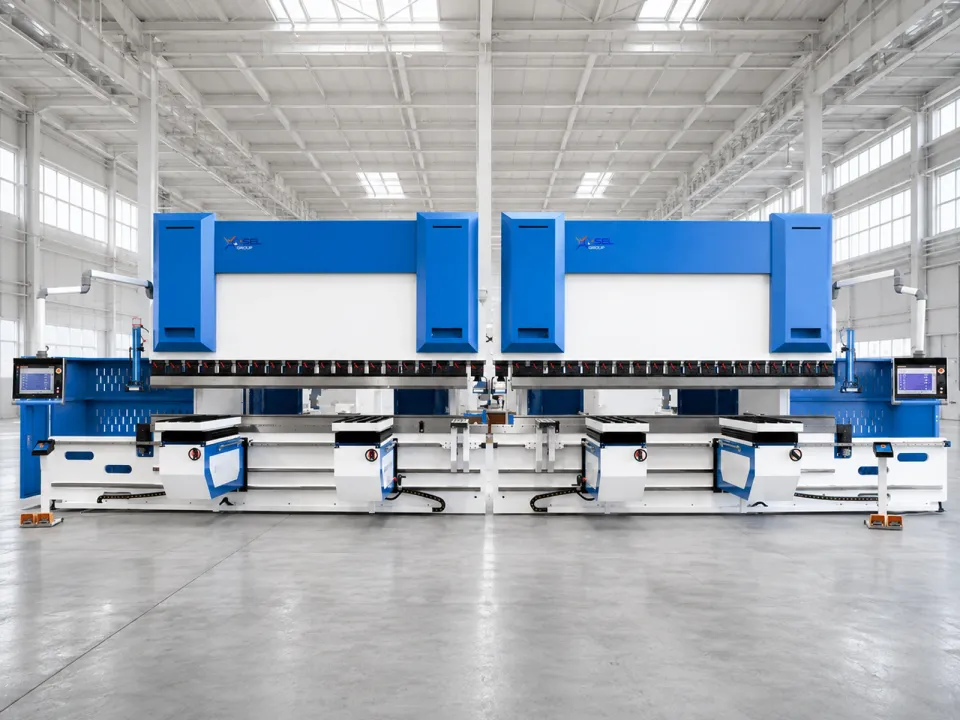
2-WAD
Article: 10032
Tandem press brakes
Two presses for coordinated bending of long parts or separate work on shorter blanks. The system is engineered around the product, working length and feeding arrangement.
- Layout
- Two presses
- Control
- CNC
- Press brakes
- 2-WAD
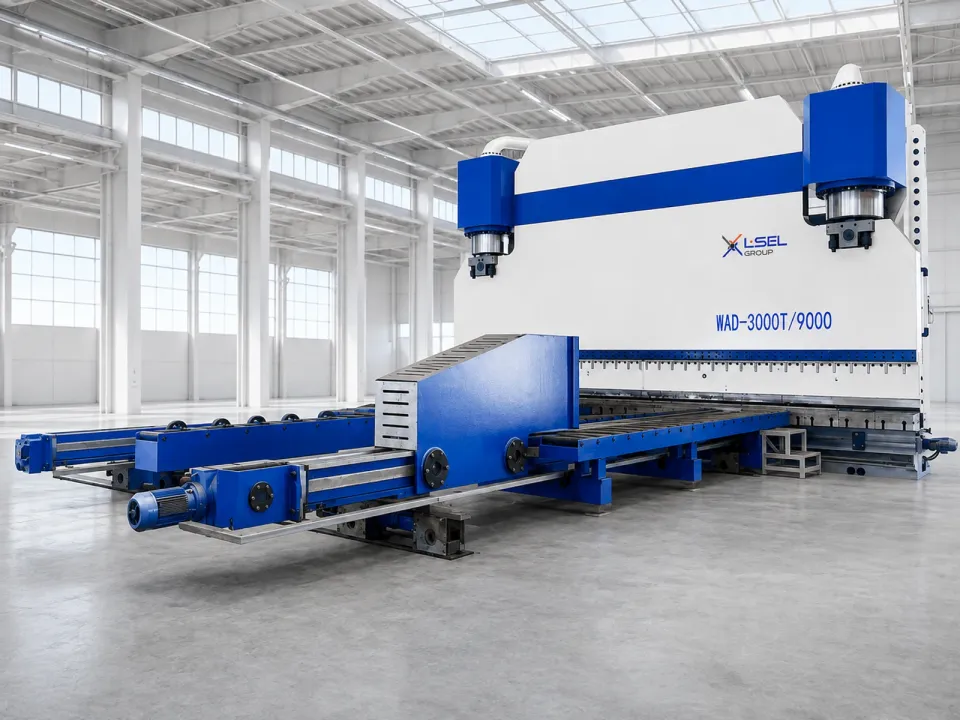
WAD/WADF
Article: 10033
Heavy press brakes
A family for long, thick plate and large components. Published standard variants are complemented by separately engineered heavy configurations.
- Force, kN
- 4000–8000
- Bending length, mm
- 3200–10000
- Control
- CNC
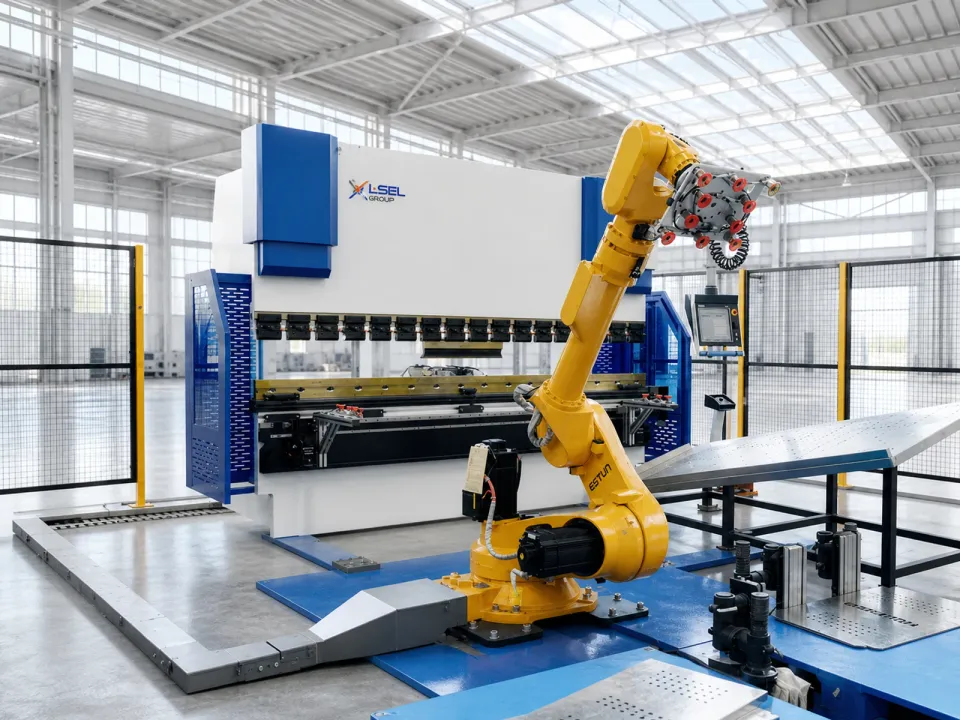
WAD-FMC
Article: 10034
Robotic bending cell
A press, robot and auxiliary stations for a repeatable bending cycle. The system is selected for part geometry, gripping method and the required operation sequence.
- Layout
- Press and robot
- Control
- CNC
- Press brakes
- WAD-FMC
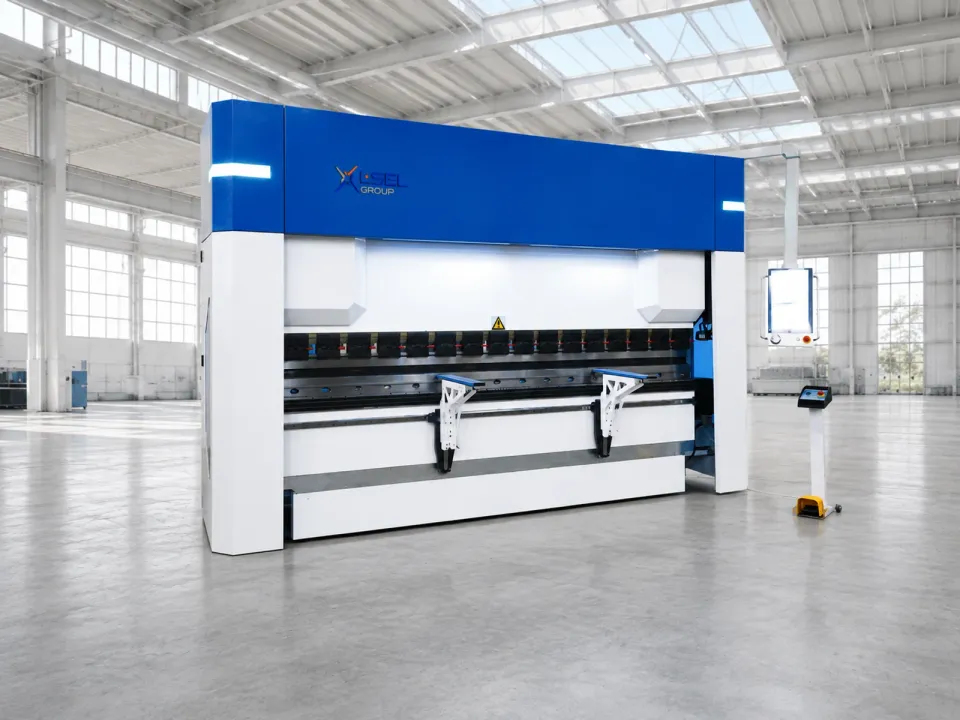
WADG
Article: 10035
All-electric press brake
Electric servo drive for controlled ram motion without a main hydraulic system. The family includes compact presses and full-size configurations for sheet-metal parts.
- Force, kN
- 30–1600
- Bending length, mm
- 200–3200
- Control
- CNC
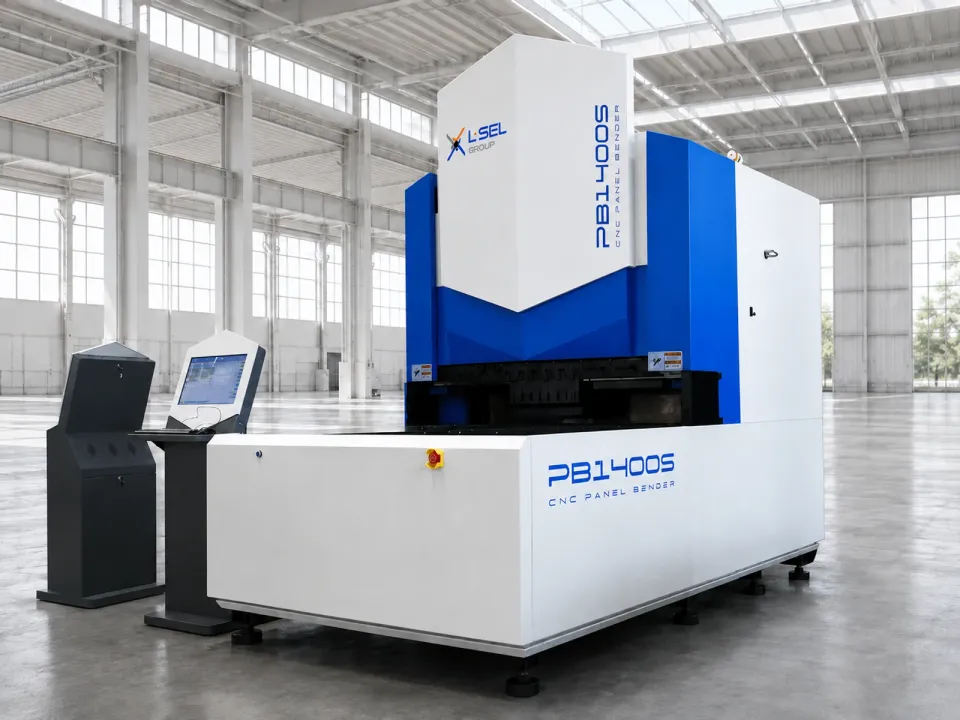
PB1000S, PB1400S
Article: 10036
Vacuum-feed panel bender
Servo-electric panel bending with suction-cup handling. For enclosures and boxes that require several sides of one blank to be formed in sequence.
- Bending length, mm
- 1000 / 1400
- Bend height, mm
- 170
- Control
- CNC
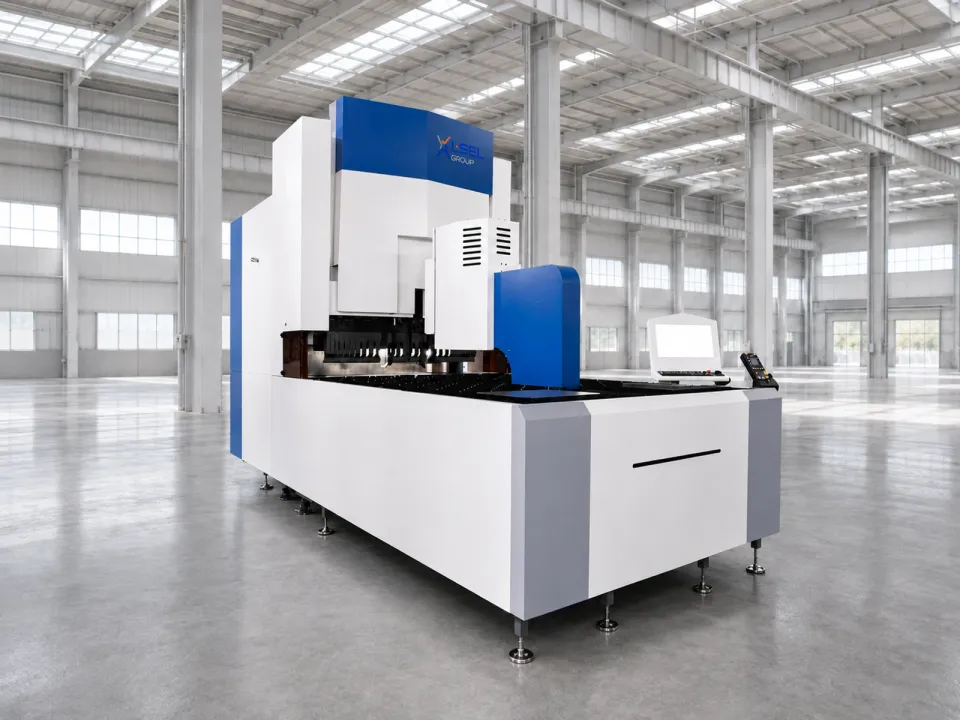
PB1400P, PB2000P, PB2500P
Article: 10037
Press-arm panel bender
A clamping manipulator feeds and rotates the sheet during programmed bending. For repeatable production of panels and enclosures with several flanges.
- Bending length, mm
- 1400 / 2000 / 2500
- Bend height, mm
- 170
- Control
- CNC
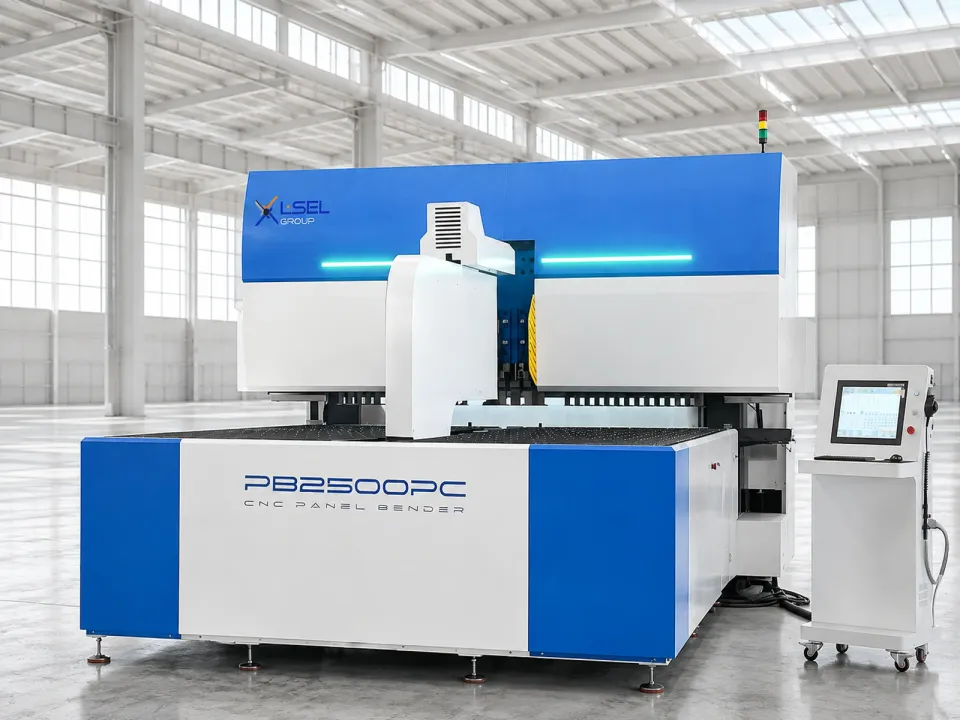
A16, A21, A26
Article: 10038
Panel bender with automatic tool change
Automated tooling setup for different panel parts. For production that changes formats, flange heights and bending programs.
- Bending length, mm
- 1630 / 2190 / 2610
- Bend height, mm
- 180
- Control
- CNC
Sheet and busbar processing machines
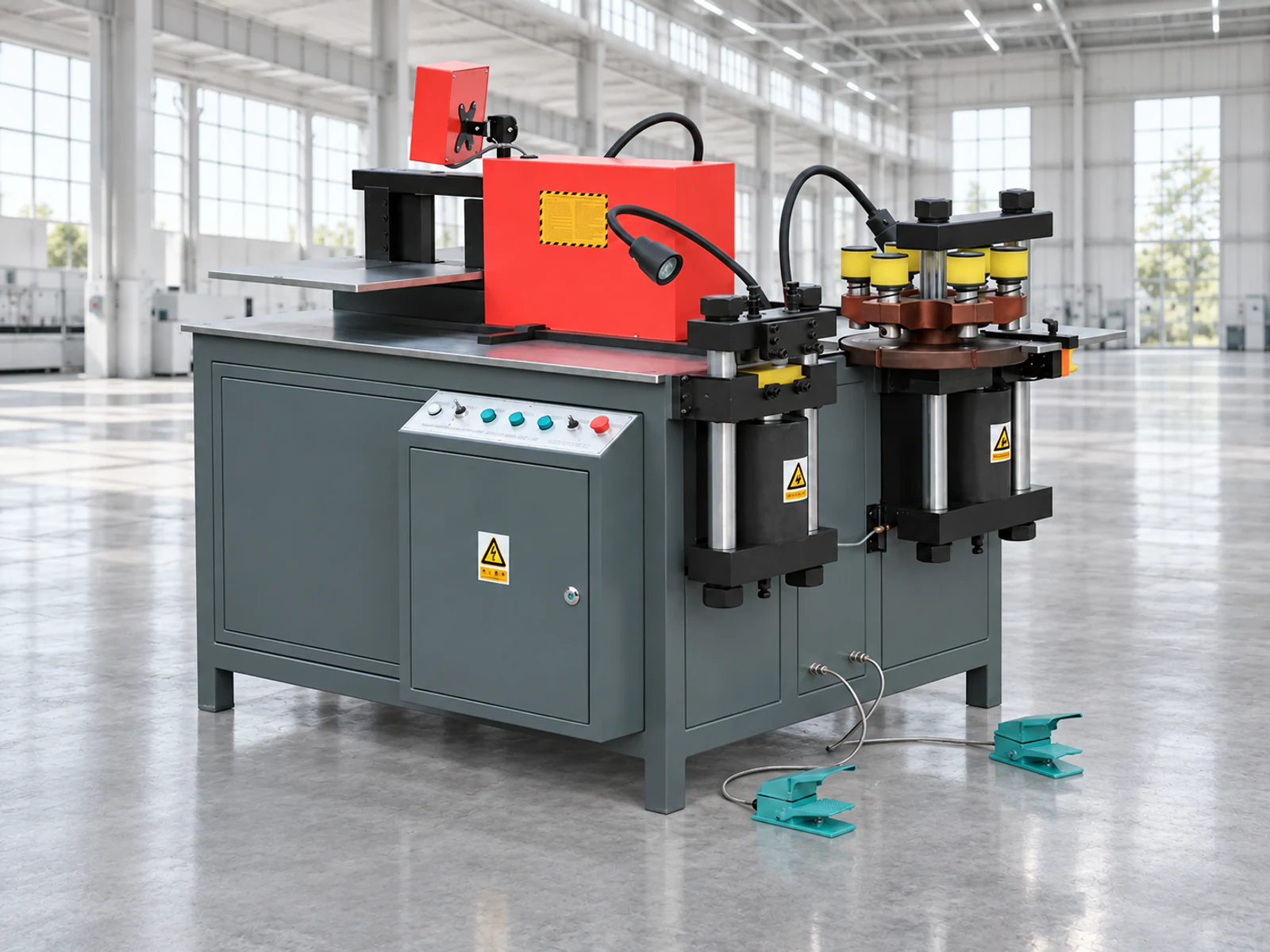
JPSK-303ESK
Article: 10011
Hydraulic busbar processing machine
Three work units for punching, shearing and bending copper or aluminium busbars in one machine.
- Punching force, kN
- 300
- Maximum busbar, mm
- 160 × 12
- Work units
- Punching, shearing, bending
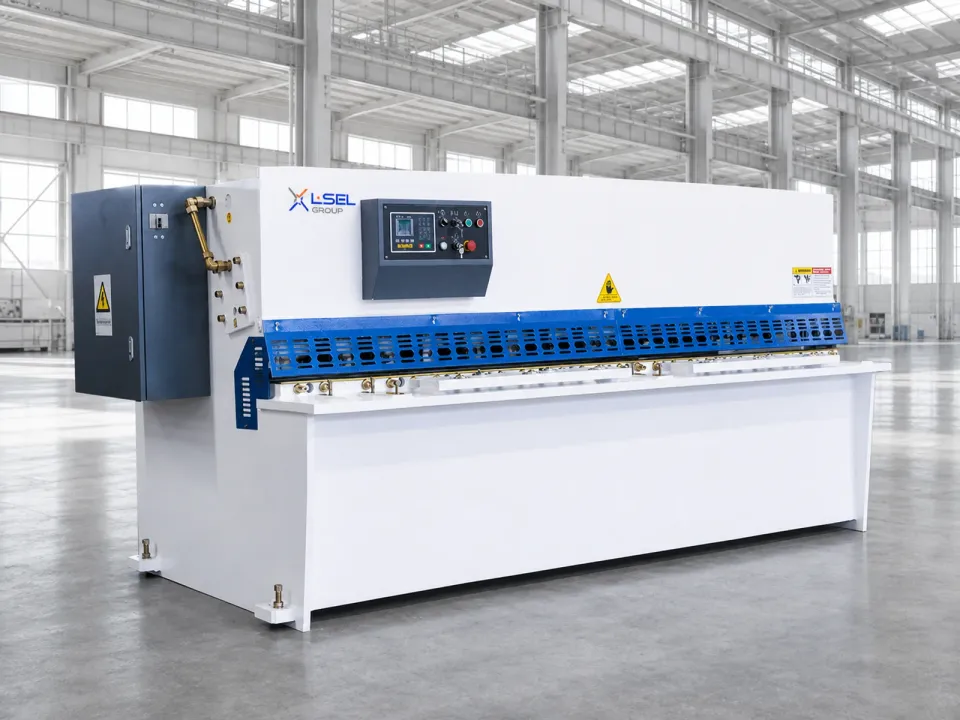
QC12K 4/2500, QC12K 4/3200, QC12K 4/4000, QC12K 4/5000, QC12K 4/6000, QC12K 6/2500, QC12K 6/3200, QC12K 6/4000, QC12K 6/5000, QC12K 6/6000, QC12K 8/2500, QC12K 8/3200, QC12K 8/4000, QC12K 8/5000, QC12K 8/6000, QC12K 10/2500, QC12K 10/3200, QC12K 10/4000, QC12K 10/6000, QC12K 12/2500, QC12K 12/3200, QC12K 12/4000, QC12K 12/5000, QC12K 12/6000, QC12K 12/8000, QC12K 16/2500, QC12K 16/3200, QC12K 16/4000, QC12K 16/5000, QC12K 16/6000, QC12K 20/2500, QC12K 20/3200, QC12K 20/4000, QC12K 25/2500, QC12K 25/3200
Article: 10039
Hydraulic swing-beam shears
Straight-line sheet cutting into strips and blanks. A swing beam and backgauge provide a dedicated blank-preparation operation before bending or assembly.
- Tabulated shearing thickness, mm
- 4–25
- Shearing length, mm
- 2500–8000
- Control
- NC / CNC
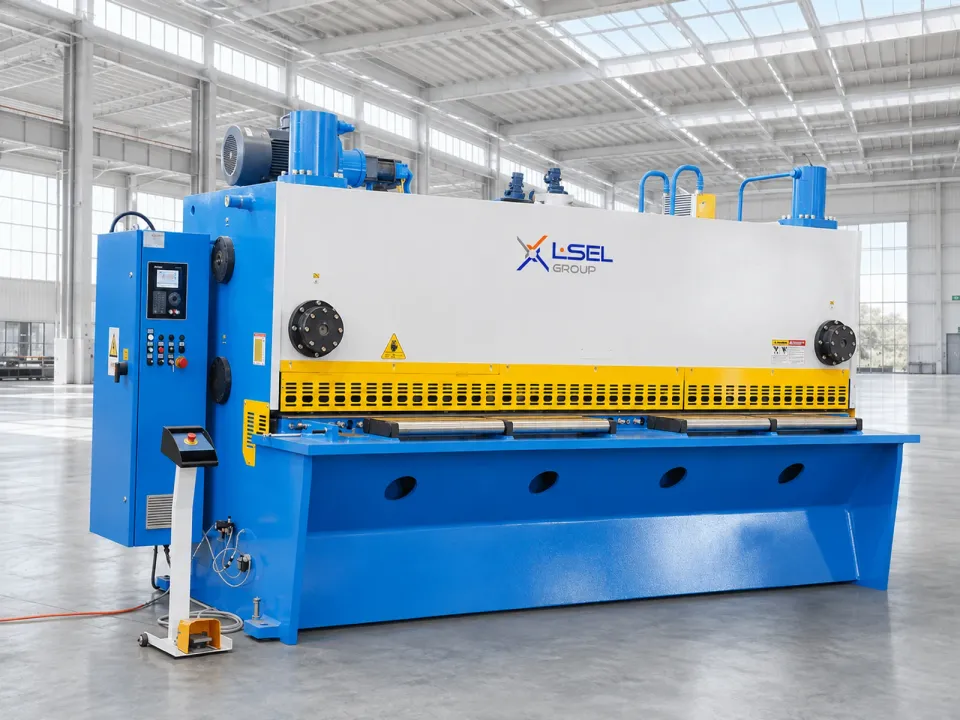
Q11K 6/2500, Q11K 6/3200, Q11K 6/4000, Q11K 6/5000, Q11K 6/6000, Q11K 8/2500, Q11K 8/3200, Q11K 8/4000, Q11K 8/5000, Q11K 8/6000, Q11K 13/2500, Q11K 13/3200, Q11K 13/4000, Q11K 13/5000, Q11K 13/6000, Q11K 16/2500, Q11K 16/3200, Q11K 16/4000, Q11K 16/6000, Q11K 16/8000, Q11K 20/2500, Q11K 20/3200, Q11K 20/4000, Q11K 20/6000, Q11K 25/2500, Q11K 25/3200, Q11K 25/4000, Q11K 30/2500, Q11K 30/3200, Q11K 30/4000, Q11K 40/2500
Article: 10041
Guillotine shears
A straight-moving blade beam for sheet blanking. Versions differ in thickness, cutting length, backgauge range and drive.
- Tabulated shearing thickness, mm
- 6–40
- Shearing length, mm
- 2500–8000
- Control
- NC / CNC
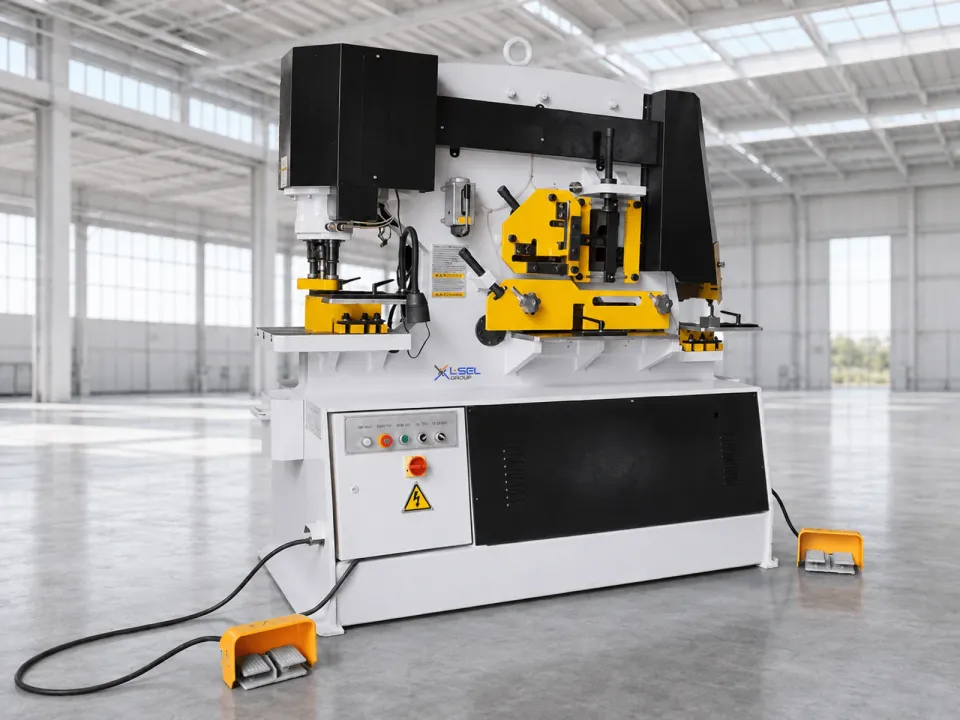
Q35Y-50, Q35Y-60, Q35Y-90, Q35Y-120, Q35Y-160, Q35Y-200, Q35Y-250
Article: 10042
Hydraulic ironworkers
Hole punching, flat-bar and section shearing, and notching on one machine. A family for blank-preparation operations on different metal stock.
- Force, t
- 50–250
- Punching diameter, mm
- 25–40
- Material strength, N/mm²
- ≤450
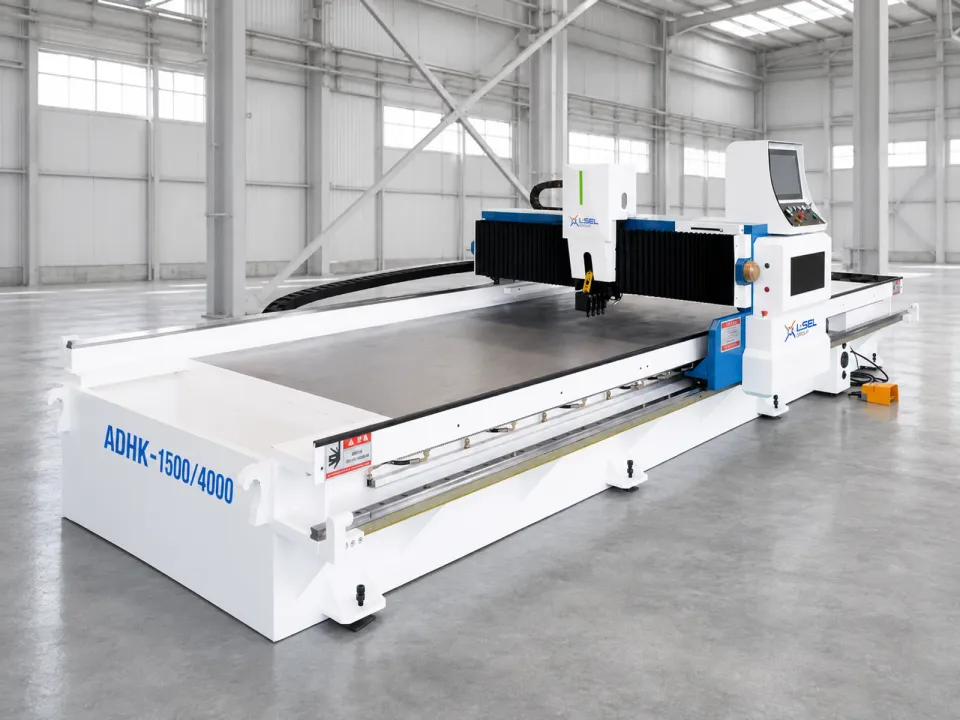
ADHK 3200/1250, ADHK 4000/1250, ADHK 4000/1500, ADHK 5000/1250, ADHK 5000/1500, ADHK 6000/1250, ADHK 6000/1500
Article: 10043
Gantry V-grooving machine
V-shaped grooves in sheet before decorative bending. A gantry layout provides access across a large flat blank.
- Processing length, mm
- 3200–6000
- Processing width, mm
- 1250 / 1500
- Sheet thickness for grooving, mm
- 0.4–4
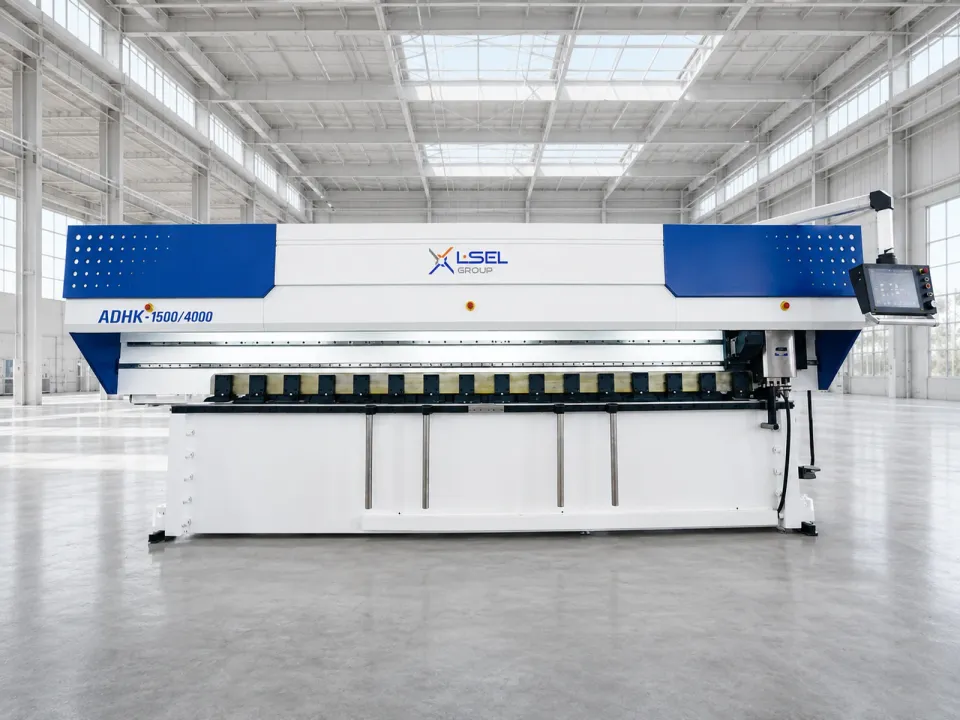
ADRK 3200/1250, ADRK 3200/1500, ADRK 4000/1250, ADRK 4000/1500
Article: 10044
Vertical V-grooving machine
V-shaped grooves before forming sheet parts with a defined outer corner. A family with front/rear sheet supports and controlled tool movement.
- Processing length, mm
- 3200 / 4000
- Processing width, mm
- 1250 / 1500
- Sheet thickness for grooving, mm
- 0.4–6
Laser welding and multifunction systems
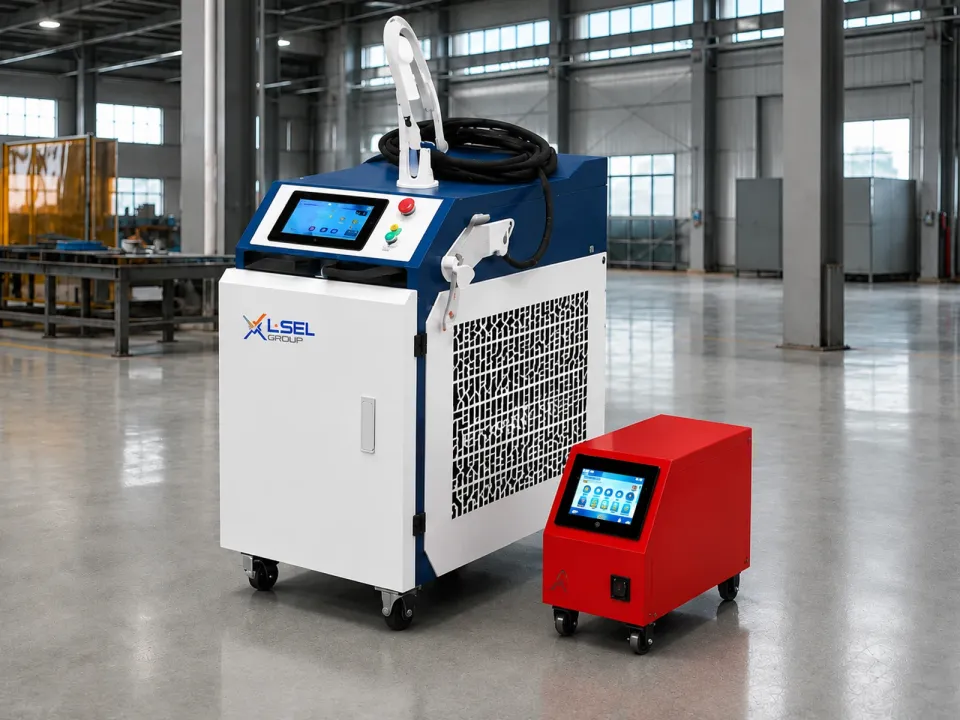
MK-HW2000, MK-HW3000
Article: 10008
Handheld laser welder
A compact water-cooled welding system with a handheld head. Configuration is selected for the material, joint and workplace conditions.
- Source power, kW
- 2 / 3
- Fiber, m
- 10
- Cooling
- Water-cooled
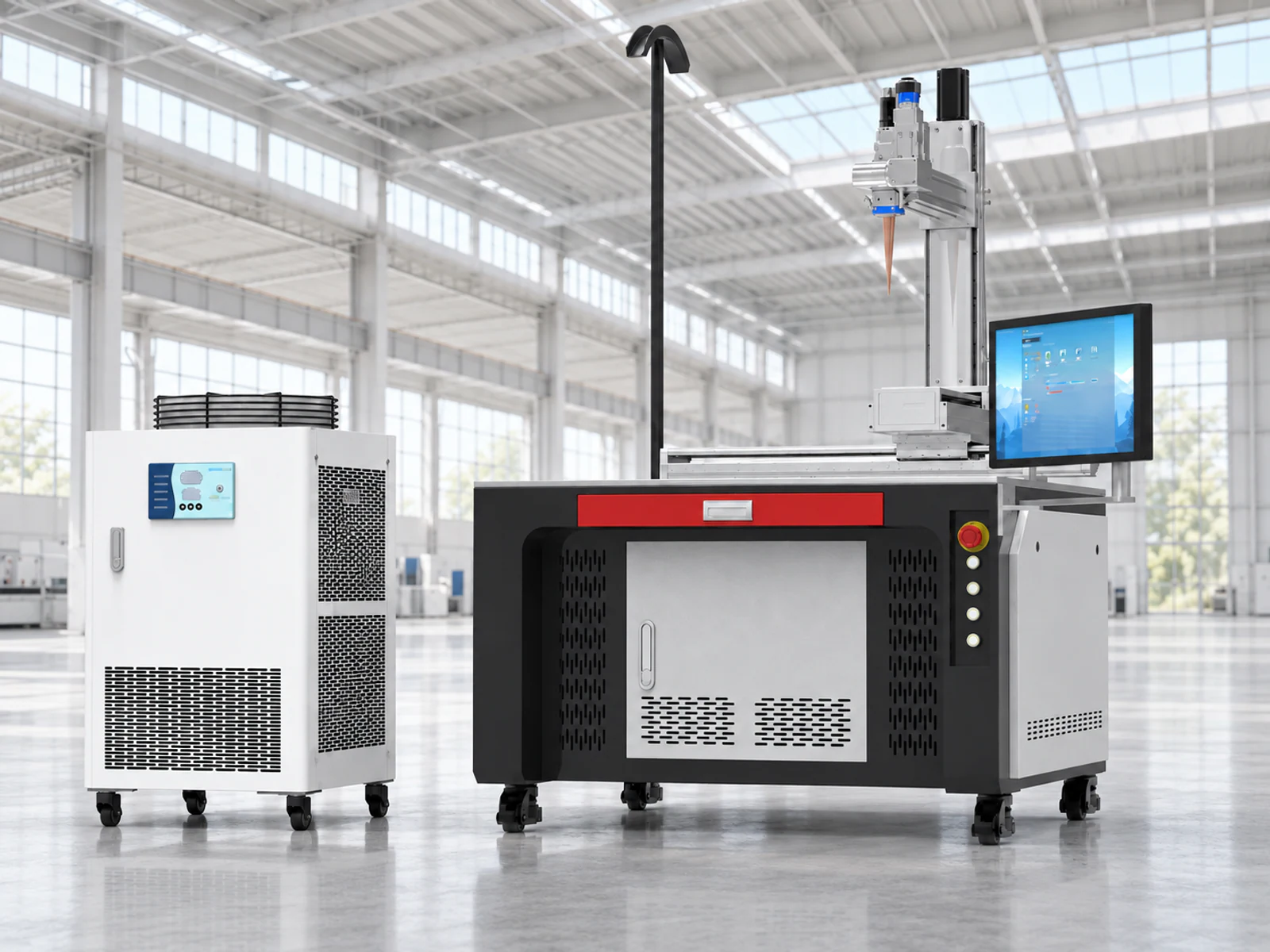
MR-AW-FL1500W
Article: 10009
Five-axis automatic laser welder
An automatic system for flanges and repeat parts with X/Y/Z linear axes and two rotary axes, W1 and W2.
- Source power, kW
- 1.5
- Controlled axes
- 5
- X / Y / Z travel, mm
- 1000 × 1250 × 500
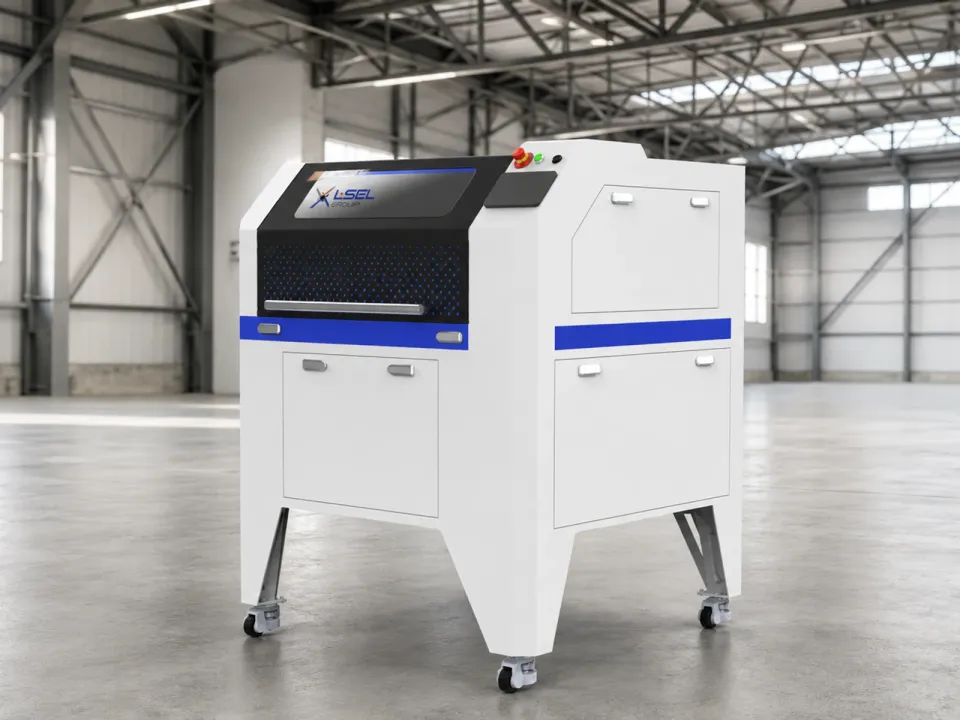
MK-B4
Article: 10074
Compact multifunction laser
CNC cutting and additional laser operations in one compact system. The series combines cutting, welding, cleaning and marking with interchangeable equipment.
- Source power, kW
- 0.8 / 1.2
- Control
- CNC
- Cooling
- Air-cooled
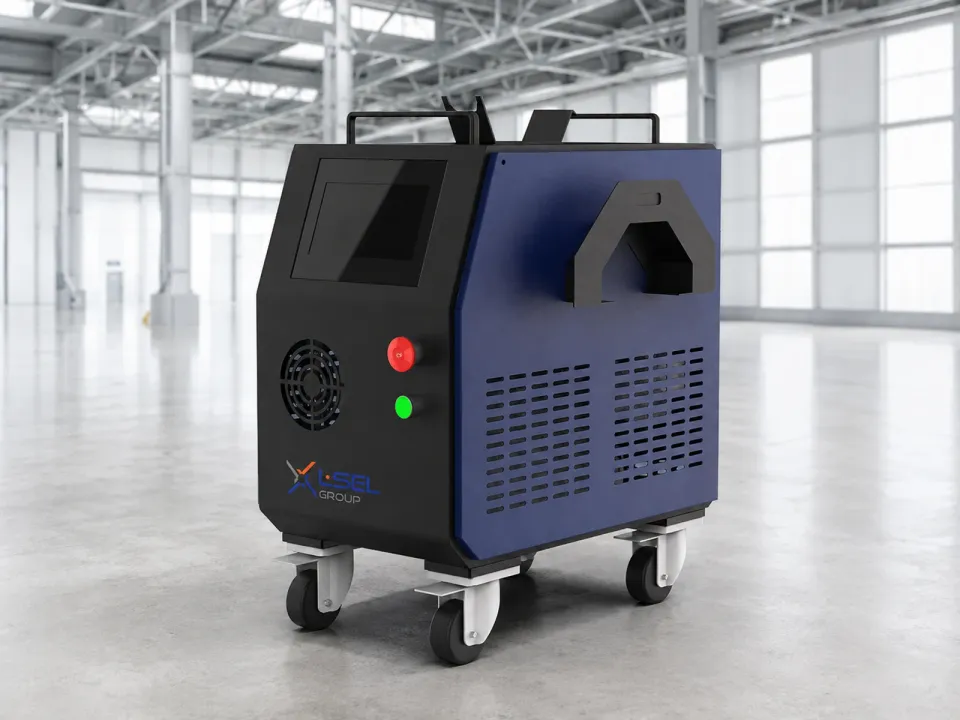
MK-AW
Article: 10075
Air-cooled laser welding
A compact mobile system for handheld laser welding. Air cooling simplifies the arrangement without a separate water chiller.
- Cooling
- Air-cooled
- Configuration
- Mobile system
- Model
- MK-AW
Automation and robotics systems
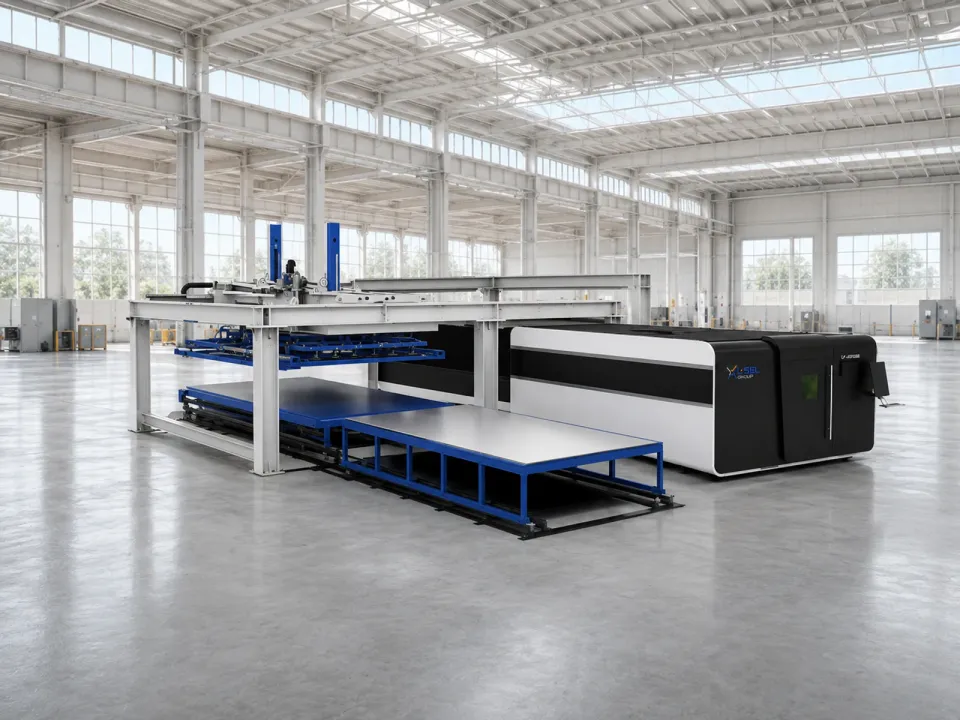
GAS
Article: 10049
Automatic sheet handling
Sheet loading and unloading for a laser cutting area. Coordinated manipulators, trolleys and machine movements reduce manual handling of blanks.
- Sheet thickness for handling, mm
- 1–14
- Maximum sheet weight for handling, kg
- 2000
- Maximum sheet for handling, mm
- 6000 × 2500
2 × 8
Article: 10052
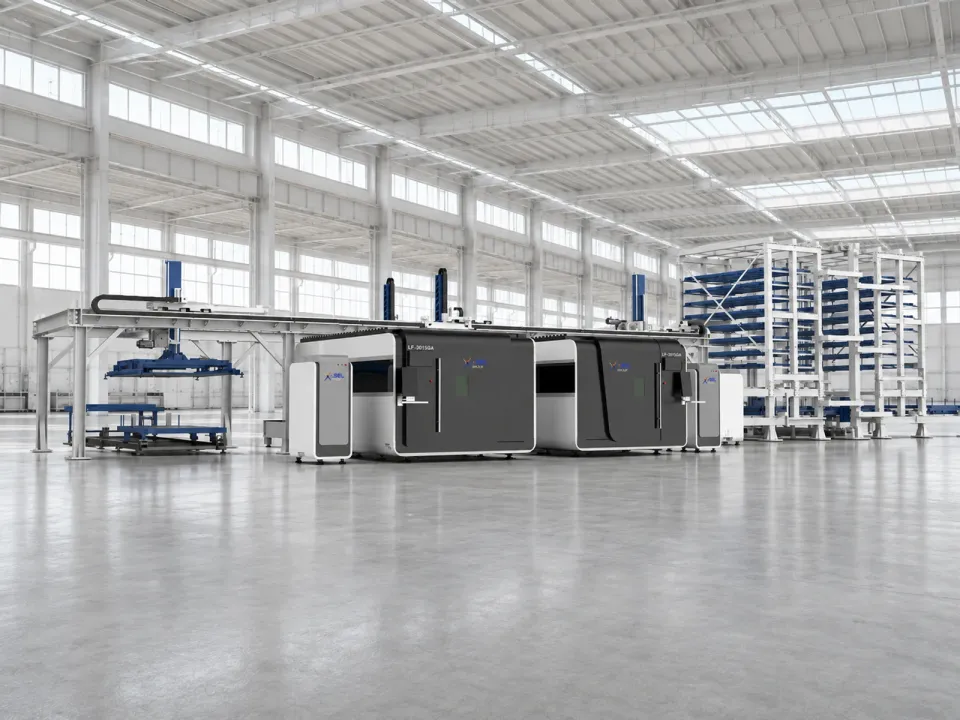
Dual-tower storage and automated laser line
Vertical sheet storage, automatic feeding and coordinated operation of two lasers. For production that needs organised materials and less manual sheet handling.
- Storage levels
- 16
- Load per storage level, t
- 3
- Maximum sheet weight for handling, kg
- 300
MK-WR
Article: 10076
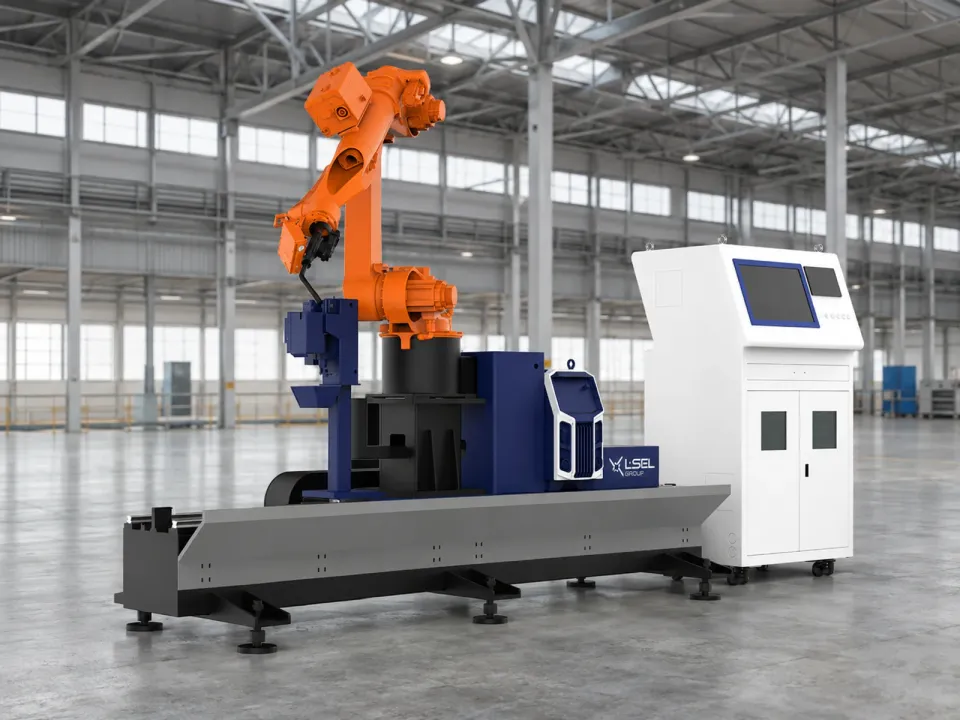
Robotic arc welding
A MIG/MAG system with a robot and optional rail travel. This is arc welding, not laser welding.
- Welding process
- MIG / MAG
- Rail module carrying load, kg
- 1000
- Positioning repeatability, mm
- ±0.05