

Suitable applications
Panels, doors, metal-furniture components and thin-sheet enclosures. Vacuum gripping must be checked on the actual surface: perforations, protective film, roughness and holes can affect holding reliability.
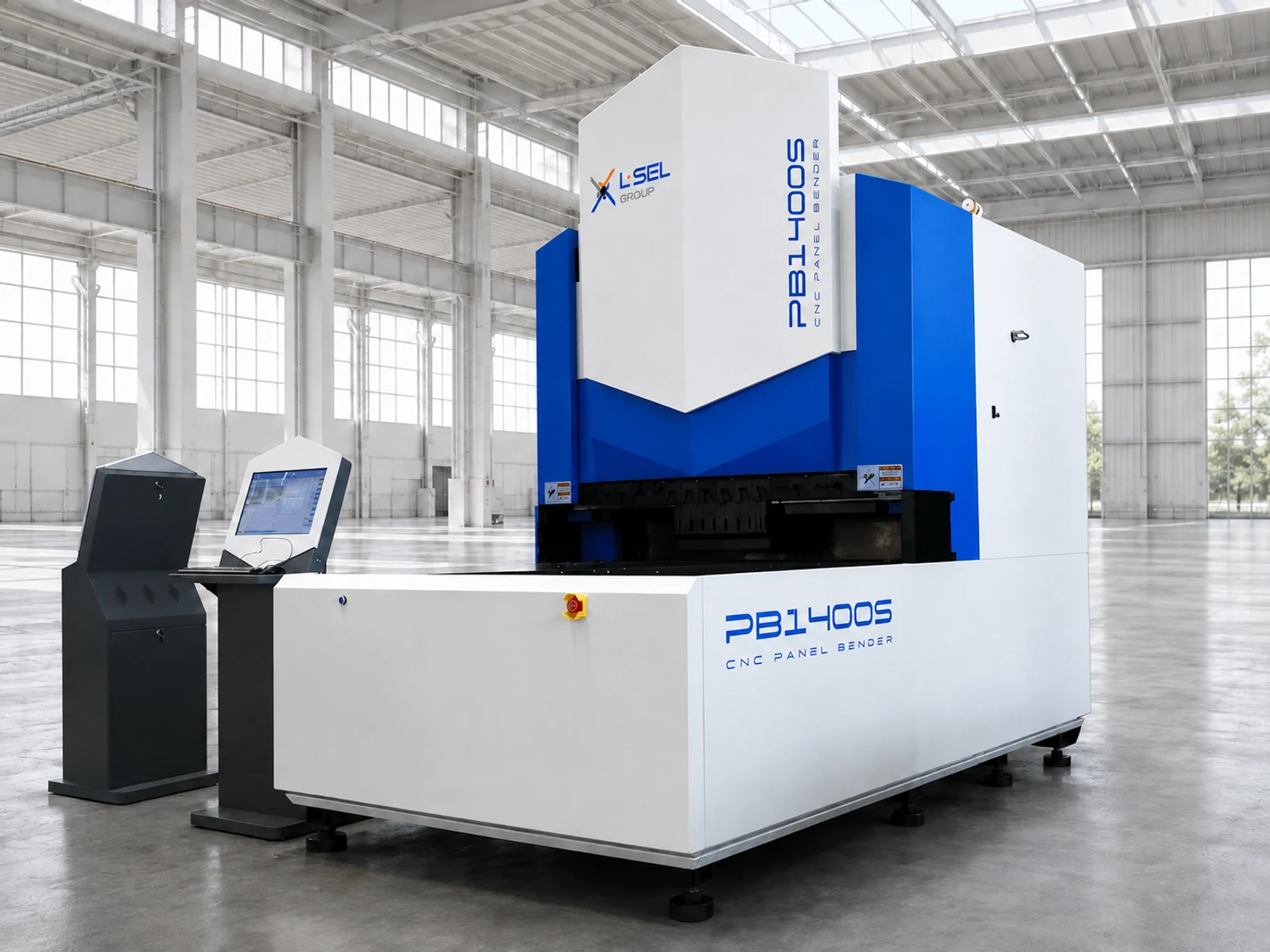
The image is for reference. Actual appearance and configuration may vary.
PB1000S, PB1400S
Article: 10036
Servo-electric panel bending with suction-cup handling. For enclosures and boxes that require several sides of one blank to be formed in sequence.
Electric servo drives coordinate feeding, rotation and bending-tool movements. A cast frame and vacuum handling system form one working unit. Upward and downward bends follow the program; each shape remains subject to tooling and blank geometry.
Panels, doors, metal-furniture components and thin-sheet enclosures. Vacuum gripping must be checked on the actual surface: perforations, protective film, roughness and holes can affect holding reliability.
PB-S handles sheet with suction cups, so suitability depends on the surface and available gripping areas. Perforations, cutouts and protective film need sample verification. For multi-sided panels, evaluate the entire rotation sequence rather than one fast bend.
| Model | Bending length, mm | Bend height, mm | Minimum sheet thickness, mm | Stainless steel, mm | Cold-rolled steel, mm | Total installed power, kW | Rated voltage, V | Machine weight, t | Dimensions L × W × H, mm |
|---|---|---|---|---|---|---|---|---|---|
| PB1000S | 1000 | 170 | 0.35 | 1.0 | 1.2 | 25 | 380 | ~7 | 2850 × 1500 × 2800 |
| PB1400S | 1400 | 170 | 0.35 | 1.0 | 1.2 | 34 | 380 | ~10 | 3650 × 1900 × 2900 |
The table covers PB1000S and PB1400S. Thicknesses apply to 304 stainless steel at 515 N/mm² and cold-rolled steel at 410 N/mm², not every grade. The complete cycle includes loading, positioning, rotation and unloading, and is evaluated on your parts.
Format, suction cups, tooling, programming and feed integration. Send the flat pattern and formed part with flange heights so we can assess gripping, bend sequence and collisions. Aluminium and non-standard surfaces require separate confirmation.
Send a drawing or photograph of the part, material, thickness, blank size and required output. This lets us compare configurations against your job, not just their power rating.
Tell us what you would like to clarify. Add drawings, photos or the required configuration reference to your request if available.
Discuss configuration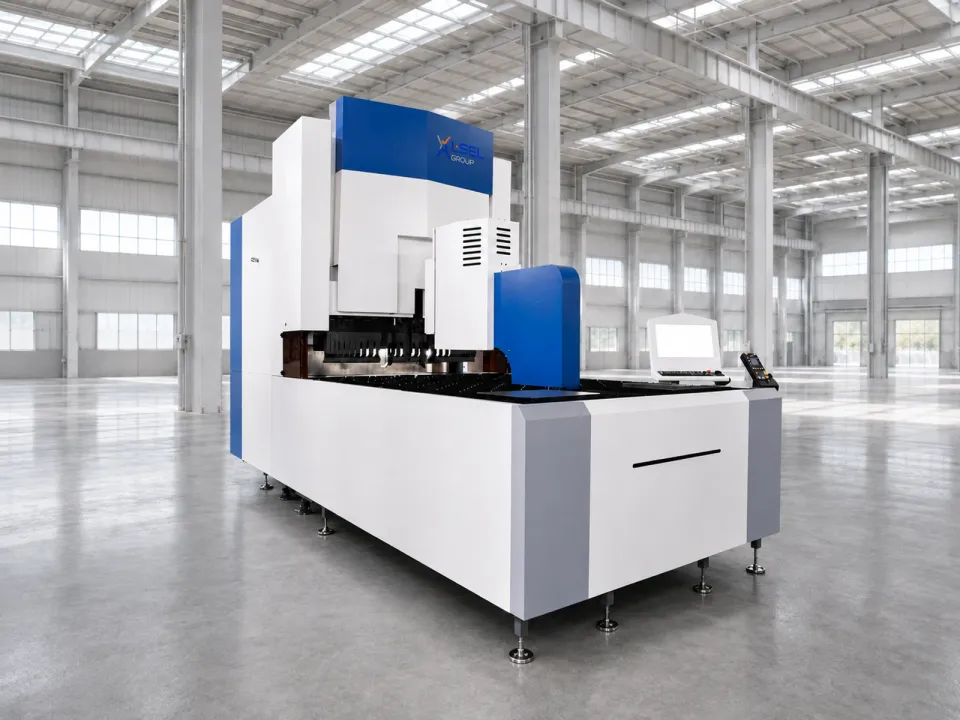
PB1400P, PB2000P, PB2500P
Article: 10037
A clamping manipulator feeds and rotates the sheet during programmed bending. For repeatable production of panels and enclosures with several flanges.
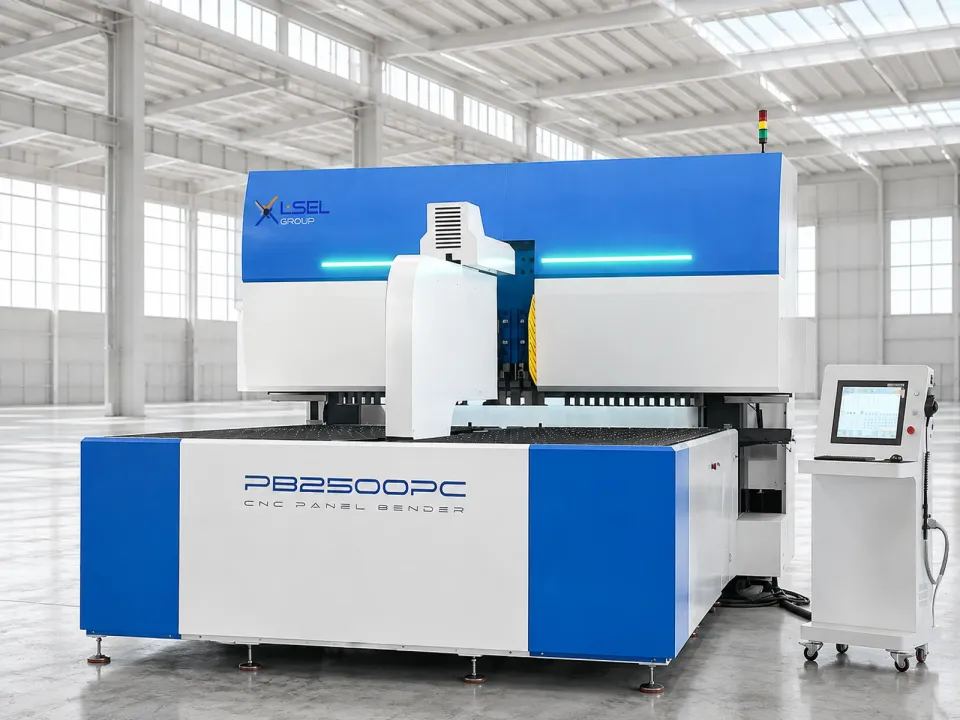
A16, A21, A26
Article: 10038
Automated tooling setup for different panel parts. For production that changes formats, flange heights and bending programs.
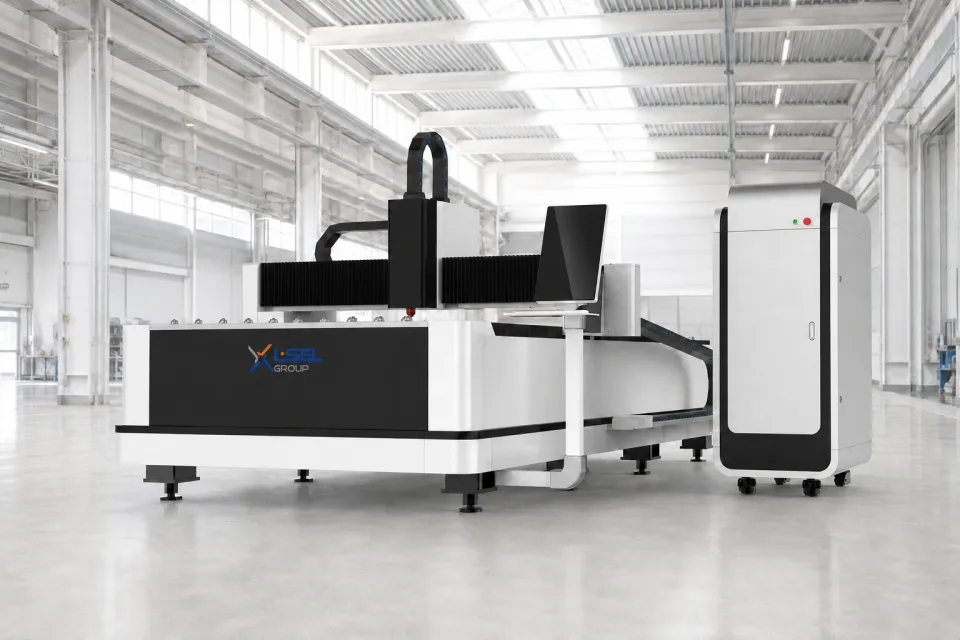
LF3015CN
Article: 10001
A single open 3000 × 1500 mm table with direct sheet access. A model for straightforward stock logistics and a configuration matched to the actual job.