

Suitable applications
Furniture frames, fitness equipment, railings, medical structures and small tube assemblies. Bevels can simplify joint preparation, but angle and quality must be checked alongside wall thickness and the intended weld.
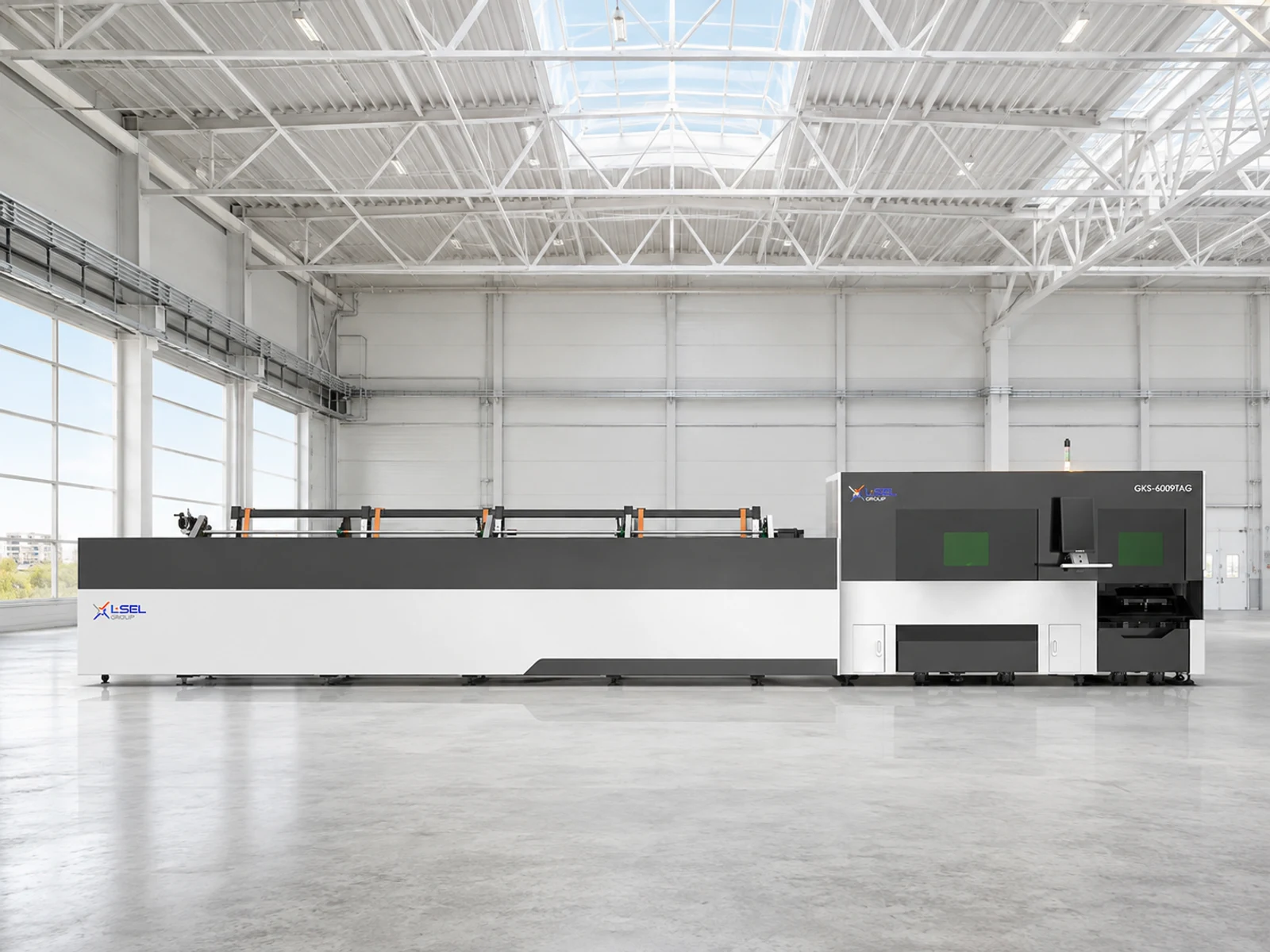
The image is for reference. Actual appearance and configuration may vary.
Article: 10054
A two-chuck system for small tubes with automatic loading. A swivelling head prepares inclined edges for subsequent assembly.
A moving gantry, pull-feed mechanism and two pneumatic chucks coordinate tube holding. Modular loading supplies the next blank; the bevel mechanism supports angles up to ±45° within the agreed process. Support and unloading arrangements depend on part length.
Furniture frames, fitness equipment, railings, medical structures and small tube assemblies. Bevels can simplify joint preparation, but angle and quality must be checked alongside wall thickness and the intended weld.
6009TAG combines small-tube bevel cutting with automatic loading. For repeat frames, assess joint preparation together with stock feeding. Loader and clamping ranges differ; the tube must meet both, as well as support and unloading requirements.
| Model | Source power, kW | Round tube, mm | Square tube, mm | Effective cutting length, mm | Workpiece mass, kg | Maximum chuck rotation, rpm | Pneumatic chuck size designation |
|---|---|---|---|---|---|---|---|
| GKS-6009TAG | 1.5 / 3 | 20–90 | 20–90 | 6500 | 80 | 150 | 90 |
| Round tube for automatic loading, mm | 10–90 |
|---|---|
| Square tube for automatic loading, mm | 10–90 |
The 10–90 mm automatic-loading range differs from the 20–90 mm clamping range. A smaller tube accepted by the loader is not confirmed for cutting without different tooling. Effective cutting length is 6500 mm and tube load is up to 80 kg. Short remnants depend on contour, gripping and cut sequence.
A 1.5 or 3 kW source, loading module, supports, unloading and gas equipment. Send sections, materials, lengths, weights and joint drawings. We check gripping, bevels, remnants and cycle on your tubes.
Send a drawing or photograph of the part, material, thickness, blank size and required output. This lets us compare configurations against your job, not just their power rating.
Tell us what you would like to clarify. Add drawings, photos or the required configuration reference to your request if available.
Discuss configuration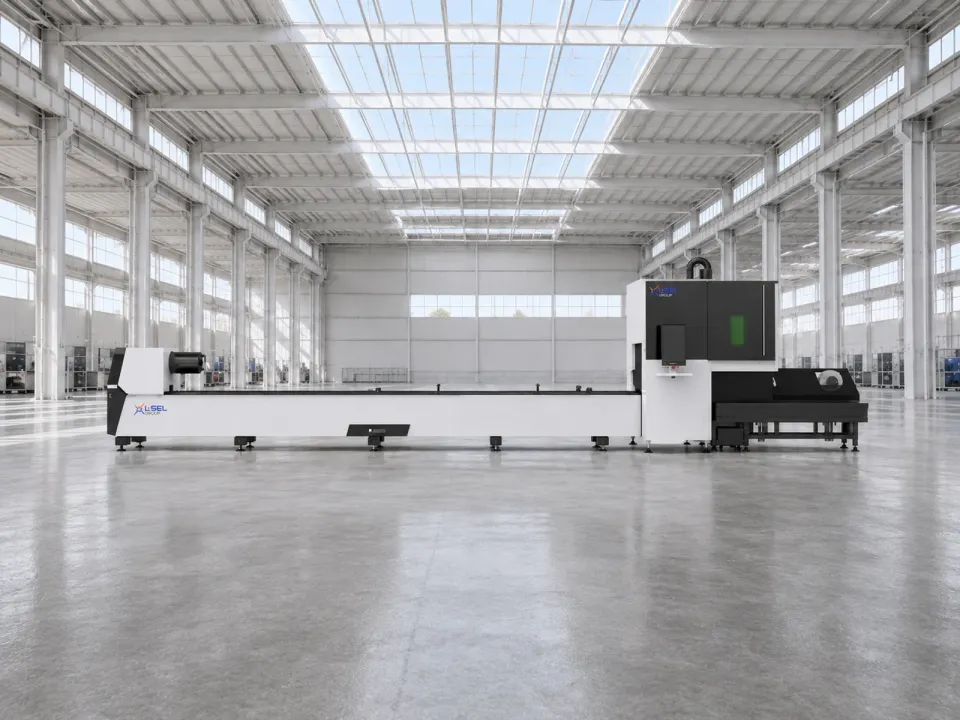
GKS-6024T2, GKS-6036T2
Article: 10005
Round and square tube cutting with two-chuck workholding. Two configurations cover different stock sizes and workpiece weights.
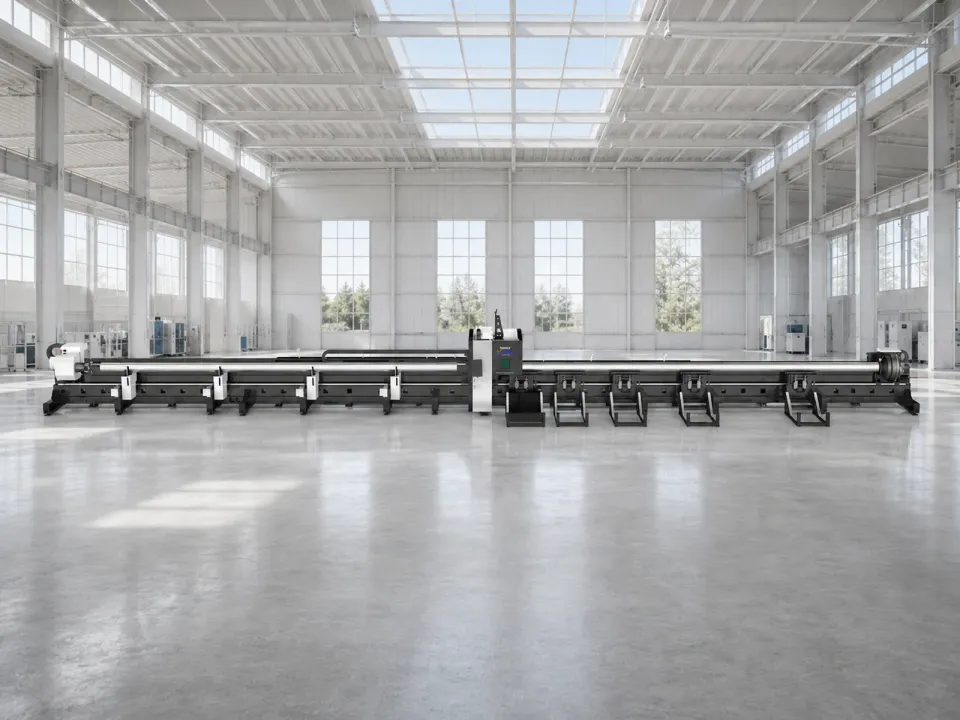
12050T3, 12065T3, 36T3
Article: 10018
Three travelling chucks for long and heavy tubes. The range covers different sections and loads, from the 36T3 configuration to 12065T3 for workpieces weighing up to 3000 kg.
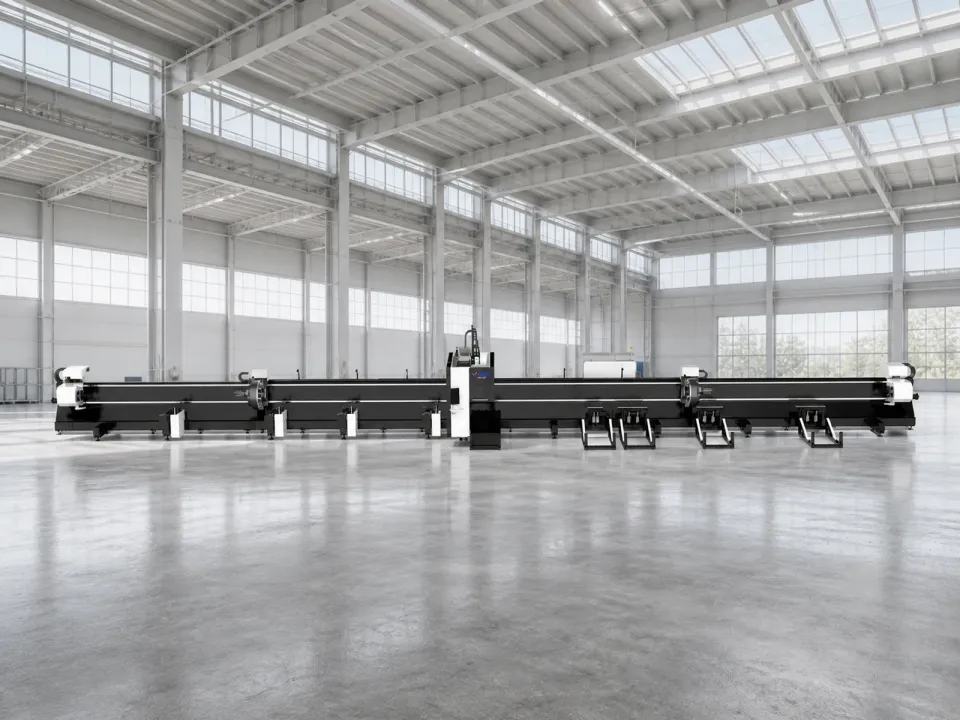
12050T4
Article: 10019
A system for round tube up to 500 mm, square section up to 350 × 350 mm and workpieces up to 2000 kg. Four travelling chucks support long profiles at different processing stages.