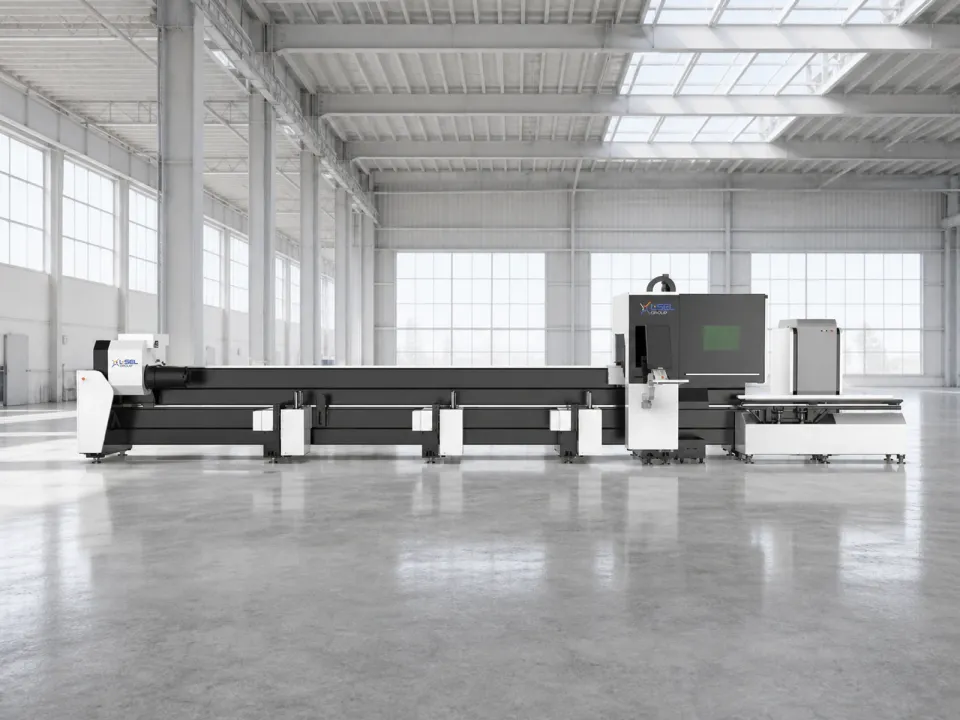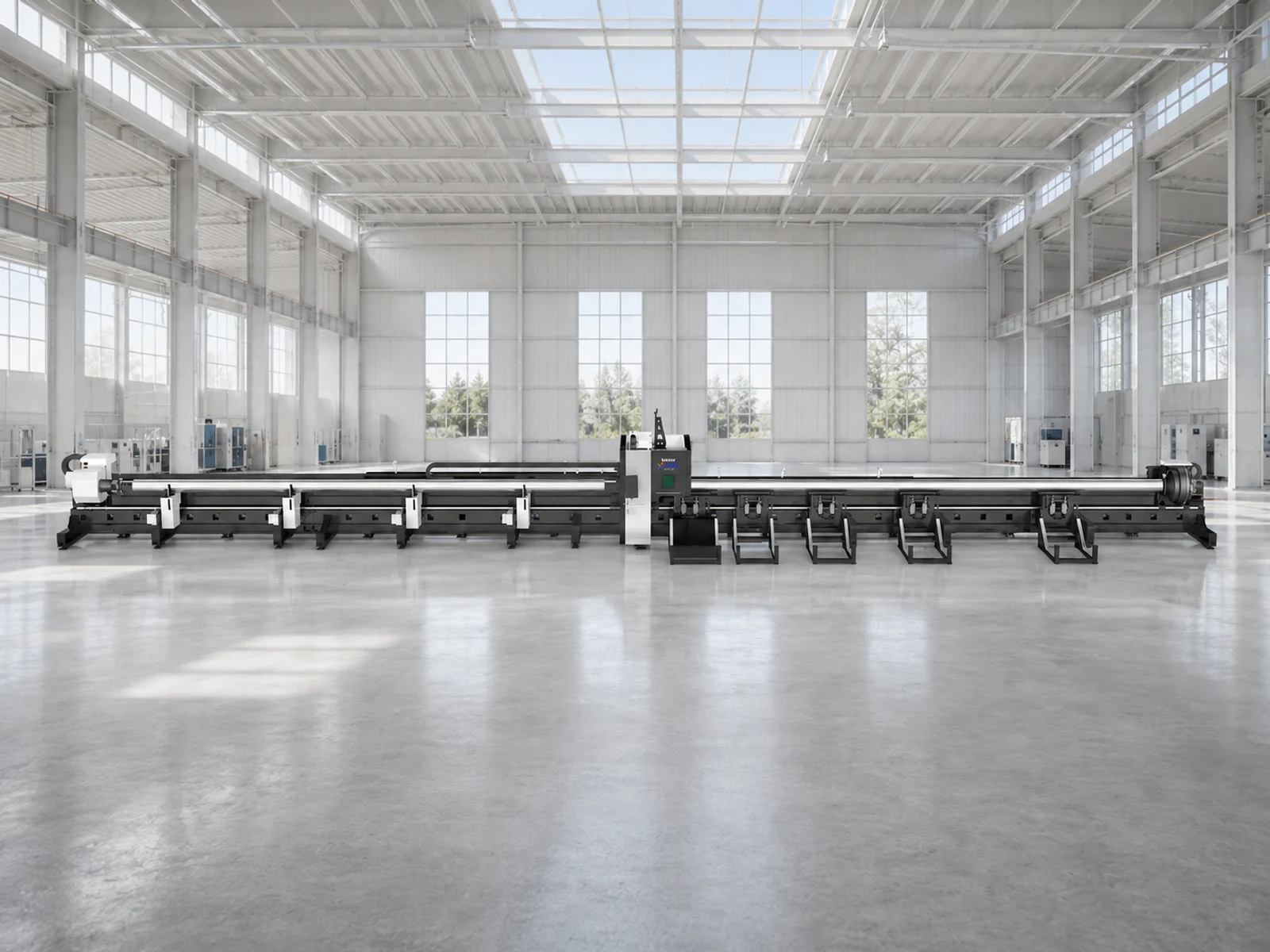
three-chuck tube laser T3

Source power, kW
3–30
Round tube, mm
30–600
Workpiece mass, kg
1200–3000

12050T3, 12065T3, 36T3

Three travelling chucks for long and heavy tubes. The range covers different sections and loads, from the 36T3 configuration to 12065T3 for workpieces weighing up to 3000 kg.

A side-mounted bed and servo-driven supports organise feeding and holding of long tube. Three chucks provide more ways to transfer the workpiece between clamping zones than a conventional two-chuck layout. Chuck count alone does not guarantee a required tolerance or zero remnant on every part.

Purpose and distinguishing features

Suitable applications

Tubular steel structures, construction and heavy machinery, long frames and load-bearing parts. Selection needs more than diameter and wall thickness: weight, straightness, finished-part length and support after cut-off also matter. Other profiles, including channels and I-beams, are checked separately against geometry and equipment.
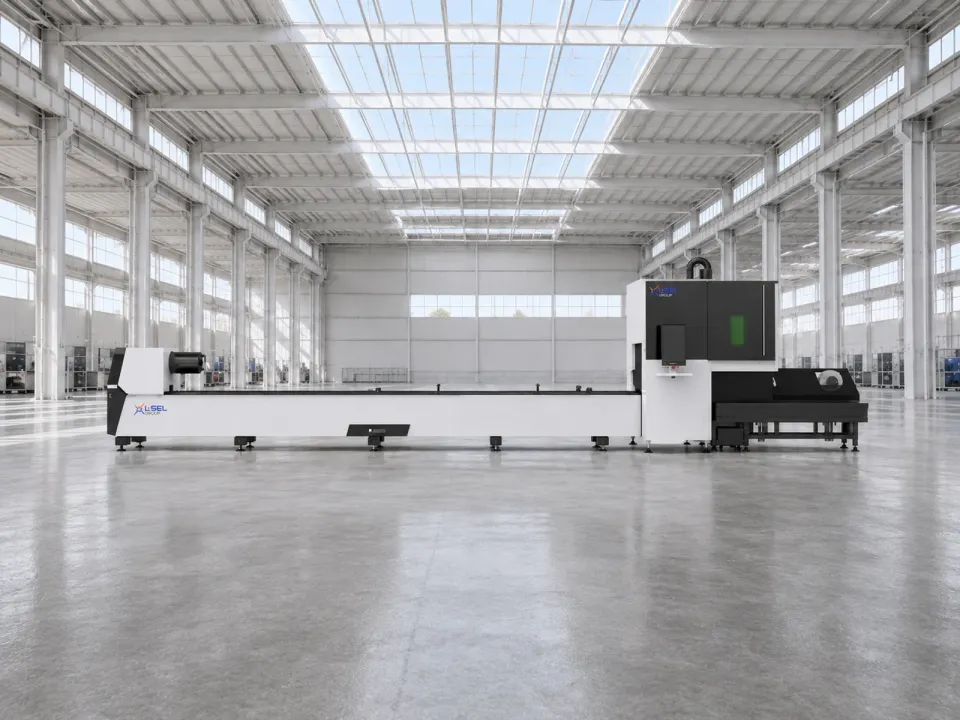
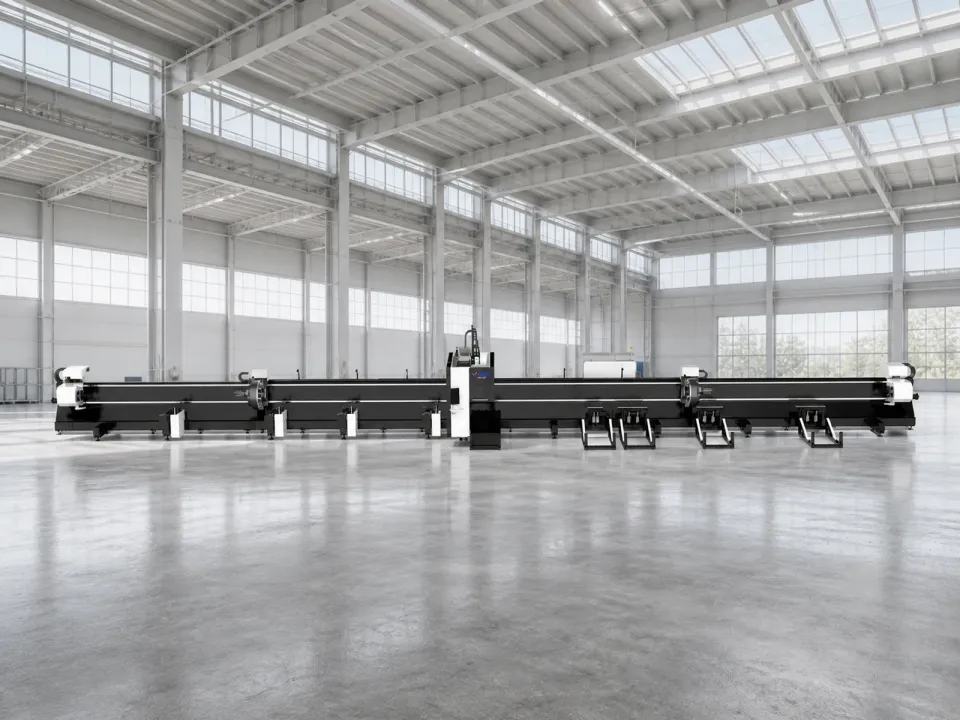
T3 three-chuck tube laser

T3 adds a third holding point for long or heavy tubes and supports stock transfer between cutting stages. Check chuck positions, supports and the centre of gravity of your profile. Overall load capacity does not describe every tube position during machining.

Technical specifications

T3 three-chuck tube laser
ModelSource power, kWRound tube, mmSquare tube, mmEffective cutting length, mmWorkpiece mass, kgMaximum chuck rotation, rpm
12050T36–3040–50040–500200030
12065T36–3050–60050–60012500300030
36T33–1230–35030–3506500 / 9500 / 12500120060

Choosing a configuration

We compare the cycle using your profile: loading, holes and end cuts, re-clamping and unloading. Maximum table speeds must not be applied simultaneously to the largest and heaviest workpiece. Remnant, acceleration and rotation are checked against the actual section and safe operating conditions.

Chuck version, source, cutting head, supports and loading system. Semi-automatic feeding is an agreed option. Working length for 12050T3 is confirmed in the specification because the source data is inconsistent; the unconfirmed value is not listed. Permitted loading, cutting and unloading lengths are agreed separately for each variant.

Discuss configuration

Send a drawing or photograph of the part, material, thickness, blank size and required output. This lets us compare configurations against your job, not just their power rating.

Tell us what you would like to clarify. Add drawings, photos or the required configuration reference to your request if available.

Discuss configuration