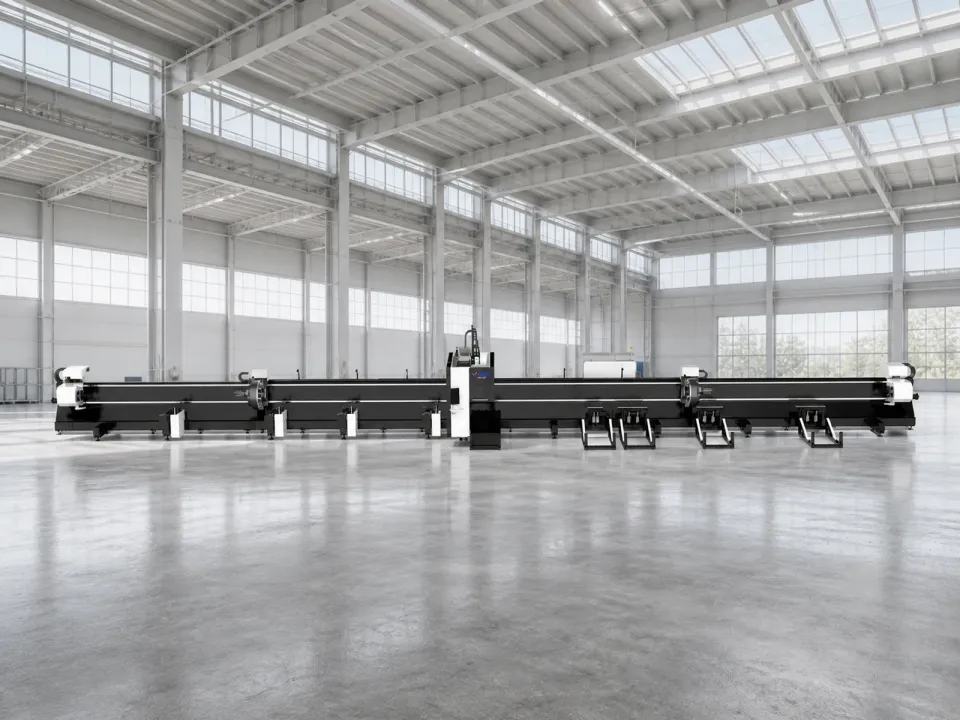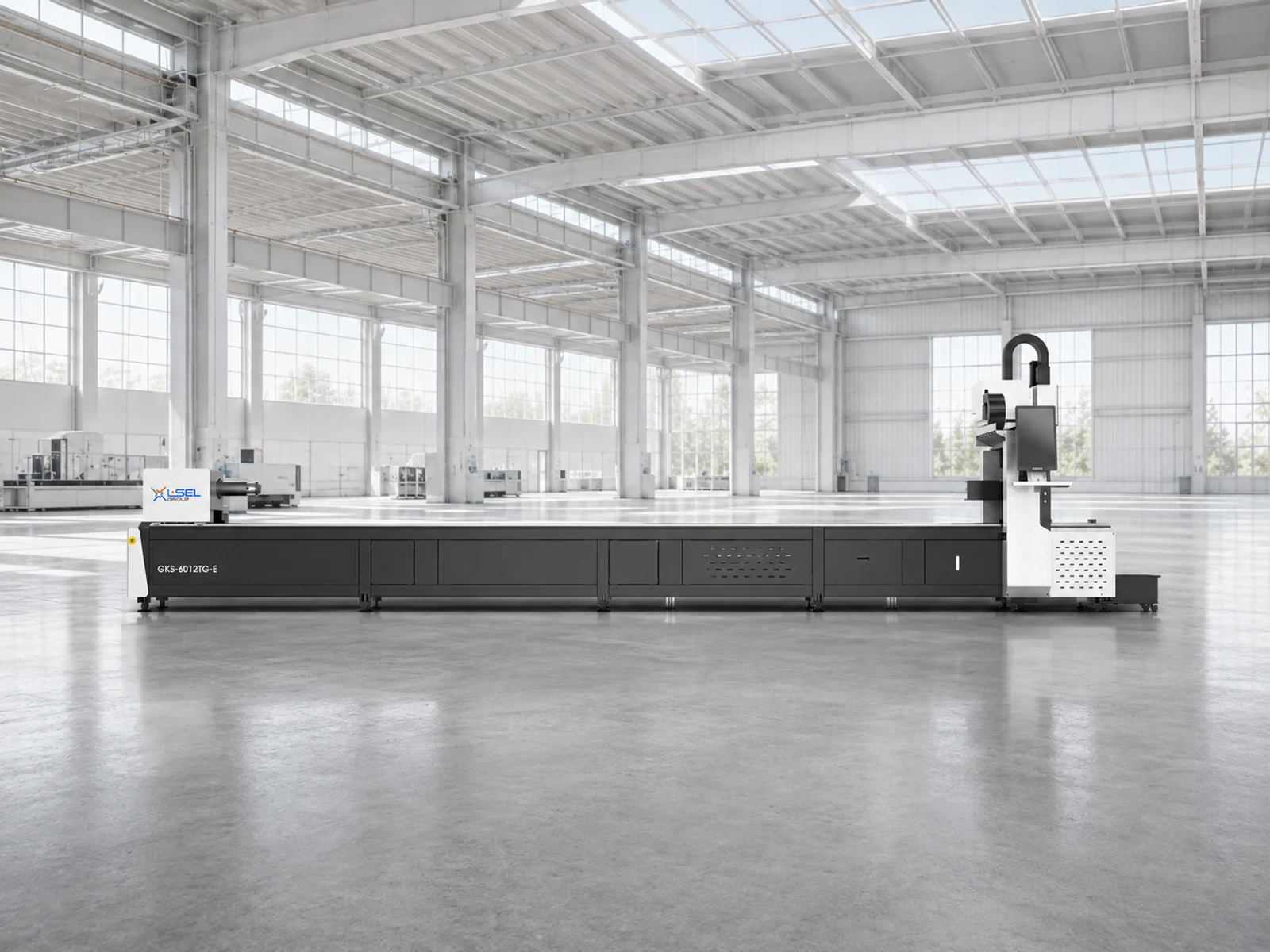
compact tube laser TG-E

Source power, kW
1.5 / 3
Round tube, mm
10–160
Workpiece mass, kg
80

6012 TG-E, 6016 TG-E

An integrated series for small tube sections from 10 to 120 or 160 mm. A 1.5 or 3 kW source, 6500 mm working length and maximum tube weight of 80 kg.

Electrical equipment, source and pneumatics are integrated into the bed. Additional front-chuck travel enables completion of a cut with two-chuck clamping. This layout suits small tubes and simplifies placement of the main assemblies, but does not remove the space needed for material feeding.

Purpose and distinguishing features

Suitable applications

Furniture and sports frames, barriers, small tubular structures and products with many holes or cut-outs. Intended for small profiles: a similar stock length does not make it a replacement for a heavy tube laser. Check the 80 kg limit against the entire incoming tube length.
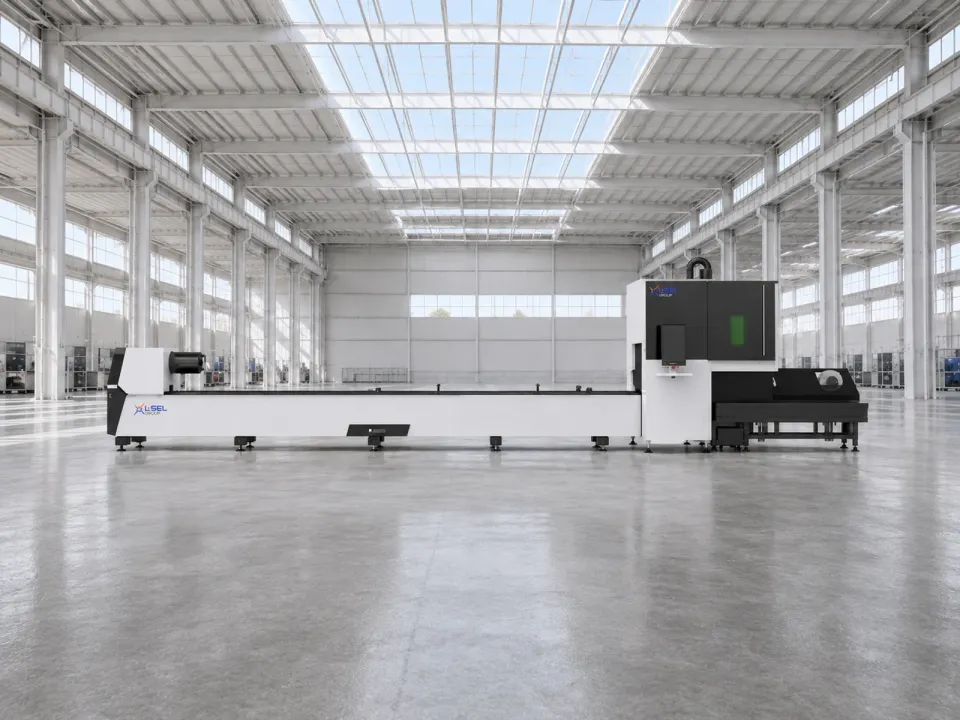
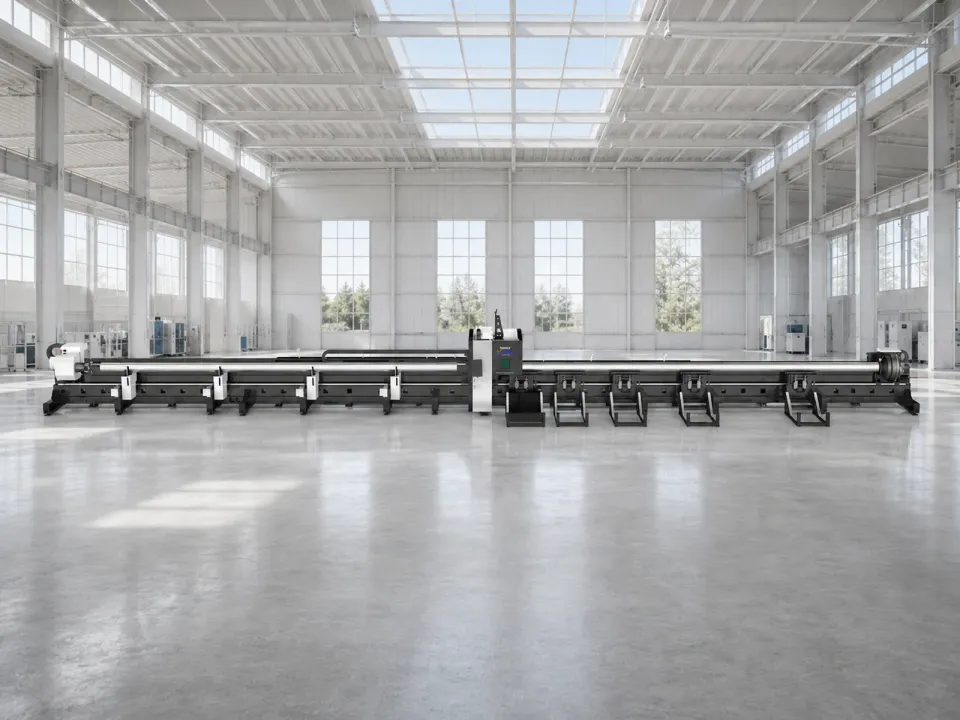
TG-E compact tube laser

TG-E targets small sections for which a heavy tube machine may be unnecessary. Check minimum clamping size, thin walls and long-stock behaviour on the supports. When producing many short parts, receiving-area access matters alongside maximum diameter.

Technical specifications

TG-E compact tube laser
ModelSource power, kWRound tube, mmSquare tube, mmEffective cutting length, mmWorkpiece mass, kgMaximum chuck rotation, rpm
6012 TG-E1.5 / 310–12010–120650080140
6016 TG-E1.5 / 310–16010–160650080140

Choosing a configuration

A minimum remnant from 30 mm is a conditional factory reference checked using your part. The maximum 140 rpm does not establish production output: contour, wall thickness, material and feed cycle all affect it. Regular processing of heavier profiles calls for comparison with TM or multi-chuck series.

A 120 or 160 mm chuck version, source, cutting head, gases, cooling and feed method. Selection needs the profile range, wall thicknesses and typical nesting job. Safe space for long tube, fume removal and maintenance access must also be provided.

Discuss configuration

Send a drawing or photograph of the part, material, thickness, blank size and required output. This lets us compare configurations against your job, not just their power rating.

Tell us what you would like to clarify. Add drawings, photos or the required configuration reference to your request if available.

Discuss configuration