

Suitable applications
Batches of sheet parts with repeatable bends where feeding, turning and stacking can be automated. Suitability depends on blank shape, centre of gravity, gripper access and consistent incoming material as well as batch size.
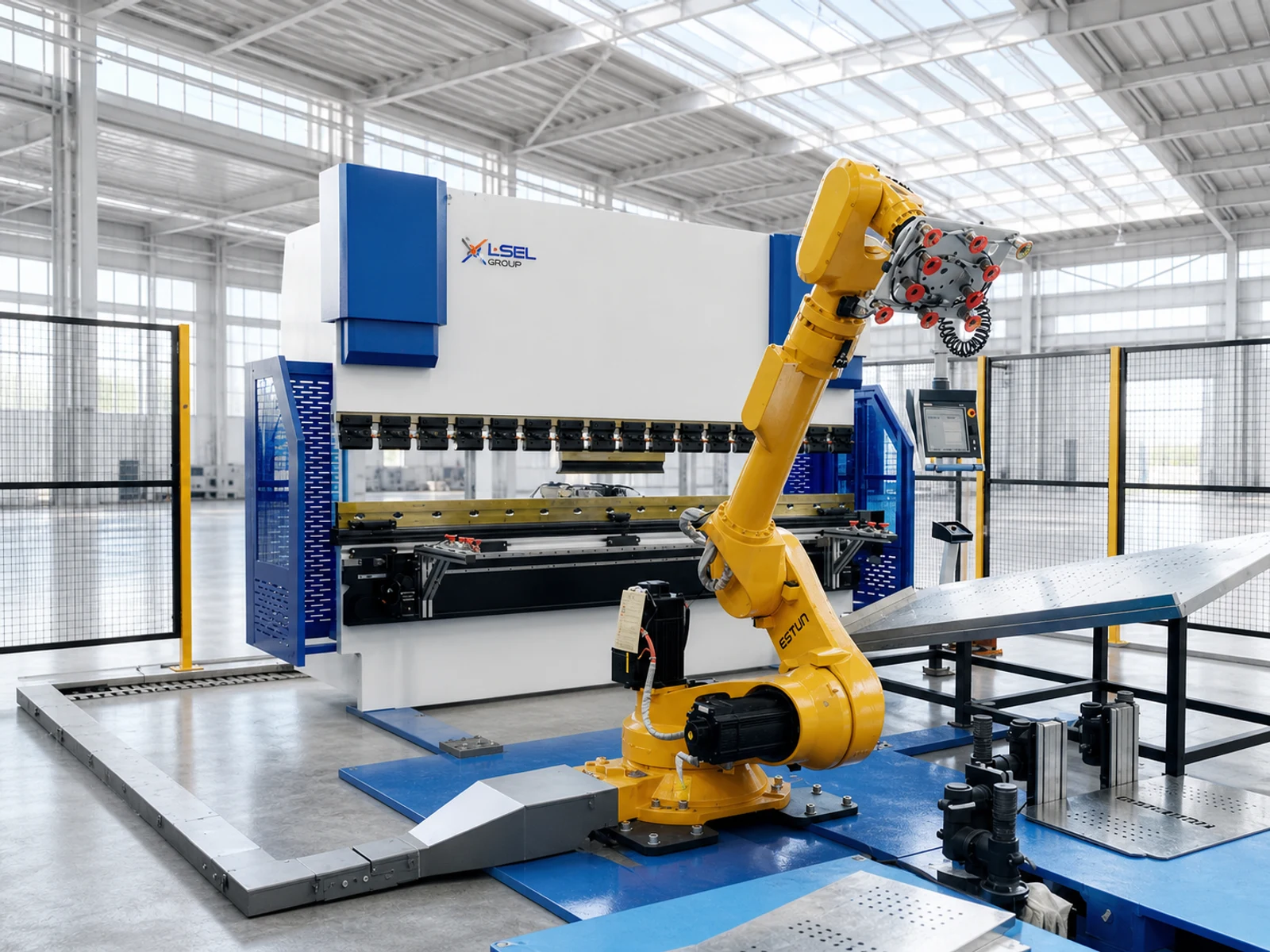
The image is for reference. Actual appearance and configuration may vary.
50T/1300, 70T/1600, 70T/2500, 80T/2500, 110T/2500, 110T/3200, 110T/4000, 110T/4100, 135T/3200, 135T/4000, 135T/4100, 170T/3200, 170T/4000, 170T/4100, 220T/3200, 220T/4000, 250T/3200, 250T/4000, 250T/5000, 250T/6000
Article: 10034
A press, robot and auxiliary stations for a repeatable bending cycle. The system is selected for part geometry, gripping method and the required operation sequence.
Depending on configuration, the cell includes robotic loading, a centring station, turning device, exchangeable grippers and stacking area. Machine vision and rapid gripper/tool changes are separately agreed capabilities. The work area needs coordinated guarding and safe setup modes.
Batches of sheet parts with repeatable bends where feeding, turning and stacking can be automated. Suitability depends on blank shape, centre of gravity, gripper access and consistent incoming material as well as batch size.
WAD-FMC automates gripping, location and turning as well as press movement. Suitability depends on the part family: accessible grip areas after each bend, changing centre of gravity and final stacking. A robot does not remove the need to engineer each part's process.
| Model | Force, kN | Bending length, mm | Approach speed, mm/s | Ram working speed, mm/s | Return speed, mm/s | Distance between columns, mm | Throat depth, mm | Ram stroke, mm | Daylight, mm | Main motor, kW | Machine weight, t | Dimensions L × W × H, mm |
|---|---|---|---|---|---|---|---|---|---|---|---|---|
| 50T/1300 | 500 | 1300 | 220 | 15.5 | 200 | 1120 | 300 | 150 | 460 | 6 | 4.5 | 1800*1500*2300 |
| 70T/1600 | 700 | 1600 | 220 | 15.5 | 200 | 1300 | 300 | 150 | 460 | 6 | 5.3 | 2300*1600*2500 |
| 70T/2500 | 700 | 2500 | 220 | 15.5 | 200 | 2050 | 300 | 150 | 460 | 6 | 6 | 3100*1600*2500 |
| 80T/2500 | 800 | 2500 | 220 | 15 | 185 | 2050 | 300 | 150 | 460 | 8.7 | 6.5 | 3100*1600*2600 |
| 110T/2500 | 1100 | 2500 | 220 | 15 | 195 | 2050 | 400 | 200 | 480 | 10.8 | 8.5 | 3100*1800*2600 |
| 110T/3200 | 1100 | 3200 | 220 | 15 | 195 | 2700 | 400 | 200 | 480 | 10.8 | 8.5 | 3800*1800*2600 |
| 110T/4000 | 1100 | 4000 | 220 | 15 | 195 | 3100 | 400 | 200 | 480 | 10.8 | 9.5 | 4600*1800*2600 |
| 110T/4100 | 1100 | 4100 | 220 | 15 | 195 | 3600 | 400 | 200 | 480 | 10.8 | 10.0 | 4700*1800*2700 |
| 135T/3200 | 1350 | 3200 | 220 | 12 | 150 | 2700 | 400 | 200 | 480 | 10.8 | 10 | 3800*1800*2700 |
| 135T/4000 | 1350 | 4000 | 220 | 12 | 150 | 3100 | 400 | 200 | 480 | 10.8 | 11 | 4600*1800*2700 |
| 135T/4100 | 1350 | 4100 | 220 | 12 | 150 | 3600 | 400 | 200 | 480 | 10.8 | 11 | 4700*1800*2700 |
| 170T/3200 | 1700 | 3200 | 160 | 12 | 122 | 2700 | 450 | 200 | 480 | 13.2 | 11.8 | 3800*2000*2800 |
| 170T/4000 | 1700 | 4000 | 160 | 12 | 122 | 3100 | 450 | 200 | 480 | 13.2 | 13 | 4600*2000*2800 |
| 170T/4100 | 1700 | 4100 | 160 | 12 | 122 | 3600 | 450 | 200 | 480 | 13.2 | 13 | 4700*2000*2800 |
| 220T/3200 | 2200 | 3200 | 160 | 11.5 | 135 | 2600 | 450 | 200 | 480 | 16.7 | 13 | 3800*2200*2850 |
| 220T/4000 | 2200 | 4000 | 160 | 11.5 | 135 | 3100 | 450 | 200 | 480 | 16.7 | 15 | 4600*2200*2850 |
| 250T/3200 | 2500 | 3200 | 100 | 10.5 | 130 | 2600 | 450 | 250 | 540 | 16.7 | 16.5 | 3500*2000*2900 |
| 250T/4000 | 2500 | 4000 | 100 | 10.5 | 130 | 3100 | 450 | 250 | 540 | 16.7 | 18.8 | 4300*2100*3100 |
| 250T/5000 | 2500 | 5000 | 100 | 10.5 | 130 | 3800 | 450 | 250 | 540 | 16.7 | 23 | 5300*2150*3150 |
| 250T/6000 | 2500 | 6000 | 100 | 10.5 | 130 | 4800 | 450 | 250 | 540 | 16.7 | 25 | 6300*2150*3150 |
The factory table below describes base presses, not the complete cell's footprint or the robot's payload. We simulate the whole cycle for your parts: picking, presentation, bending, regripping and unloading. Autonomous operation and cycle time are validated using the agreed product range.
Press, robot, grippers, supports, feeding, stacking, programming and production-system integration. Assessment requires drawings or 3D models, materials, thicknesses, weights, batches and sorting requirements. Training and maintenance form part of cell commissioning planning.
Send a drawing or photograph of the part, material, thickness, blank size and required output. This lets us compare configurations against your job, not just their power rating.
Tell us what you would like to clarify. Add drawings, photos or the required configuration reference to your request if available.
Discuss configuration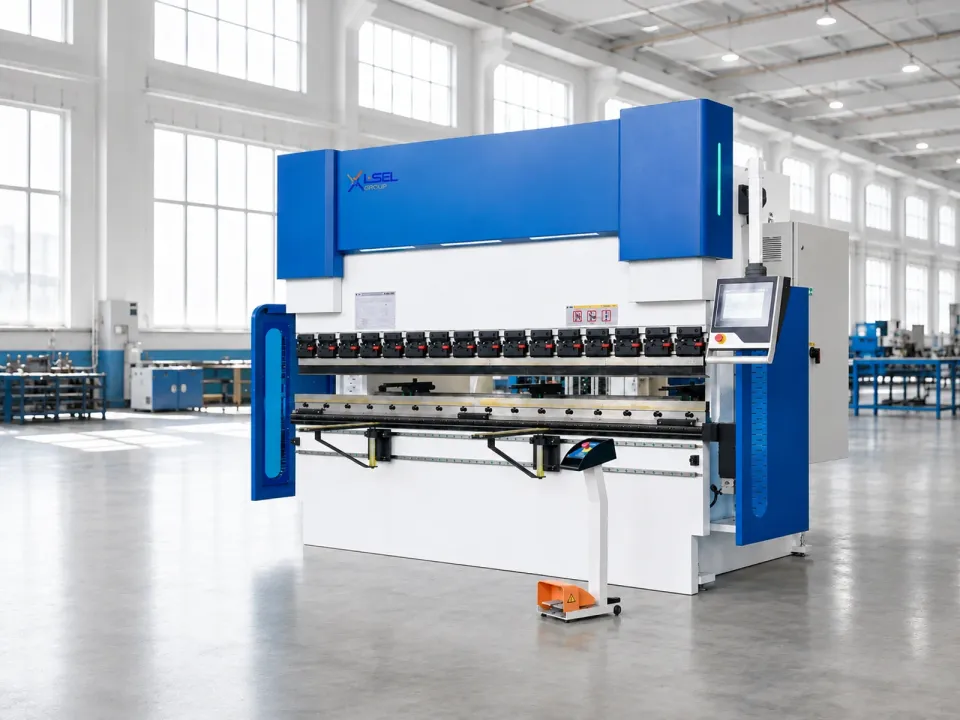
WAD 50T/1300, WAD 50T/2000, WAD 70T/1600, WAD 70T/2500, WAD 70T/3200, WAD 80T/2500, WAD 110T/2500, WAD 110T/3200, WAD 110T/4000, WAD 110T/4100, WAD 135T/3200, WAD 135T/4000, WAD 135T/4100, WAD 170T/2500, WAD 170T/3200, WAD 170T/4000, WAD 170T/4100, WAD 220T/2500, WAD 220T/3200, WAD 220T/4000, WAD 220T/5000, WAD 250T/2500, WAD 250T/3200, WAD 250T/4000, WAD 250T/5000, WAD 250T/6000, WAD 300T/3200, WAD 300T/4000, WAD 300T/5000, WAD 300T/6000, WAD 400T/3200, WAD 400T/4000, WAD 400T/5000, WAD 400T/6000, WAD 400T/8000, WAD 500T/4000, WAD 500T/5000, WAD 500T/6000, WAD 600T/3200, WAD 600T/4000, WAD 600T/5000, WAD 600T/6000, WAD 600T/7000, WAD 700T/6000, WAD 800T/6000, WAD 800T/7000, WAD 800T/8000, WAD 800T/10000
Article: 10007
Electro-hydraulic synchronisation and CNC control for repeatable bending. Force and working length are selected for your parts and tooling.
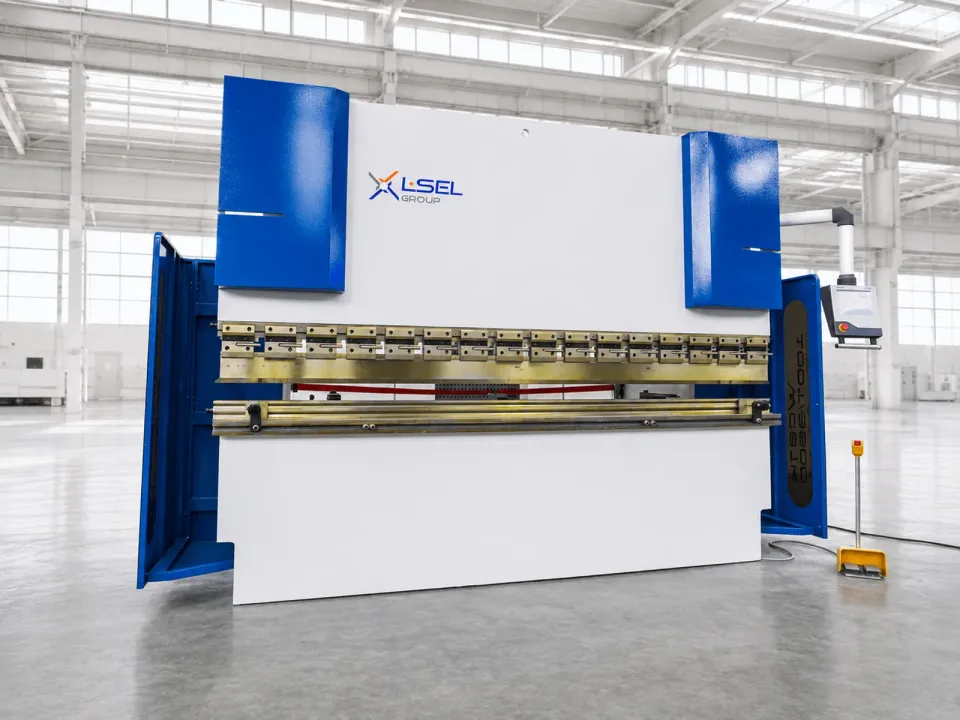
WC67K/WC67E
Article: 10031
The WC67K/WC67E torsion-synchronised family for standard bending operations. Force, length and controls are matched to the parts your production makes every day.
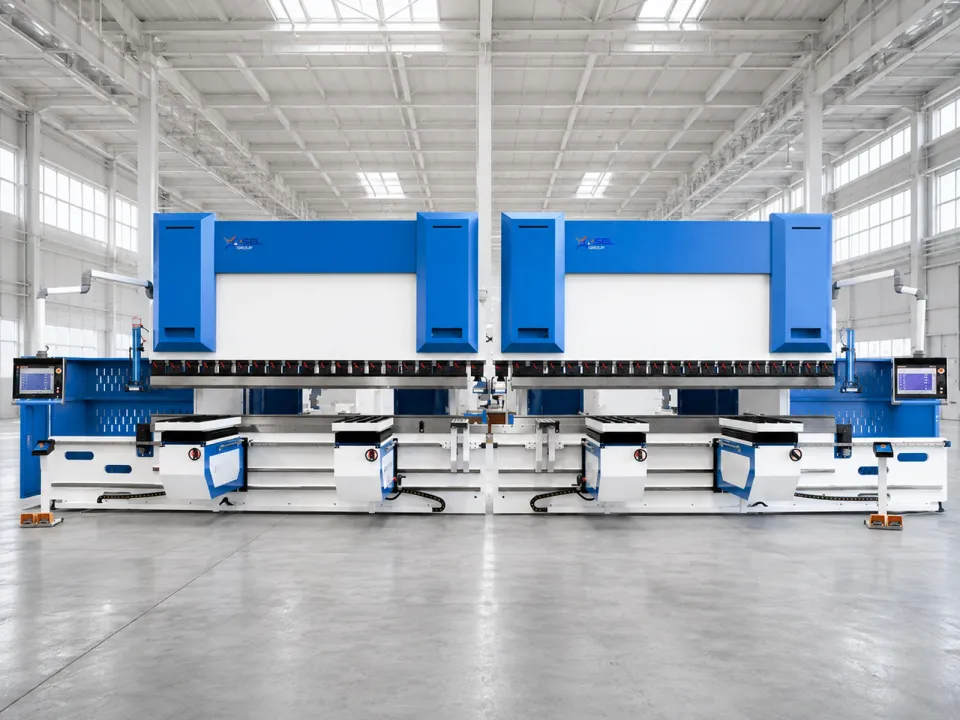
2-WAD
Article: 10032
Two presses for coordinated bending of long parts or separate work on shorter blanks. The system is engineered around the product, working length and feeding arrangement.