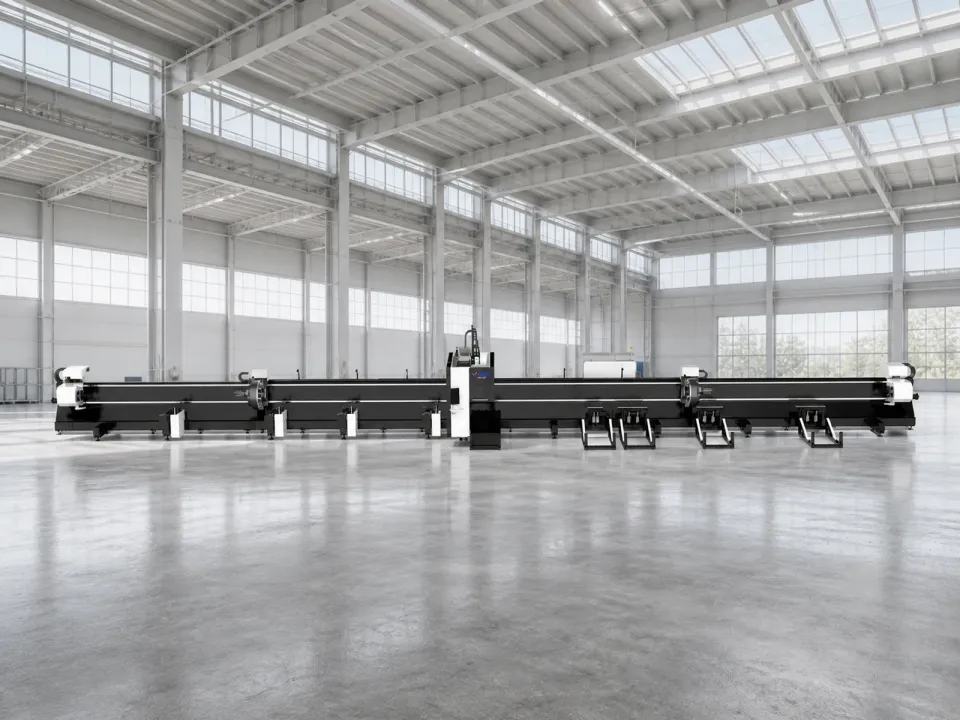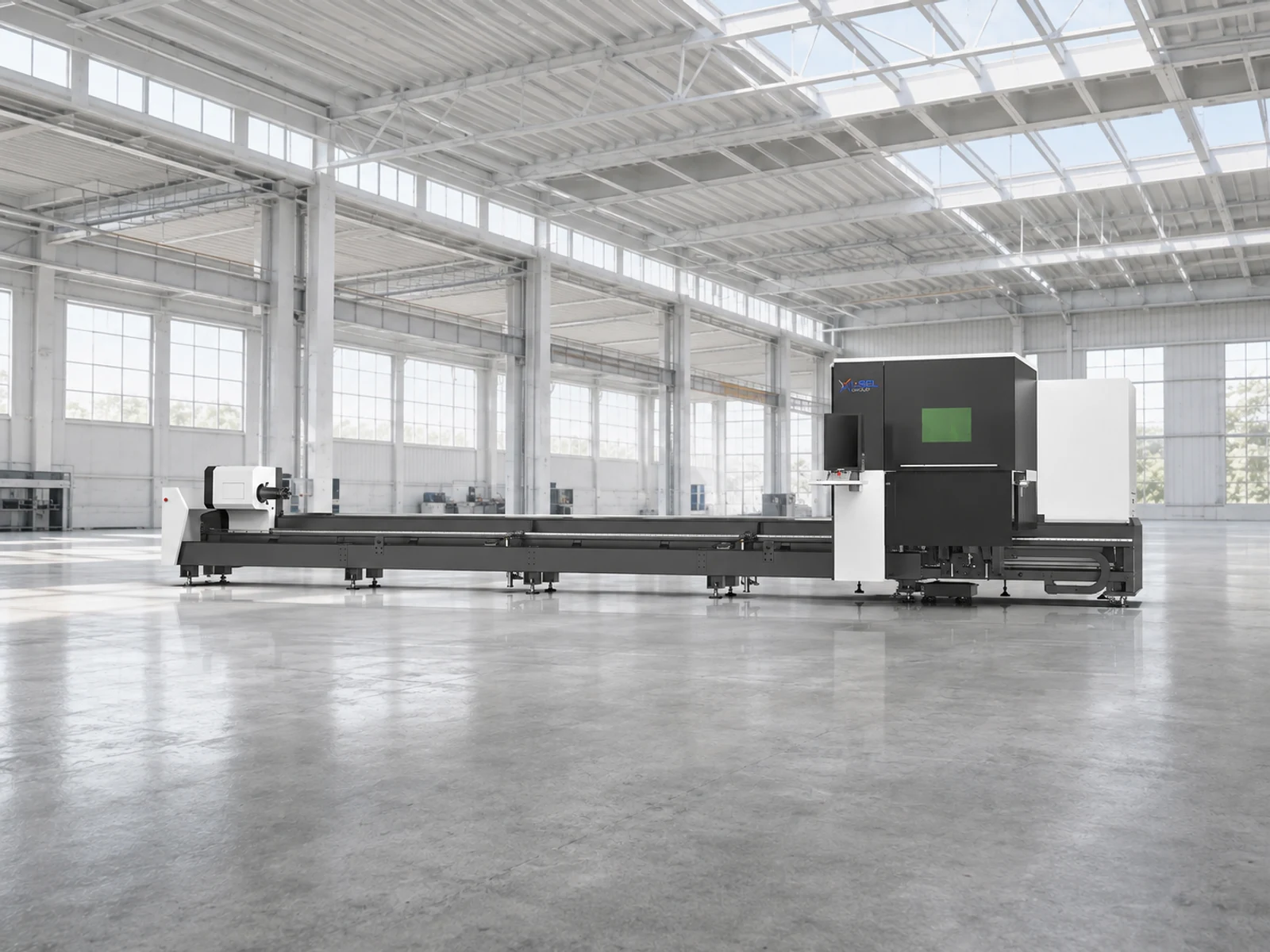
small-profile tube laser TM II

Source power, kW
1.5 / 3 / 6
Round tube, mm
10–160
Workpiece mass, kg
80

A two-chuck series for tubes up to 120 or 160 mm with bevel-cutting capability. Sources of 1.5, 3 or 6 kW and different rotation dynamics for the two chuck sizes.

A travelling front chuck and side-mounted bed support the workpiece during the final cut. Maximum rotation is 200 rpm for the 120 version and 140 rpm for the 160 version. These are different configurations, so the smaller version's speed limit must not be transferred to the larger one.

Purpose and distinguishing features

Suitable applications

Furniture frames, fitness equipment, barriers and tube assemblies requiring holes, joint contours and edge preparation. Incoming tube weight is limited to 80 kg. For bevels, angle, wall thickness, head access and the subsequent welded-joint requirements are checked additionally.
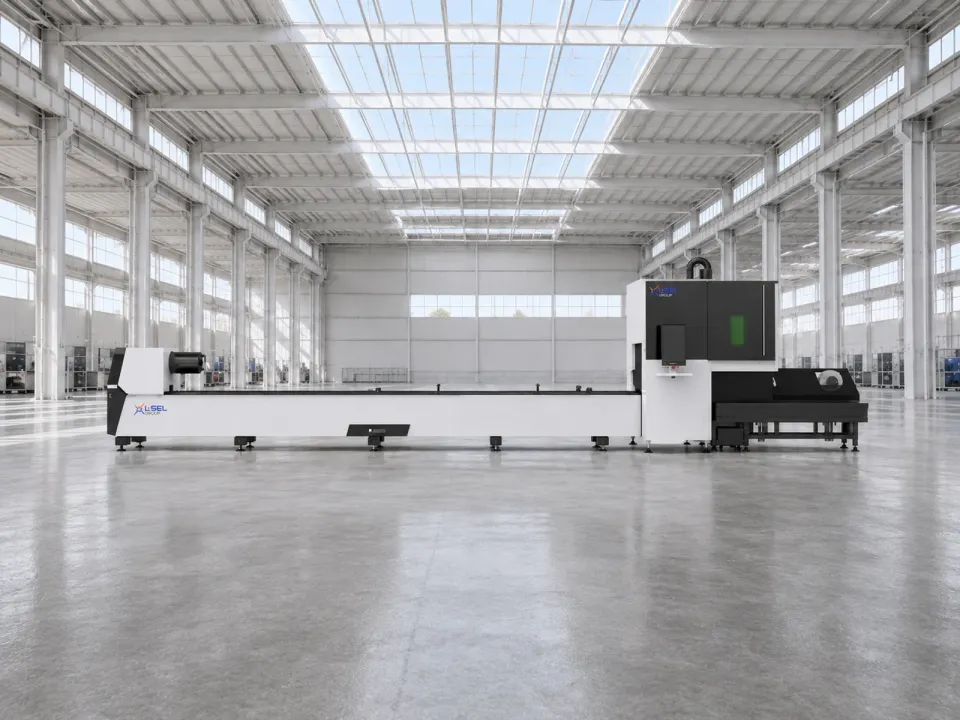
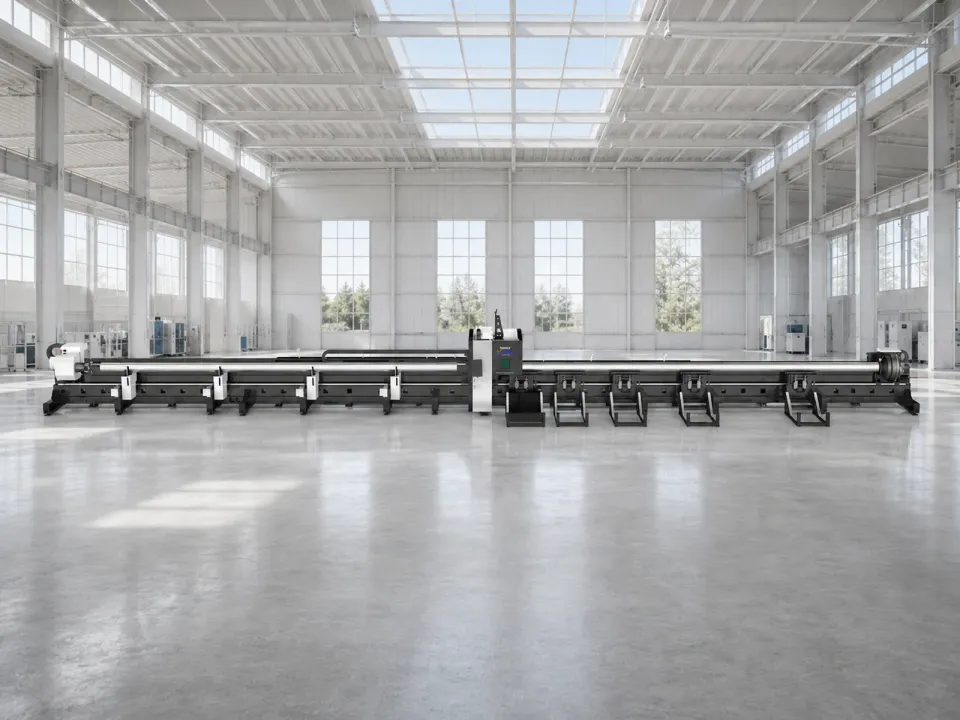
TM II small-profile tube laser

TM II adds bevel preparation to small-tube processing, useful for joints requiring an angled edge before welding. Check head clearance near the chuck, section shape and the required angle. Straight-cut capacity does not establish the complete bevel-cutting envelope.

Technical specifications

TM II small-profile tube laser
ModelSource power, kWRound tube, mmSquare tube, mmEffective cutting length, mmWorkpiece mass, kgMaximum chuck rotation, rpm
TM II · 1201.5 / 3 / 610–12010–120650080200
TM II · 1601.5 / 3 / 610–16010–160650080140

Choosing a configuration

We compare straight cuts and bevels using your parts. Angled cutting can change cycle time and allowable thickness, so having a bevel head alone does not establish output. End remnant, re-clamping sequence and rotation conditions are agreed using samples and the nesting plan.

Chuck size, power, a head for the required operations, supports and material feeding. Table variants are labelled by the maximum 120 or 160 mm section; the exact factory code is recorded in the specification. Bevel capability and range are agreed for the actual profile and equipment.

Discuss configuration

Send a drawing or photograph of the part, material, thickness, blank size and required output. This lets us compare configurations against your job, not just their power rating.

Tell us what you would like to clarify. Add drawings, photos or the required configuration reference to your request if available.

Discuss configuration