

Suitable applications
Metal part welding where handheld access to the joint is needed. We assess process suitability and joint quality on your samples.
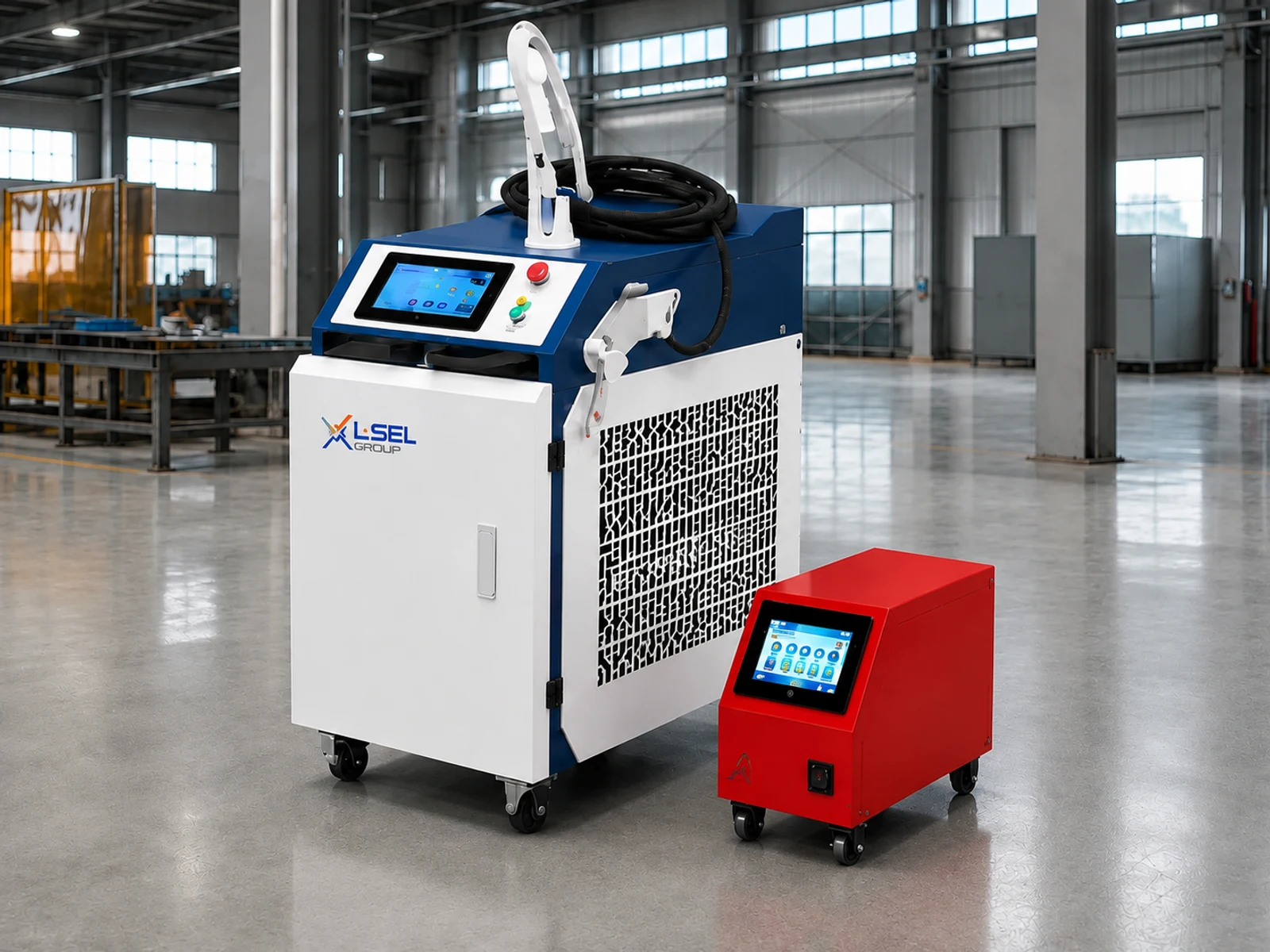
The image is for reference. Actual appearance and configuration may vary.
MK-HW2000, MK-HW3000
Article: 10008
A compact water-cooled welding system with a handheld head. Configuration is selected for the material, joint and workplace conditions.
Metal part welding where handheld access to the joint is needed. We assess process suitability and joint quality on your samples.
MK-HW is intended for manually guided seams with water cooling. Unlike a robotic cell, the operator defines the path; joint preparation, fixturing and steady movement affect quality. Compare the 2 and 3 kW versions on a representative joint, not a presumed guaranteed thickness.
| Model | Source power, kW |
|---|---|
| MK-HW2000 | 2 |
| MK-HW3000 | 3 |
Source, head, wire feed, shielding gas and cooling. Training, eye protection, work-area screening and other laser safety measures must be agreed.
Two configurations: 2 and 3 kW. We select power for the material, joint and required workflow. The source, head and wire feeder form one system; the final component list is recorded in the specification.
| Parameter | MK-HW2000 | MK-HW3000 |
|---|---|---|
| Source power | 2 kW | 3 kW |
| Typical source | MAX Photonics | MAX Photonics |
| Electrical supply | 220 V, 50 Hz, single-phase | 380 V, 50 Hz, three-phase |
| Cooling | Industrial water cooling | Industrial water cooling |
| Typical chiller | S&A | S&A |
| Fiber length | 10 m | 10 m |
| Head | SUP23T or an agreed alternative | SUP23T or an agreed alternative |
| Wire diameter | 0.8–1.2 mm, configuration-dependent | 0.8–1.2 mm, configuration-dependent |
| Wire feeding | Single or dual | Single or dual |
| Shielding gas | Nitrogen or argon, process-dependent | Nitrogen or argon, process-dependent |
| Handheld head weight | Approximately 0.8 kg, model-dependent | Approximately 0.8 kg, model-dependent |
| Wavelength | As specified for the installed source | As specified for the installed source |
The laser delivers energy directly to the joint. On prepared parts, this can produce a neat seam and reduce subsequent grinding. Local heating is particularly useful for thin-sheet enclosures, panels and other parts sensitive to distortion.
Butt, corner and lap joints are possible after checking the specific process. Close-fitting joints may be welded without filler wire; automatic feeding helps form the seam or compensate for an agreed joint gap.
| Material | 2 kW | 3 kW |
|---|---|---|
| Stainless / galvanized steel | 0.5–4 mm | 1–6 mm |
| Carbon steel | 1–4 mm | 0.5–5 mm |
| Aluminum | 1–3 mm | 1–4 mm |
Laser welding is not a universal replacement for TIG. Compare it on repeat parts with a controlled joint: travel speed alone is not enough. Preparation, seam finishing and repeatable results also matter.
| Criterion | Handheld laser | TIG |
|---|---|---|
| Joint preparation | Close fit and a controlled gap | More flexibility with uneven gaps |
| Heating | Localized; process-dependent | Broader heated zone |
| Repeat thin-sheet parts | Worth evaluating with samples | Depends on requirements and operator skill |
| Complex repairs and thick parts | Requires a separate suitability check | A conventional process is often appropriate |
Before commissioning, provide a risk assessment, controlled laser area, restricted access, appropriate protective screens, eyewear matched to the installed source wavelength and local welding-fume extraction. Direct and reflected radiation can injure eyes and skin.
The operator needs training in process settings, optical maintenance and safe operation. Send drawings or photos, material, thickness and weld requirements. A sample trial helps establish the power, wire-feed configuration and suitability for your production.
Send a drawing or photograph of the part, material, thickness, blank size and required output. This lets us compare configurations against your job, not just their power rating.
Tell us what you would like to clarify. Add drawings, photos or the required configuration reference to your request if available.
Discuss configuration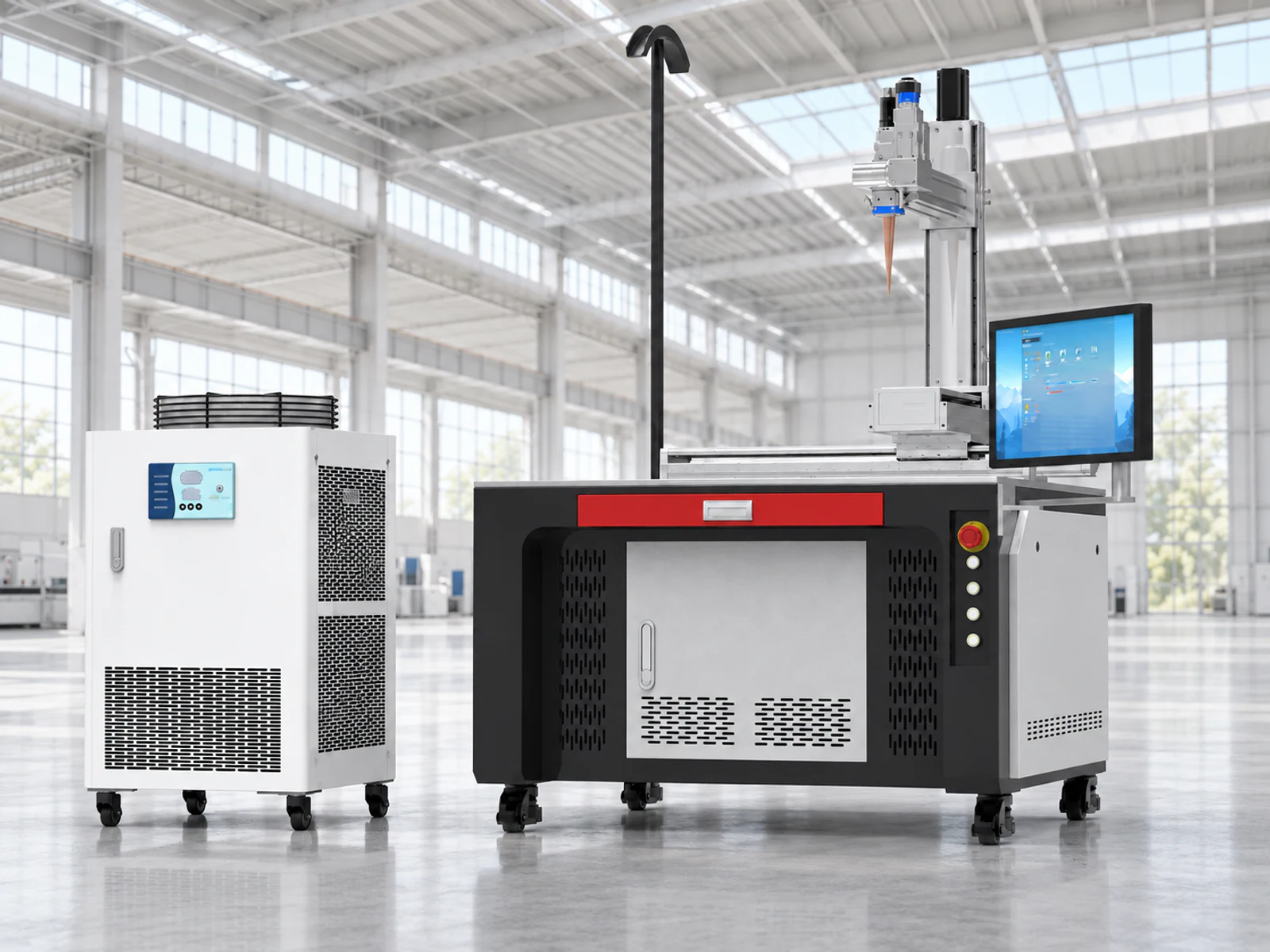
MR-AW-FL1500W
Article: 10009
An automatic system for flanges and repeat parts with X/Y/Z linear axes and two rotary axes, W1 and W2.
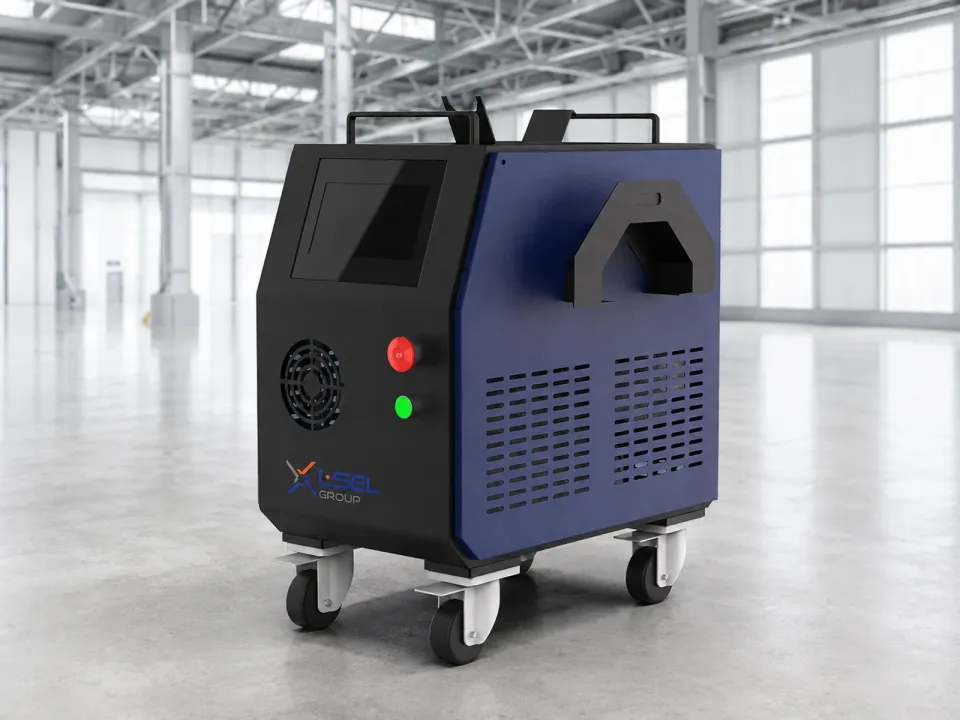
MK-AW
Article: 10075
A compact mobile system for handheld laser welding. Air cooling simplifies the arrangement without a separate water chiller.
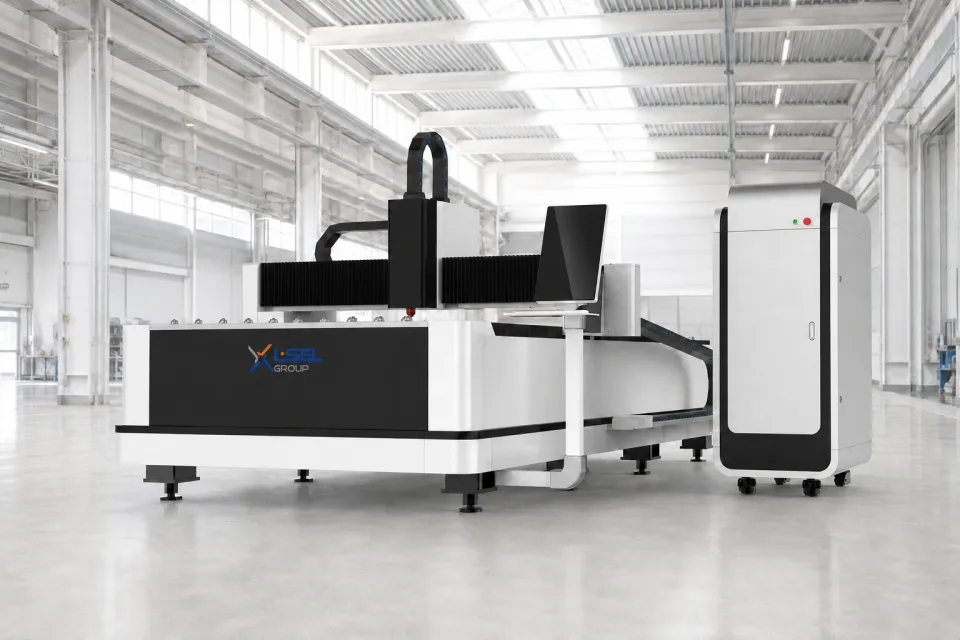
LF3015CN
Article: 10001
A single open 3000 × 1500 mm table with direct sheet access. A model for straightforward stock logistics and a configuration matched to the actual job.